Notice: تابع WP_Block_Type_Registry::register به طورنادرست فراخوانی شد. نامهای نوع بلوک نباید حروف بزرگ داشته باشند. لطفاً برای اطلاعات بیشتر، اشکال زدایی در وردپرس را مشاهده کنید. (این پیام در نگارش 5.0.0 افزوده شده است.) in /home/ethicsho/public_html/wp-includes/functions.php on line 5313
Warning: Use of undefined constant TDC_PATH_LEGACY - assumed 'TDC_PATH_LEGACY' (this will throw an Error in a future version of PHP) in /home/ethicsho/public_html/wp-content/plugins/td-composer/td-composer.php on line 109
Warning: Use of undefined constant TDSP_THEME_PATH - assumed 'TDSP_THEME_PATH' (this will throw an Error in a future version of PHP) in /home/ethicsho/public_html/wp-content/plugins/td-composer/td-composer.php on line 113 بایگانیهای 9781412953917 - خانه اخلاق پژوهان جوان Notice: Trying to access array offset on value of type bool in /home/ethicsho/public_html/wp-content/plugins/wp-ulike/inc/general-functions.php on line 807
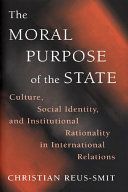
This book seeks to explain why different systems of sovereign states have built different types of fundamental institutions to govern interstate relations. Why, for example, did the ancient Greeks operate a successful system of third-party arbitration, while international society today rests on a combination of international law and multilateral diplomacy? Why did the city-states of Renaissance Italy develop a system of oratorical diplomacy, while the states of absolutist Europe relied on naturalist international law and “old diplomacy”? Conventional explanations of basic institutional practices have difficulty accounting for such variation. Christian Reus-Smit addresses this problem by presenting an alternative, “constructivist” theory of international institutional development, one that emphasizes the relationship between the social identity of the state and the nature and origin of basic institutional practices.Reus-Smit argues that international societies are shaped by deep constitutional structures that are based on prevailing beliefs about the moral purpose of the state, the organizing principle of sovereignty, and the norm of procedural justice. These structures inform the imaginations of institutional architects as they develop and adjust institutional arrangements between states. As he shows with detailed reference to ancient Greece, Renaissance Italy, absolutist Europe, and the modern world, different cultural and historical contexts lead to profoundly different constitutional structures and institutional practices. The first major study of its kind, this book is a significant addition to our theoretical and empirical understanding of international relations, past and present.
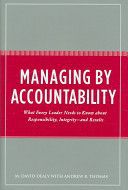
At its core, accountability is the responsibility to act. It is the commitment to do the right thing and stand by your decisions. Perhaps most importantly, it is a quality that must come from within; dishearteningly, even as legislators, shareholders, customers, and community activists are demanding greater accountability from corporate leaders, too many are waiting for some third party to take action. Whatever the endeavor, it is ultimately the individual who must hold himself to the highest standard first. Those who manage by accountability viscerally know that external rules cannot substitute for character. And they know that accountability is a quality that can be developed, honed through practice, and encouraged in others. Using stories drawn from David Dealy’s experiences on the front lines, as well as examples from other successful leaders, “Managing by Accountability” demonstrates how leaders who embark on a management philosophy of personal accountability imbue their organizations with the qualities of integrity and responsibility. In their down-to-earth style, the authors identify the five great accountability mistakes and offer a wealth of practical suggestions for overcoming them to achieve outstanding results throughout the organization. In some cases it may be Congress (e.g., Sarbanes-Oxley legislation), the media, the company’s legal or communications department, Wall Street, disgruntled customers, or angry community activists. This is not to say that formal accountability programs are useless; they do play an important role. Nevertheless, it is ultimately the individual who must hold himself to the highest standard first-without waiting to be told, pushed, or prodded. Those who manage by accountability viscerally know that external rules cannot substitute for character. And they also know that accountability can be developed, honed through practice, and encouraged in others. “Managing by Accountability” demonstrates how leaders who embark on a management philosophy of personal accountability imbue their organizations with the qualities of integrity and responsibility. Using stories drawn from David Dealy’s experiences on the front lines, as well as examples from other successful leaders, the book provides concrete examples of accountability in action. In their down-to-earth style, Dealy and Thomas identify the five great accountability mistakes and offer a wealth of practical suggestions for overcoming them to achieve outstanding results throughout the organization.
Do the reasons we have for acting as we do derive from our concerns and desires, or are there objective values in the world that we are rationally required to pursue and protect? Alan Goldman argues for the internalist or subjectivist view of practical reasons on the grounds that it is simpler, more unified, and more comprehensible than the rival objectivist position. He provides a naturalistic account of practical rationality in terms of coherence within sets of desires or motivational states, and between motivations, intentions, and actions. Coherence is defined as the avoidance of self-defeat, the defeat of one’s own deepest concerns. The demand for coherence underlies both practical and theoretical reason and derives from the natural aims of belief and action. In clarifying which desires create reasons, drawing on the literature of cognitive psychology, Goldman offers conceptual analyses of desires, emotions, and attitudes. Reasons are seen to derive ultimately from our deepest occurrent concerns. These concerns require no reasons themselves but provide reasons for many more superficial desires. In defense of this theory, Goldman argues that rational agents need not be morally motivated or concerned for their narrow self-interest. Objective values would demand such concern. They would be independent of our desires but would provide reasons for us to pursue and protect them. They would require rational agents to be motivated by them. But, Goldman argues, we are not motivated in that way, and it makes no sense to demand that our informed and coherent desires be generally other than they are. We need not appeal to such objective values in order to explain how our lives can be good and meaningful. Reasons from Within will appeal to anyone interested in the nature of values and reasons, particularly students of philosophy, psychology, and decision theory.
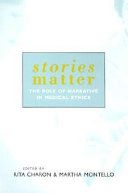
This text examines the many ways that narrative methods of analysis and interpretation are transforming the work of medicine and ethics. This edited collection provides conceptual foundations, guidelines and theory central to narrative ethics.
K. Danner Clouser is one of the most important figures in establishing and shaping the fields of medical ethics, bioethics, and the philosophy of education in the second half of the twentieth century. Clouser challenged many established approaches to moral theory and offered innovative strategies for integrating the humanities into professional education, especially that of physicians and nurses. The contributions published in Building Bioethics: Conversations with Clouser and Friends on Medical Ethics are unique both in their devotion to a critical review of his contributions, and in bringing together internationally known figures in bioethics, medical ethics, and philosophy of medicine to comment upon Clouser’s work. These leaders of the field include Tom Beauchamp, Daniel Callahan, James Childress, Nancy Dubler, H. Tristram Engelhardt, Al Jonsen, Loretta Kopelman, Larry McCullough, John Moskop, and Robert Veatch. This book merits special attention from those interested in bioethics, philosophy of medicine, medical ethics, philosophy, medical education, religious studies, and nursing education.
ما از اخلاق چه انتظاری داریم؟ این سوال شاید تاحدودی برای عموم مردم و یا متخصصان این رشته قابل پاسخ باشد؛ اینکه خوب بودن را به ما بیاموزد و در تنظیم روابط فردی م...

جشن کتاب تهران به ایستگاه سی و یکم رسیده است. حال و احوال نشر کتاب خوب نیست و باید فرهنگدوستان را به خرید و هدیه دادن کتاب ترغیب نمود. خانه اخلاقپژوهان جوان ب...

بنیاد کتابهای اخلاق اسلامی عمدتا پالایش جان از آلودگیها و آراستن آن به زیباییها است. اندیشه محوری این قبیل کتابها آن است که انسان فعلی آنی نیست که باید باشد...

-
0 Comments