Notice: تابع WP_Block_Type_Registry::register به طورنادرست فراخوانی شد. نامهای نوع بلوک نباید حروف بزرگ داشته باشند. لطفاً برای اطلاعات بیشتر، اشکال زدایی در وردپرس را مشاهده کنید. (این پیام در نگارش 5.0.0 افزوده شده است.) in /home/ethicsho/public_html/wp-includes/functions.php on line 5313
Warning: Use of undefined constant TDC_PATH_LEGACY - assumed 'TDC_PATH_LEGACY' (this will throw an Error in a future version of PHP) in /home/ethicsho/public_html/wp-content/plugins/td-composer/td-composer.php on line 109
Warning: Use of undefined constant TDSP_THEME_PATH - assumed 'TDSP_THEME_PATH' (this will throw an Error in a future version of PHP) in /home/ethicsho/public_html/wp-content/plugins/td-composer/td-composer.php on line 113 بایگانیهای 9781402093463 - خانه اخلاق پژوهان جوان Notice: Trying to access array offset on value of type bool in /home/ethicsho/public_html/wp-content/plugins/wp-ulike/inc/general-functions.php on line 807
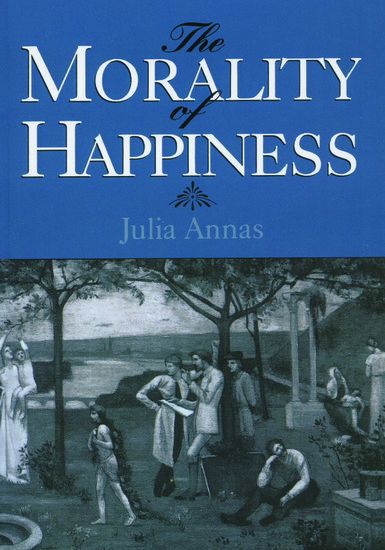
Ancient ethical theories, based on the notions of virtue and happiness, have struck many as an attractive alternative to modern theories. But we cannot find out whether this is true until we understand ancient ethics–and to do this we need to examine the basic structure of ancient ethical theory, not just the details of one or two theories. In this book, Annas brings together the results of a wide-ranging study of ancient ethical philosophy and presents it in a way that is easily accessible to anyone with an interest in ancient or modern ethics. She examines the fundamental notions of happiness and virtue, the role of nature in ethical justification and the relation between concern for self and concern for others. Her careful examination of the ancient debates and arguments shows that many widespread assumptions about ancient ethics are quite mistaken. Ancient ethical theories are not egoistic, and do not depend for their acceptance on metaphysical theories of a teleological kind. Most centrally, they are recognizably theories of morality, and the ancient disputes about the place of virtue in happiness can be seen as akin to modern disputes about the demands of morality.
It is axiomatic that every valuation of a business or business interest must contain a definition or standard of value. Each standard of value contains numerous assumptions, and there can be significant variation in the application of a particular standard of value and its underlying assumptions. Standards of Value addresses many of the ambiguities inherent in applying common standards of value. Written by Jay Fishman, Shannon Pratt, and William Morrison–three renowned valuation practitioners who deal with these issues on a daily basis–this book discusses the interaction between valuation theory and its judicial and regulatory application. A must-read for appraisers, accountants, judges, attorneys, and appraisal users, this insightful book addresses standards of value as applied in four distinct contexts: estate and gift taxation; shareholder dissent and oppression; divorce; and financial reporting. Here, practitioners will discover some of the intricacies of performing services in these venues, and appraisers will find this book helpful in understanding why the practitioners are asking such questions. Providing expert direction on interpreting and applying standards of value, this guide includes: Valuations for estate and gift tax, shareholder dissent and oppression, and divorce matters presented within their respective judicial frameworksCase-by-case reasoning behind appraisal-related decisionsState-by-state analyses that provide a clearer idea of how a state’s established case law may give insight on the standard of valueA general overview of the concepts of value, cost, and priceFair market value in estate and gift tax valuationsFair value in dissenting and oppressed shareholder mattersThe premises and standards of value used when valuing a business in divorceCurrent and proposed standards for the reporting of assets and liabilities for corporations as established by the Financial Accounting Standards Board (FASB) of the AICPA
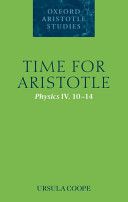
What is the relation between time and change? Does time depend on the mind? Is the present always the same or is it always different? Aristotle tackles these questions in the Physics, and Time for Aristotle is the first book in English devoted to this discussion. Aristotle claims that time is not a kind of change, but that it is something dependent on change; he defines it as a kind of “number of change.” Ursula Coope argues that what this means is that time is a kind of order (not, as is commonly supposed, a kind of measure). It is universal order within which all changes are related to each other. This interpretation enables Coope to explain two puzzling claims that Aristotle makes: that the now is like a moving thing, and that time depends for its existence on the mind. Brilliantly lucid in its explanation of this challenging section of the Physics, Time for Aristotle shows his discussion to be of enduring philosophical interest.
ما از اخلاق چه انتظاری داریم؟ این سوال شاید تاحدودی برای عموم مردم و یا متخصصان این رشته قابل پاسخ باشد؛ اینکه خوب بودن را به ما بیاموزد و در تنظیم روابط فردی م...

جشن کتاب تهران به ایستگاه سی و یکم رسیده است. حال و احوال نشر کتاب خوب نیست و باید فرهنگدوستان را به خرید و هدیه دادن کتاب ترغیب نمود. خانه اخلاقپژوهان جوان ب...

بنیاد کتابهای اخلاق اسلامی عمدتا پالایش جان از آلودگیها و آراستن آن به زیباییها است. اندیشه محوری این قبیل کتابها آن است که انسان فعلی آنی نیست که باید باشد...

-
0 Comments