Notice: تابع WP_Block_Type_Registry::register به طورنادرست فراخوانی شد. نامهای نوع بلوک نباید حروف بزرگ داشته باشند. لطفاً برای اطلاعات بیشتر، اشکال زدایی در وردپرس را مشاهده کنید. (این پیام در نگارش 5.0.0 افزوده شده است.) in /home/ethicsho/public_html/wp-includes/functions.php on line 5313
Warning: Use of undefined constant TDC_PATH_LEGACY - assumed 'TDC_PATH_LEGACY' (this will throw an Error in a future version of PHP) in /home/ethicsho/public_html/wp-content/plugins/td-composer/td-composer.php on line 109
Warning: Use of undefined constant TDSP_THEME_PATH - assumed 'TDSP_THEME_PATH' (this will throw an Error in a future version of PHP) in /home/ethicsho/public_html/wp-content/plugins/td-composer/td-composer.php on line 113 بایگانیهای 9781402089664 - خانه اخلاق پژوهان جوان Notice: Trying to access array offset on value of type bool in /home/ethicsho/public_html/wp-content/plugins/wp-ulike/inc/general-functions.php on line 807
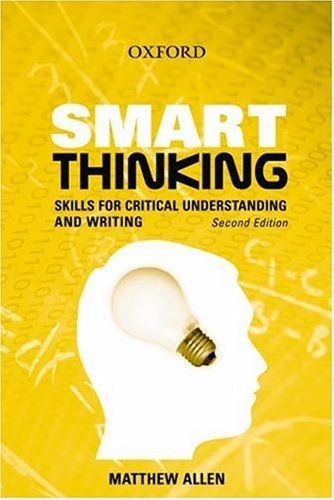
Smart Thinking: Skills for Critical Understanding and Writing 2E is a practical step-by-step guide to improving skills in analysis, critical thinking, and the effective communication of arguments and explanations. The book combines an accessible and straightforward style, with a strong foundation of knowledge. The text treats reasoning as an aspect of communication, not an abstract exercise in logic. The book not only provides detailed advice on how to practise analytical skills, but also demonstrates how these skills can be used in research and writing. In particular, it emphasises how to develop arguments that are coherent and that take account of their audience and context.
“We all live our daily lives surrounded by the products of technology that make what we do simpler, faster, and more efficient. These are benefits we often just take for granted. But at the same time, as these products disburden us of unwanted tasks that consumed much time and effort in earlier eras, many of them also leave us more disengaged from our natural and even human surroundings. It is the task of what Gene Moriarty calls focal engineering to create products that will achieve a balance between disburdenment and engagement.” “One of Moriarty’s examples of a focally engineered structure is the Golden Gate Bridge, which “draws people to it, enlivens and elevates the human spirit, and resonates with the world of its congenial setting. Humans, bridge, and world are in tune.” These values of engagement, enlivenment, and resonance are key to the normative approach Moriarty brings to the profession of engineering, which traditionally has focused mainly on technical measures of evaluation such as efficiency, productivity, objectivity, and precision.”–BOOK JACKET.
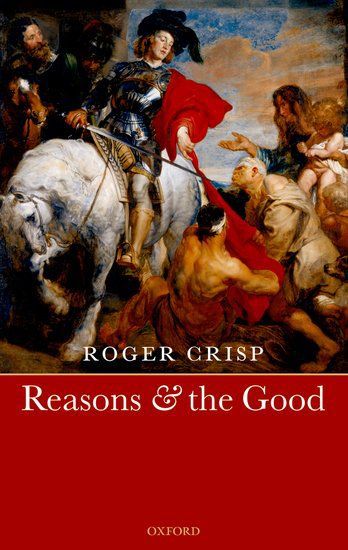
In Reasons and the Good Roger Crisp answers some of the oldest questions in moral philosophy. Fundamental to ethics, he claims, is the idea of ultimate reasons for action; and he argues controversially that these reasons don’t depend on moral concepts. He investigates the nature of reasons themselves, and how we come to know them. He defends a hedonistic theory of well-being and an account of practical reason according to which we can give some, though not overriding, priority to our own good over that of others.
The idea that we are in some significant sense responsible for our emotions is an idea that Robert Solomon has developed for almost three decades. Here, in a single volume, he traces the development of this theory of emotions and elaborate it in detail. Two themes run through his work: the first presents a “cognitive” theory of emotions in which emotions are construed primarily as evaluative judgments. The second proposes an “existentialist” perspective in which he defends the idea that, as we are responsible for our emotions. Indeed, sometimes it even makes sense to say that we “choose” them. While the first claim has gained increasing currency in the literature, his claim about responsibility for emotions has continued to meet with considerable resistance and misinterpretation. The new emphasis on evolutionary biology and neurology has (mistakenly) reinforced the popular prejudice that emotions “happen” to us and are entirely beyond our control. This volume is also a kind of intellectual memoir of Solomon1s own development as a thinker. The essays written in the 1980s elaborate the themes of the “intentionality” of emotion and the claim that emotions are “judgments”; in this period, he is also increasingly preoccupied with how emotions vary and are identified in a variety of cultures. In the 1990’s, his interests evolve to consider the social and political role of emotions and theories about emotion. The final section presents his current philosophical position on the seeming “passivity” of the passions. Despite his own critical assessment of his earlier work, he continues to argue that, in the final analysis, we are responsible for our emotions and existential quality of our lives.
ما از اخلاق چه انتظاری داریم؟ این سوال شاید تاحدودی برای عموم مردم و یا متخصصان این رشته قابل پاسخ باشد؛ اینکه خوب بودن را به ما بیاموزد و در تنظیم روابط فردی م...

جشن کتاب تهران به ایستگاه سی و یکم رسیده است. حال و احوال نشر کتاب خوب نیست و باید فرهنگدوستان را به خرید و هدیه دادن کتاب ترغیب نمود. خانه اخلاقپژوهان جوان ب...

بنیاد کتابهای اخلاق اسلامی عمدتا پالایش جان از آلودگیها و آراستن آن به زیباییها است. اندیشه محوری این قبیل کتابها آن است که انسان فعلی آنی نیست که باید باشد...

-
0 Comments