Notice: تابع WP_Block_Type_Registry::register به طورنادرست فراخوانی شد. نامهای نوع بلوک نباید حروف بزرگ داشته باشند. لطفاً برای اطلاعات بیشتر، اشکال زدایی در وردپرس را مشاهده کنید. (این پیام در نگارش 5.0.0 افزوده شده است.) in /home/ethicsho/public_html/wp-includes/functions.php on line 5313
Warning: Use of undefined constant TDC_PATH_LEGACY - assumed 'TDC_PATH_LEGACY' (this will throw an Error in a future version of PHP) in /home/ethicsho/public_html/wp-content/plugins/td-composer/td-composer.php on line 109
Warning: Use of undefined constant TDSP_THEME_PATH - assumed 'TDSP_THEME_PATH' (this will throw an Error in a future version of PHP) in /home/ethicsho/public_html/wp-content/plugins/td-composer/td-composer.php on line 113 بایگانیهای 9781147651744 - خانه اخلاق پژوهان جوان Notice: Trying to access array offset on value of type bool in /home/ethicsho/public_html/wp-content/plugins/wp-ulike/inc/general-functions.php on line 807
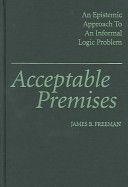
When, if ever, is one justified in accepting the premises of an argument? What is the proper criterion of premise acceptability? Providing a comprehensive theory of premise acceptability, this book answers these questions from an epistemological approach that the author calls “common sense foundationalism”. His work will be of interest to specialists in informal logic, critical thinking and argumentation theory as well as to a broader range of philosophers and those teaching rhetoric.
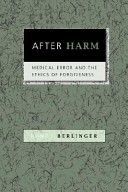
Medical error is a leading problem of health care in the United States. Each year, more patients die as a result of medical mistakes than are killed by motor vehicle accidents, breast cancer, or AIDS. While most government and regulatory efforts are directed toward reducing and preventing errors, the actions that should follow the injury or death of a patient are still hotly debated. According to Nancy Berlinger, conversations on patient safety are missing several important components: religious voices, traditions, and models. In After Harm, Berlinger draws on sources in theology, ethics, religion, and culture to create a practical and comprehensive approach to addressing the needs of patients, families, and clinicians affected by medical error. She emphasizes the importance of acknowledging fallibility, telling the truth, confronting feelings of guilt and shame, and providing just compensation. After Harm adds important human dimensions to an issue that has profound consequences for patients and health care providers.
On the basis of Dewey’s principles, Paul G. Woodford explores the social foundation of current music education practices in the context of democratic values of freedom, creativity, and contribution to society. He then critiques the means by which this ideal is learned by teachers and taught to students. Woodford concludes with recommendations for acknowledging democratic and non-democratic values in music teaching, teacher training, and performance, and suggests steps toward a “liberal” music education.
In this book John Kekes examines the indispensable role enjoyment plays in a good life. The key to it is the development of a style of life that combines an attitude and a manner of living and acting that jointly express one’s deepest concerns. Since such styles vary with characters and circumstances, a reasonable understanding of them requires attending to the particular and concrete details of individual lives. Reflection on works of literature is a better guide to this kind of understanding than the futile search for general theories and principles that preoccupies much of contemporary moral thought. Enjoyment proceeds by the detailed examination of particular cases, shows how this kind of reflection can be reasonably conducted, and how the quest for universality and impartiality is misguided in this context. Central to the argument is a practical, particular, pluralistic, and yet objective conception of reason that rejects the pervasive contemporary tendency to regard reasons as good only if they are binding on all who aspire to live reasonably and morally. Reason in morality is neither theoretical nor general. Reasons for living and acting in particular ways are individually variable and none the worse for that. Kekes aims to reorient moral thought from deontological, contractarian, and consequentialist preoccupations toward a reasonable but pluralistic reflection on what individuals can do to make their lives better.
ما از اخلاق چه انتظاری داریم؟ این سوال شاید تاحدودی برای عموم مردم و یا متخصصان این رشته قابل پاسخ باشد؛ اینکه خوب بودن را به ما بیاموزد و در تنظیم روابط فردی م...

جشن کتاب تهران به ایستگاه سی و یکم رسیده است. حال و احوال نشر کتاب خوب نیست و باید فرهنگدوستان را به خرید و هدیه دادن کتاب ترغیب نمود. خانه اخلاقپژوهان جوان ب...

بنیاد کتابهای اخلاق اسلامی عمدتا پالایش جان از آلودگیها و آراستن آن به زیباییها است. اندیشه محوری این قبیل کتابها آن است که انسان فعلی آنی نیست که باید باشد...

-
0 Comments