Notice: تابع WP_Block_Type_Registry::register به طورنادرست فراخوانی شد. نامهای نوع بلوک نباید حروف بزرگ داشته باشند. لطفاً برای اطلاعات بیشتر، اشکال زدایی در وردپرس را مشاهده کنید. (این پیام در نگارش 5.0.0 افزوده شده است.) in /home/ethicsho/public_html/wp-includes/functions.php on line 5313
Warning: Use of undefined constant TDC_PATH_LEGACY - assumed 'TDC_PATH_LEGACY' (this will throw an Error in a future version of PHP) in /home/ethicsho/public_html/wp-content/plugins/td-composer/td-composer.php on line 109
Warning: Use of undefined constant TDSP_THEME_PATH - assumed 'TDSP_THEME_PATH' (this will throw an Error in a future version of PHP) in /home/ethicsho/public_html/wp-content/plugins/td-composer/td-composer.php on line 113 بایگانیهای 9781140792925 - خانه اخلاق پژوهان جوان Notice: Trying to access array offset on value of type bool in /home/ethicsho/public_html/wp-content/plugins/wp-ulike/inc/general-functions.php on line 807
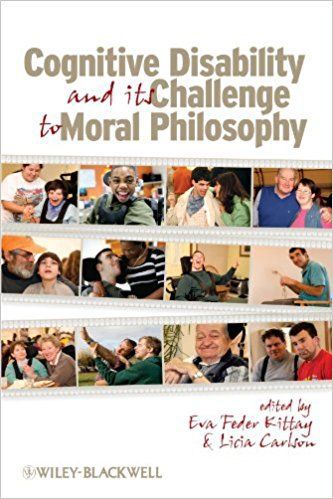
We have been taught that all humans share intrinsic qualities that lend them a common dignity. Philosophers conceive of a certain level of cognitive capacity as the very mark of humanity, and extend the mantle of equal moral fellowship to these “persons.” But what of individuals with diminished cognitive abilities? Cognitive disability poses significant challenges to these fundamental philosophical concepts, prompting a variety of difficult questions. Should those with cognitive disabilities be excluded from the protections and responsibilities we routinely assign to “persons”? Are we forced to reconsider the very concept of “personhood”? How should the interests of people with cognitive disabilities and their caregivers be represented politically? Who is responsible for guaranteeing their care? And to what extent ought they to be granted autonomy?Cognitive Disability and Its Challenge to Moral Philosophy addresses these concerns in a series of thought-provoking Chapters contributed by some of the most prominent moral philosophers of our time, as well as clinicians and medical historians. Collectively, the Chapters represent an important milestone in contemporary thinking about ethical considerations relating to people with cognitive disabilities.Eva Feder Kittay is Distinguished Professor of Philosophy, Women’s Studies Affiliate, and Senior Fellow of the Center for Medical Humanities, Bioethics and Compassionate Care at Stony Brook University, New York. Her published works include Love’s Labor: Essays on Women, Equality, and Dependency (1998); The Blackwell Guide to Feminist Philosophy (co-edited with Linda Martin Alcoff, Wiley-Blackwell, 2006); The Subject of Care: Feminist Perspectives on Dependency (with Ellen K. Feder, 2003); and Metaphor: Its Cognitive Force and Linguistic Structure (1990). She is also the mother of a cognitively disabled woman.Licia Carlson is an assistant professor of philosophy at Providence College. Her research interests include twentieth-century French philosophy, ethics, feminist theory, philosophy and disability, and the philosophy of music. She has published articles on bioethics, feminist theory, disability, and the works of Michel Foucault, and is the author of The Faces of Intellectual Disability: Philosophical Reflections (2010).
The utility maximization paradigm forms the basis of many economic, psychological, cognitive and behavioral models. Since it was first devised in the eighteenth century, numerous examples have revealed the deficiencies of the concept. This book makes a contribution to overcome those deficiencies by taking into account insensitivity of measurement threshold and context of choice. It covers classic theory as a special, context-free case and gives a systematic overview of new models of utility maximization within a context-dependent threshold as well as related preference and choice models. The second edition has been updated to include the most recent developments and a new chapter on classic and new results for infinite sets. The presented models will be helpful to scientists in economics, decision making theory, social choice theory, behavioral and cognitive sciences, and related fields.
Book Summary of Aristotle And Moral RealismThis volume of essays brings together scholars of ancient philosophy and some of today’s most distinguished moral philosophers to discuss Aristotle’s ethics and the problems of moral realism. One of the central and perennial philosophical problems is the question of whether our ethical assertions and beliefs can be justifiably claimed to rest on some objective foundation. As an upholder of the objectivity of ethics and as one of the most important ethical thinkers in the history of philosophy, Aristotle’s writings on these questions are of the greatest interest. Indeed, much of recent moral philosophy has looked directly to Aristotle for inspiration on the problem of moral objectivity. For example, “virtue theorists” were influenced by Aristotle in their proposal that what determines the right thing to do in a particular case is what the virtuous man would do. Similarly, “sensibility theorists” have found support for their view in Aristotle’s remarks about the importance of the conditioning of one’s desires for the development of virtue and knowledge about the human good. One of the central issues addressed by the contributors is whether it is wrong to believe that the justification of a moral claim requires an “external” validation which goes beyond reference to human practices of moral condemnation and approval. Or does moral objectivity require ethical discourse to have an origin and explanatory power similar in important respects to that of an empirical science? The contributors range over many other issues and areas of Aristotle’s philosophy, including his account of tragedy and his theory of justice. It will be welcomed by all philosophers and classicists with an interest in moral philosophy and Greek ethics..
The UK Environmental Law Association (UKELA) holds a conference each year to bring together academics and practitioners,lawyers and environmental experts from other disciplines – within both science and social science. It is a unique event providing a forum for discussion of the most pressing issues of environmental regulation, and provides a unique combination of analysis and practical application. These articles, presented as papers at the Cardiff Conference in 2001, provide an accessible and informative collection addressing the conference theme of economics, ethics and the environment, including such issues as: how we can use traditional economic devices such as taxation, trading and insurance to assist in environmental regulation; how we treat and protect the natural world; how we might cope with the growing problem of waste; and how we should react to safeguard the environment in the face of risks and scientific uncertainties. The collection forms a topical and wide ranging discussion of key issues for legal practitioners, academics and students and will also be of great interest to a wider range of disciplines relating to the environment.
ما از اخلاق چه انتظاری داریم؟ این سوال شاید تاحدودی برای عموم مردم و یا متخصصان این رشته قابل پاسخ باشد؛ اینکه خوب بودن را به ما بیاموزد و در تنظیم روابط فردی م...

جشن کتاب تهران به ایستگاه سی و یکم رسیده است. حال و احوال نشر کتاب خوب نیست و باید فرهنگدوستان را به خرید و هدیه دادن کتاب ترغیب نمود. خانه اخلاقپژوهان جوان ب...

بنیاد کتابهای اخلاق اسلامی عمدتا پالایش جان از آلودگیها و آراستن آن به زیباییها است. اندیشه محوری این قبیل کتابها آن است که انسان فعلی آنی نیست که باید باشد...

-
0 Comments