Notice: تابع WP_Block_Type_Registry::register به طورنادرست فراخوانی شد. نامهای نوع بلوک نباید حروف بزرگ داشته باشند. لطفاً برای اطلاعات بیشتر، اشکال زدایی در وردپرس را مشاهده کنید. (این پیام در نگارش 5.0.0 افزوده شده است.) in /home/ethicsho/public_html/wp-includes/functions.php on line 5313
Warning: Use of undefined constant TDC_PATH_LEGACY - assumed 'TDC_PATH_LEGACY' (this will throw an Error in a future version of PHP) in /home/ethicsho/public_html/wp-content/plugins/td-composer/td-composer.php on line 109
Warning: Use of undefined constant TDSP_THEME_PATH - assumed 'TDSP_THEME_PATH' (this will throw an Error in a future version of PHP) in /home/ethicsho/public_html/wp-content/plugins/td-composer/td-composer.php on line 113 بایگانیهای 9780824742881 - خانه اخلاق پژوهان جوان Notice: Trying to access array offset on value of type bool in /home/ethicsho/public_html/wp-content/plugins/wp-ulike/inc/general-functions.php on line 807
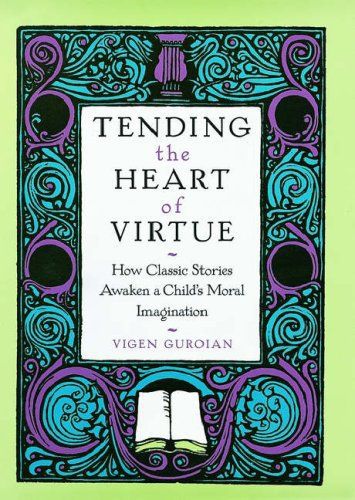
As the popularity of William Bennett’s Book of Virtues attests, parents are turning more and more to children’s literature to help instill values in their kids. Now, in this elegantly written and passionate book, Vigen Guroian provides the perfect complement to books such as Bennett’s, offering parents and teachers a much-needed roadmap to some of our finest children’s stories. Guroian illuminates the complex ways in which fairy tales and fantasies educate the moral imagination from earliest childhood. Examining a wide range of stories–from “Pinocchio” and “The Little Mermaid” to “Charlotte’s Web,” “The Velveteen Rabbit,” “The Wind in the Willows,” and the “Chronicles of Narnia”–he argues that these tales capture the meaning of morality through vivid depictions of the struggle between good and evil, in which characters must make difficult choices between right and wrong, or heroes and villains contest the very fate of imaginary worlds. Character and the virtues are depicted compellingly in these stories; the virtues glimmer as if in a looking glass, and wickedness and deception are unmasked of their pretensions to goodness and truth. We are made to face the unvarnished truth about ourselves, and what kind of people we want to be. Throughout, Guroian highlights the classical moral virtues such as courage, goodness, and honesty, especially as they are understood in traditional Christianity. At the same time, he so persuasively evokes the enduring charm of these familiar works that many readers will be inspired to reread their favorites and explore those they may have missed.
People act for reasons. That is how we understand ourselves. But what is it to act for a reason? This is what Fred Schueler investigates. He rejects the dominant view that the beliefs and desires that constitute our reasons for acting simply cause us to act as we do, and argues instead for a view centered on practical deliberation-our ability to evaluate the reasons we accept. Schueler’s account of “reasons explanations: emphasizes the relation between reasons and purposes, and the fact that the reasons for an action are not always good reasons.
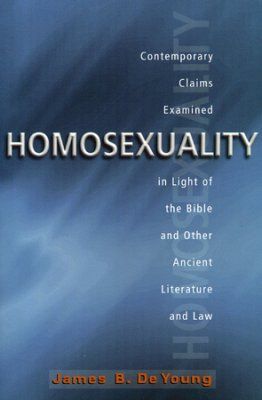
This thorough study answers those who would revise the message of Scripture. Using the Bible, Jewish literature, and information from ancient cultures, it provides the knowledge necessary to respond with confidence, compassion, and honesty to demands that Christians accept active homosexuality.
Is there a public good? A prevalent view in political science is that democracy is unavoidably chaotic, arbitrary, meaningless, and impossible. Such scepticism began with Condorcet in the eighteenth century, and continued most notably with Arrow and Riker in the twentieth century. In this powerful book, Gerry Mackie confronts and subdues these long-standing doubts about democratic governance. Problems of cycling, agenda control, strategic voting, and dimensional manipulation are not sufficiently harmful, frequent, or irremediable, he argues, to be of normative concern. Mackie also examines every serious empirical illustration of cycling and instability, including Rikers famous argument that the US Civil War was due to arbitrary dimensional manipulation. Almost every empirical claim is erroneous, and none is normatively troubling, Mackie says. This spirited defence of democratic institutions should prove both provocative and influential.
ما از اخلاق چه انتظاری داریم؟ این سوال شاید تاحدودی برای عموم مردم و یا متخصصان این رشته قابل پاسخ باشد؛ اینکه خوب بودن را به ما بیاموزد و در تنظیم روابط فردی م...

جشن کتاب تهران به ایستگاه سی و یکم رسیده است. حال و احوال نشر کتاب خوب نیست و باید فرهنگدوستان را به خرید و هدیه دادن کتاب ترغیب نمود. خانه اخلاقپژوهان جوان ب...

بنیاد کتابهای اخلاق اسلامی عمدتا پالایش جان از آلودگیها و آراستن آن به زیباییها است. اندیشه محوری این قبیل کتابها آن است که انسان فعلی آنی نیست که باید باشد...

-
0 Comments