Notice: تابع WP_Block_Type_Registry::register به طورنادرست فراخوانی شد. نامهای نوع بلوک نباید حروف بزرگ داشته باشند. لطفاً برای اطلاعات بیشتر، اشکال زدایی در وردپرس را مشاهده کنید. (این پیام در نگارش 5.0.0 افزوده شده است.) in /home/ethicsho/public_html/wp-includes/functions.php on line 5313
Warning: Use of undefined constant TDC_PATH_LEGACY - assumed 'TDC_PATH_LEGACY' (this will throw an Error in a future version of PHP) in /home/ethicsho/public_html/wp-content/plugins/td-composer/td-composer.php on line 109
Warning: Use of undefined constant TDSP_THEME_PATH - assumed 'TDSP_THEME_PATH' (this will throw an Error in a future version of PHP) in /home/ethicsho/public_html/wp-content/plugins/td-composer/td-composer.php on line 113 بایگانیهای 9780823219797 - خانه اخلاق پژوهان جوان Notice: Trying to access array offset on value of type bool in /home/ethicsho/public_html/wp-content/plugins/wp-ulike/inc/general-functions.php on line 807
Medicine and health care generate many bioethical problems and dilemmas that are of great academic, professional and public interest. This comprehensive resource is designed as a succinct yet authoritative text and reference for clinicians, bioethicists, and advanced students seeking a better understanding of ethics problems in the clinical setting. Each chapter illustrates an ethical problem that might be encountered in everyday practice; defines the concepts at issue; examines their implications from the perspectives of ethics, law and policy; and then provides a practical resolution. There are 10 key sections presenting the most vital topics and clinically relevant areas of modern bioethics. International, interdisciplinary authorship and cross-cultural orientation ensure suitability for a worldwide audience. This book will assist all clinicians in making well-reasoned and defensible decisions by developing their awareness of ethical considerations and teaching the analytical skills to deal with them effectively.
What Nietzsche Really Saidgives us a lucid overview — both informative and entertaining — of perhaps the most widely read and least understood philosopher in history. Friedrich Nietzsche’s aggressive independence, flamboyance, sarcasm, and celebration of strength have struck responsive chords in contemporary culture. More people than ever are reading and discussing his writings. But Nietzsche’s ideas are often overshadowed by the myths and rumors that surround his sex life, his politics, and his sanity. In this lively and comprehensive analysis, Nietzsche scholars Robert C. Solomon and Kathleen M. Higgins get to the heart of Nietzsche’s philosophy, from his ideas on “the will to power” to his attack on religion and morality and his infamousUbermensch(superman). What Nietzsche Really Saidoffers both guidelines and insights for reading and understanding this controversial thinker. Written with sophistication and wit, this book provides an excellent summary of the life and work of one of history’s most provocative philosophers. From the Hardcover edition.
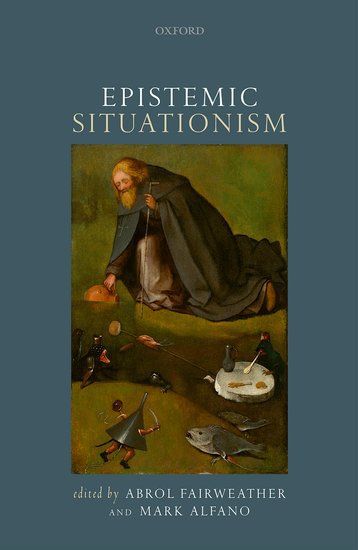
“This volume is the first sustained examination of epistemic situationism, the clash between virtue epistemology and the situationist hypothesis supported by research in empirical psychology. Current research in social psychology suggests that environmental variables have greater explanatory and predictive power than traits in explaining human behavior and this has raised serious challenges to ethical theories, such as virtue ethics, that rely on a psychology of personality traits. However, virtue epistemology appears to assume the same trait-based psychology as virtue ethics does, and the research challenging virtue theories in ethics is relevant to philosophical theorizing about knowledge as well. Until recently virtue epistemology and situationism were separate literatures, but philosophers have begun to examine the apparent incompatibility between situationist psychology and virtue epistemology. Much of the psychological research that raises questions about the empirical adequacy of the moral psychology of virtue ethics also appears to raise doubts about the empirical adequacy of the epistemic psychology assumed by virtue epistemology. Responsibilist virtue epistemology appears particularly vulnerable because epistemic virtues like open-mindedness, conscientiousness, and intellectual courage are traits of intellectual character, but reliabilist virtue epistemology appeals to the psychology of cognitive skill, abilities, and competences that may be similarly vulnerable. The essays in this volume take up this new problem of epistemic situationism from multiple points of view – some skeptical or revisionary, others conservative.”–
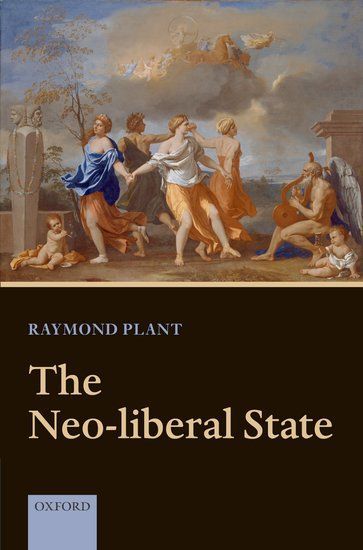
The aim of the book is two-fold. First of all it is to provide a fair, complete and analytical account of the Neo-liberal conception of the role and function of the state in modern society. The second aim is to provide a critical assessment of some of the central elements of this conception. The book will look at the emphasis of Neo-liberals on procedural and rule governed approaches to the role of the state rather than outcome or end state views of the role of government and to consider how this conception of politics relates to issues such as the rule of law, freedom, justice, rights, the relationship to the market economy, to civil society and to look at the role of government in relation to the provision of welfare and public sector services more generally. It builds up the Neo-liberal case in respect of these aspects of modern society by drawing upon the works of central Neo-liberal thinkers such as Hayek, Mises, Menger, as well as thinkers such as Oakeshott, Nozick and Rotbard who are not directly Neo-liberals but whose works have been important for the development of central Neo-liberal themes. The second part of the book provides what might be regarded as an immanent critique of the Neo-liberal case built up in the first part of the study. It takes Neo-liberal ideas very seriously and shows how incoherences arise within and between those ideas such that a plausible form of Neo-liberalism as opposed to Libertarianism on the one hand and Social Democracy on the other is very difficult to state. The theme of this book is very germane given the considerable debate which is now taking place in the context of the world financial crisis about the appropriate role for the state.
Marshall McLuhan died on the last day of 1980, on the doorstep of the personal computer revolution. Yet McLuhan’s ideas anticipated a world of media in motion, and its impact on our lives on the dawn of the new millennium.Paul Levinson examines why McLuhan’s theories about media are more important to us today than when they were first written, and why the Wired generation is now turning to McLuhan’s work to understand the global village in the digital age.
ما از اخلاق چه انتظاری داریم؟ این سوال شاید تاحدودی برای عموم مردم و یا متخصصان این رشته قابل پاسخ باشد؛ اینکه خوب بودن را به ما بیاموزد و در تنظیم روابط فردی م...

جشن کتاب تهران به ایستگاه سی و یکم رسیده است. حال و احوال نشر کتاب خوب نیست و باید فرهنگدوستان را به خرید و هدیه دادن کتاب ترغیب نمود. خانه اخلاقپژوهان جوان ب...

بنیاد کتابهای اخلاق اسلامی عمدتا پالایش جان از آلودگیها و آراستن آن به زیباییها است. اندیشه محوری این قبیل کتابها آن است که انسان فعلی آنی نیست که باید باشد...

-
0 Comments