Notice: تابع WP_Block_Type_Registry::register به طورنادرست فراخوانی شد. نامهای نوع بلوک نباید حروف بزرگ داشته باشند. لطفاً برای اطلاعات بیشتر، اشکال زدایی در وردپرس را مشاهده کنید. (این پیام در نگارش 5.0.0 افزوده شده است.) in /home/ethicsho/public_html/wp-includes/functions.php on line 5313
Warning: Use of undefined constant TDC_PATH_LEGACY - assumed 'TDC_PATH_LEGACY' (this will throw an Error in a future version of PHP) in /home/ethicsho/public_html/wp-content/plugins/td-composer/td-composer.php on line 109
Warning: Use of undefined constant TDSP_THEME_PATH - assumed 'TDSP_THEME_PATH' (this will throw an Error in a future version of PHP) in /home/ethicsho/public_html/wp-content/plugins/td-composer/td-composer.php on line 113 بایگانیهای 9780816422067 - خانه اخلاق پژوهان جوان Notice: Trying to access array offset on value of type bool in /home/ethicsho/public_html/wp-content/plugins/wp-ulike/inc/general-functions.php on line 807
This book explores philosophical ethics in Arabo-Islamic thought. Examining the meaning, origin and development of “Divine Command Theory”, it underscores the philosophical bases of religious fundamentalism that hinder social development and hamper dialogue between different cultures and nations.Challenging traditional stereotypes of Islam, the book refutes contemporary claims that Islam is a defining case of ethical voluntarism, and that the prominent theory in Islamic ethical thought is Divine Command Theory. The author argues that, in fact, early Arab-Islamic scholars articulated moral theories: theories of value and theories of obligation. She traces the development of Arabo-Islamic ethics from the early Islamic theological and political debates between the Kharijites and the Murji’ites, shedding new light on the moral theory of Abd al-Jabbar al-Mu’tazili and the effects of this moral theory on post-Mu’tazilite ethical thought.Highlighting important aspects in the development of Islamic thought, this book will appeal to students and scholars of Islamic moral thought and ethics, Islamic law, and religious fundamentalism.
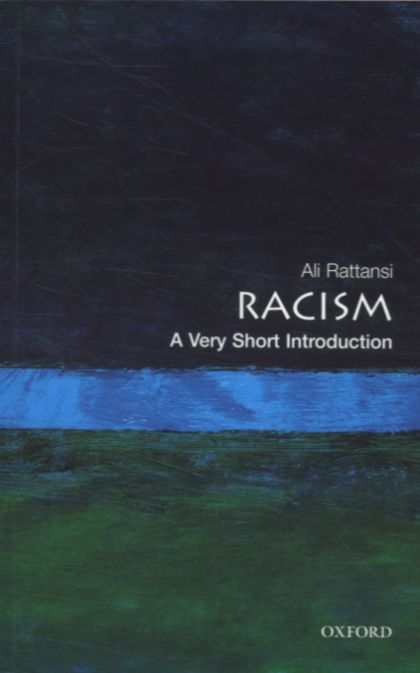
From subtle discrimination in everyday life, to horrors like lynching in the Old South, cultural imperialism, and “ethnic cleansing”, racism exists in many different forms, in almost every facet of society. Despite civil rights movements and other attempts at progress, racial prejudices and stereotypes remain deeply embedded in Western culture. Racism takes a frank and objective look at why these notions exist. It explores how racism has come to be so firmly established, and looks at how race, ethnicity, and xenophobia are related. This book incorporates the latest research to demystify the subject of racism and explore its history, science, and culture. It sheds light not only on how racism has evolved since its earliest beginnings, but also explores the numerous embodiments of racism, highlighting the paradox of its survival, despite the scientific discrediting of the notion of ‘race’ with the latest advances in genetics. As encompassing as it is concise, Racism is a valuable guide to one of the world’s most destructive problems.
In this book, S. A. Lloyd offers a radically new interpretation of Hobbes’s laws of nature, revealing them to be not egoistic precepts of personal prudence but rather moral instructions for obtaining the common good. This account of Hobbes’s moral philosophy stands in contrast to both divine command and rational choice interpretations. Drawing from the core notion of reciprocity, Lloyd explains Hobbes’s system of “cases in the law of nature” and situates Hobbes’s moral philosophy in the broader context of his political philosophy and views on religion. Offering ingenious new arguments, Lloyd defends a reciprocity interpretation of the laws of nature through which humanity’s common good is secured.
ما از اخلاق چه انتظاری داریم؟ این سوال شاید تاحدودی برای عموم مردم و یا متخصصان این رشته قابل پاسخ باشد؛ اینکه خوب بودن را به ما بیاموزد و در تنظیم روابط فردی م...

جشن کتاب تهران به ایستگاه سی و یکم رسیده است. حال و احوال نشر کتاب خوب نیست و باید فرهنگدوستان را به خرید و هدیه دادن کتاب ترغیب نمود. خانه اخلاقپژوهان جوان ب...

بنیاد کتابهای اخلاق اسلامی عمدتا پالایش جان از آلودگیها و آراستن آن به زیباییها است. اندیشه محوری این قبیل کتابها آن است که انسان فعلی آنی نیست که باید باشد...

-
0 Comments