Notice: تابع WP_Block_Type_Registry::register به طورنادرست فراخوانی شد. نامهای نوع بلوک نباید حروف بزرگ داشته باشند. لطفاً برای اطلاعات بیشتر، اشکال زدایی در وردپرس را مشاهده کنید. (این پیام در نگارش 5.0.0 افزوده شده است.) in /home/ethicsho/public_html/wp-includes/functions.php on line 5313
Warning: Use of undefined constant TDC_PATH_LEGACY - assumed 'TDC_PATH_LEGACY' (this will throw an Error in a future version of PHP) in /home/ethicsho/public_html/wp-content/plugins/td-composer/td-composer.php on line 109
Warning: Use of undefined constant TDSP_THEME_PATH - assumed 'TDSP_THEME_PATH' (this will throw an Error in a future version of PHP) in /home/ethicsho/public_html/wp-content/plugins/td-composer/td-composer.php on line 113 بایگانیهای 9780813124575 - خانه اخلاق پژوهان جوان Notice: Trying to access array offset on value of type bool in /home/ethicsho/public_html/wp-content/plugins/wp-ulike/inc/general-functions.php on line 807
What is ethics? Where does it come from? Can we really hope to find any rational way of deciding how we ought to live? If we can, what would it be like, and how are we going to know when we have found it? To capture the essentials of what we know about the origins and nature of ethics, Peter Singer has drawn on anthropology, evolution, game theory, and works of fiction, in addition to the classic moral philosophy of such thinkers as Nietzsche, Kant, and Confucius. By choosing some of the finest pieces of writing, old and new, in and about ethics, he conveys the intellectual excitement of the search for answers to basic questions about how we ought to live. From the debates of Socrates and the profound writing of Rousseau to Jane Goodall’s reflections on the ethics of chimpanzee kinship and Luther’s commentary on the Sixth Commandment (thou shalt not kill), this engaging reader offers a complete and thorough introduction to the fascinating world of ethical debate.
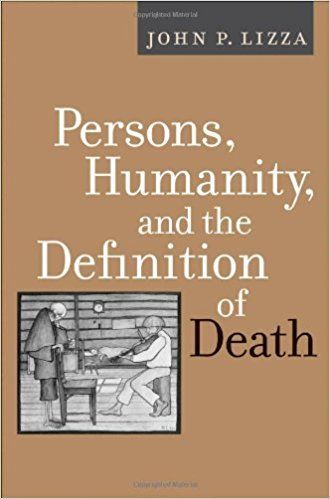
In this riveting and timely work, John P. Lizza presents the first comprehensive analysis of personhood and humanity in the context of defining death. Rejecting the common assumption that human or personal death is simply a biological phenomenon for biologists or physicians to define, Lizza argues that the definition of death is also a matter for metaphysical reflection, moral choice, and cultural acceptance. Lizza maintains that defining death remains problematic because basic ontological, ethical, and cultural issues have never been adequately addressed. Advances in life-sustaining technology and organ transplantation have led to revision of the legal definition of death. It is generally accepted that death occurs when all functions of the brain have ceased. However, legal and clinical cases involving postmortem pregnancy, individuals in permanent vegetative state, those with anencephaly, and those with severe dementia challenge the neurological criteria. Is “brain death” really death? Should the neurological criteria be expanded to include individuals in permanent vegetative state, with anencephaly, and those with severe dementia? What metaphysical, ethical, and cultural considerations are relevant to answering such questions? Although Lizza accepts a pluralistic approach to the legal definition of death, he proposes a nonreductive, substantive view in which persons are understood as “constituted by” human organisms. This view, he argues, provides the best account of human nature as biological, moral, and cultural and supports a consciousness-related formulation of death. Through an analysis of legal and clinical cases and a discussion of alternative concepts of personhood, Lizza casts greater light on the underlying themes of a complex debate.
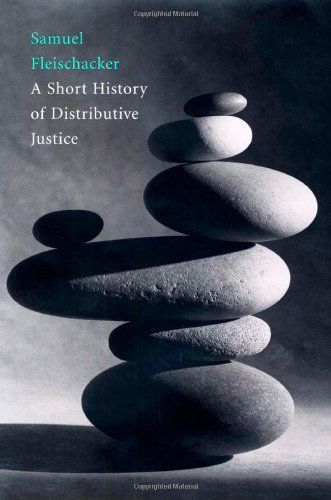
Distributive justice in its modern sense calls on the state to guarantee that everyone is supplied with a certain level of material means. Samuel Fleischacker argues that guaranteeing aid to the poor is a modern idea, developed only in the last two centuries. Earlier notions of justice, including Aristotle’s, were concerned with the distribution of political office, not of property. It was only in the eighteenth century, in the work of philosophers such as Adam Smith and Immanuel Kant, that justice began to be applied to the problem of poverty. To attribute a longer pedigree to distributive justice is to fail to distinguish between justice and charity. Fleischacker explains how confusing these principles has created misconceptions about the historical development of the welfare state. Socialists, for instance, often claim that modern economics obliterated ancient ideals of equality and social justice. Free-market promoters agree but applaud the apparent triumph of skepticism and social-scientific rigor. Both interpretations overlook the gradual changes in thinking that yielded our current assumption that justice calls for everyone, if possible, to be lifted out of poverty. By examining major writings in ancient, medieval, and modern political philosophy, Fleischacker shows how we arrived at the contemporary meaning of distributive justice.
Nicomachean Ethics VI is considered one of classical philosophy’s greatest achievements. Aristotle on Practical Wisdom is the first full-scale commentary on this work to be issued in over a century, and is the most comprehensive and philosophically illuminating to date. A meticulous translation coupled with facing-page analysis enables readers to engage directly with the account of phronêsis or practical wisdom that Aristotle is developing, while a full introduction locates that account in the context of his ethical thought and of later ethical thought more generally.The commentary discusses the text line by line, illuminating obscure passages, explaining technical ones, and providing a new overall interpretation of the work and the nature of practical reason. A companion volume, Action, Contemplation, and Happiness, expands on this interpretation to provide a startling new picture of Aristotle’s thought as a whole. Although the two books can be approached separately, together they constitute one of the most daring and original contemporary readings of Aristotle’s philosophy. Aimed at committed students of these notoriously difficult writings, C. D. C. Reeve’s engaging and lucid books should find a wide audience among philosophers, classicists, and all readers willing to wrestle with a thinker of unparalleled subtlety, depth, and scope.
ما از اخلاق چه انتظاری داریم؟ این سوال شاید تاحدودی برای عموم مردم و یا متخصصان این رشته قابل پاسخ باشد؛ اینکه خوب بودن را به ما بیاموزد و در تنظیم روابط فردی م...

جشن کتاب تهران به ایستگاه سی و یکم رسیده است. حال و احوال نشر کتاب خوب نیست و باید فرهنگدوستان را به خرید و هدیه دادن کتاب ترغیب نمود. خانه اخلاقپژوهان جوان ب...

بنیاد کتابهای اخلاق اسلامی عمدتا پالایش جان از آلودگیها و آراستن آن به زیباییها است. اندیشه محوری این قبیل کتابها آن است که انسان فعلی آنی نیست که باید باشد...

-
0 Comments