Notice: تابع WP_Block_Type_Registry::register به طورنادرست فراخوانی شد. نامهای نوع بلوک نباید حروف بزرگ داشته باشند. لطفاً برای اطلاعات بیشتر، اشکال زدایی در وردپرس را مشاهده کنید. (این پیام در نگارش 5.0.0 افزوده شده است.) in /home/ethicsho/public_html/wp-includes/functions.php on line 5313
Warning: Use of undefined constant TDC_PATH_LEGACY - assumed 'TDC_PATH_LEGACY' (this will throw an Error in a future version of PHP) in /home/ethicsho/public_html/wp-content/plugins/td-composer/td-composer.php on line 109
Warning: Use of undefined constant TDSP_THEME_PATH - assumed 'TDSP_THEME_PATH' (this will throw an Error in a future version of PHP) in /home/ethicsho/public_html/wp-content/plugins/td-composer/td-composer.php on line 113 بایگانیهای 9780805848489 - خانه اخلاق پژوهان جوان Notice: Trying to access array offset on value of type bool in /home/ethicsho/public_html/wp-content/plugins/wp-ulike/inc/general-functions.php on line 807
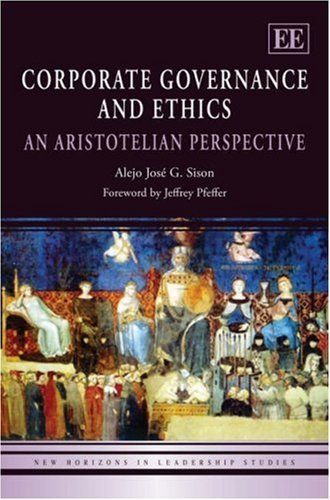
Corporate Governance and Ethics is an illuminating and practical reading of Aristotle’s Politics for today’s corporate directors. With a deft synthesis of ethics, economics and politics, Alejo Sison elevates the discussion of corporate governance out of the realm of abstract rules and structures into a more effective form of Aristotelian politics. He argues that corporate governance is a human practice where subjective, ethical conditions outweigh the mastery of techniques, since the firm is not a mere production function but, above all, a community of workers. Corporate governance issues are discussed in a holistic fashion, using international case studies to embed the discussion in environments defined by their economic, legal and cultural systems. One of the author’s key messages is that reform starts with the ethical and political education of directors.Alejo Sison uses an integrative approach to corporate governance that incorporates ethical-political considerations with the economic and legal dimensions of issues. He backs his theoretical claims with a series of case histories including Fiat from Italy, Cheung Kong Holdings and Whampoa Limited from China, Banco Popular from Spain and United Airlines from the US. He provides a special focus on the education of corporate directors in accordance with the principles of Aristotle’s Politics. This accessible book will appeal to corporate directors, executives and managers; academics and students with an interest in corporate governance, leadership and ethics, corporate citizenship and corporate social responsibility; and modern readers of Aristotle’s virtue theory and politics in relation to business ethics.
This beautifully written book by one of the world’s leading moral philosophers argues that the key to a fulfilled life is to pursue wholeheartedly what one cares about, that love is the most authoritative form of caring, and that the purest form of love is, in a complicated way, self-love. Harry Frankfurt writes that it is through caring that we infuse the world with meaning. Caring provides us with stable ambitions and concerns; it shapes the framework of aims and interests within which we lead our lives. The most basic and essential question for a person to raise about the conduct of his or her life is not what he or she should care about but what, in fact, he or she cannot help caring about. The most important form of caring, Frankfurt writes, is love, a nonvoluntary, disinterested concern for the flourishing of what is loved. Love is so important because meaningful practical reasoning must be grounded in ends that we do not seek only to attain other ends, and because it is in loving that we become bound to final ends desired for their own sakes. Frankfurt argues that the purest form of love is self-love. This sounds perverse, but self-love–as distinct from self-indulgence–is at heart a disinterested concern for whatever it is that the person loves. The most elementary form of self-love is nothing more than the desire of a person to love. Insofar as this is true, self-love is simply a commitment to finding meaning in our lives.
Tenure is the abortion issue of the academy, igniting arguments and inflaming near-religious passions. To some, tenure is essential to academic freedom and a magnet to recruit and retain top-flight faculty. To others, it is an impediment to professorial accountability and a constraint on institutional flexibility and finances. But beyond anecdote and opinion, what do we really know about how tenure works?In this unique book, Richard Chait and his colleagues offer the results of their research on key empirical questions. Are there circumstances under which faculty might voluntarily relinquish tenure? When might new faculty actually prefer non-tenure track positions? Does the absence of tenure mean the absence of shared governance? Why have some colleges abandoned tenure while others have adopted it? Answers to these and other questions come from careful studies of institutions that mirror the American academy: research universities and liberal arts colleges, including both highly selective and less prestigious schools.Lucid and straightforward, The Questions of Tenure offers vivid pictures of academic subcultures. Chait and his colleagues conclude that context counts so much that no single tenure system exists. Still, since no academic reward carries the cachet of tenure, few institutions will initiate significant changes without either powerful external pressures or persistent demands from new or disgruntled faculty.
ما از اخلاق چه انتظاری داریم؟ این سوال شاید تاحدودی برای عموم مردم و یا متخصصان این رشته قابل پاسخ باشد؛ اینکه خوب بودن را به ما بیاموزد و در تنظیم روابط فردی م...

جشن کتاب تهران به ایستگاه سی و یکم رسیده است. حال و احوال نشر کتاب خوب نیست و باید فرهنگدوستان را به خرید و هدیه دادن کتاب ترغیب نمود. خانه اخلاقپژوهان جوان ب...

بنیاد کتابهای اخلاق اسلامی عمدتا پالایش جان از آلودگیها و آراستن آن به زیباییها است. اندیشه محوری این قبیل کتابها آن است که انسان فعلی آنی نیست که باید باشد...

-
0 Comments