Notice: تابع WP_Block_Type_Registry::register به طورنادرست فراخوانی شد. نامهای نوع بلوک نباید حروف بزرگ داشته باشند. لطفاً برای اطلاعات بیشتر، اشکال زدایی در وردپرس را مشاهده کنید. (این پیام در نگارش 5.0.0 افزوده شده است.) in /home/ethicsho/public_html/wp-includes/functions.php on line 5313
Warning: Use of undefined constant TDC_PATH_LEGACY - assumed 'TDC_PATH_LEGACY' (this will throw an Error in a future version of PHP) in /home/ethicsho/public_html/wp-content/plugins/td-composer/td-composer.php on line 109
Warning: Use of undefined constant TDSP_THEME_PATH - assumed 'TDSP_THEME_PATH' (this will throw an Error in a future version of PHP) in /home/ethicsho/public_html/wp-content/plugins/td-composer/td-composer.php on line 113 بایگانیهای 9780805840636 - خانه اخلاق پژوهان جوان Notice: Trying to access array offset on value of type bool in /home/ethicsho/public_html/wp-content/plugins/wp-ulike/inc/general-functions.php on line 807
This is an OCR edition without illustrations or index. It may have numerous typos or missing text. However, purchasers can download a free scanned copy of the original rare book from GeneralBooksClub.com. You can also preview excerpts from the book there. Purchasers are also entitled to a free trial membership in the General Books Club where they can select from more than a million books without charge. Original Published by: Printed for R. Gosling in 1735 in 357 pages; Subjects: Political science; Natural law; International law; International law and relations; Duty; Conduct of life; Ethics; Law / International; Law / Jurisprudence; Law / Natural Law; Philosophy / General; Philosophy / Ethics & Moral Philosophy; Philosophy / Political;
Why should we be tolerant? What does it mean to “live and let live”? What ought to be tolerated and what not? Toleration: A Critical Introductionis a comprehensive and accessible philosophical introduction to toleration. The first part of the book clearly and coherently introduces and assesses the major theoretical accounts of toleration, examining toleration in light of challenges from skepticism, value pluralism and reasonableness. Catriona McKinnon also draws from those philosophers whose theories are central to toleration, from Locke and Mill to Rawls. In the second part of the book, McKinnon applies the theories of toleration to urgent contemporary problems such as female circumcision, the French headscarves affair, artistic freedom, pornography and censorship, and holocaust denial. Toleration: ACritical Introductionprovides a solid theoretical base to those who value toleration, whilst considering the challenges toleration faces in practice. It provides anideal starting point for those coming to the topic for the first time, and anyone interested in the challenges facing toleration today.
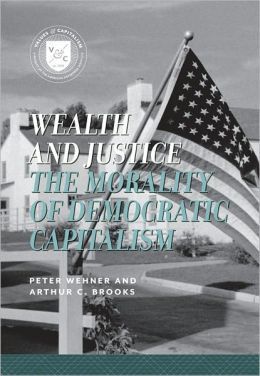
In Wealth and Justice, Arthur C. Brooks and Peter Wehner explore how America’s system of democratic capitalism both depends upon and cultivates an intricate social web of families, churches, and communities. Far from oppressing and depriving individuals, the free market system uniquely enables Americans to exercise vocation and experience the dignity of self-sufficiency, all while contributing to the common good. The fruits of this system include the alleviation of poverty, better health, and greater access to education than at any other time in human history-but also a more significant prosperity: the flourishing of the human soul.
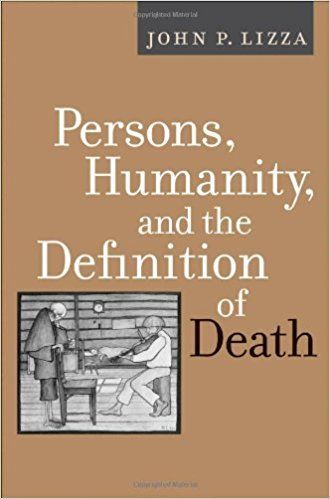
In this riveting and timely work, John P. Lizza presents the first comprehensive analysis of personhood and humanity in the context of defining death. Rejecting the common assumption that human or personal death is simply a biological phenomenon for biologists or physicians to define, Lizza argues that the definition of death is also a matter for metaphysical reflection, moral choice, and cultural acceptance. Lizza maintains that defining death remains problematic because basic ontological, ethical, and cultural issues have never been adequately addressed. Advances in life-sustaining technology and organ transplantation have led to revision of the legal definition of death. It is generally accepted that death occurs when all functions of the brain have ceased. However, legal and clinical cases involving postmortem pregnancy, individuals in permanent vegetative state, those with anencephaly, and those with severe dementia challenge the neurological criteria. Is “brain death” really death? Should the neurological criteria be expanded to include individuals in permanent vegetative state, with anencephaly, and those with severe dementia? What metaphysical, ethical, and cultural considerations are relevant to answering such questions? Although Lizza accepts a pluralistic approach to the legal definition of death, he proposes a nonreductive, substantive view in which persons are understood as “constituted by” human organisms. This view, he argues, provides the best account of human nature as biological, moral, and cultural and supports a consciousness-related formulation of death. Through an analysis of legal and clinical cases and a discussion of alternative concepts of personhood, Lizza casts greater light on the underlying themes of a complex debate.
ما از اخلاق چه انتظاری داریم؟ این سوال شاید تاحدودی برای عموم مردم و یا متخصصان این رشته قابل پاسخ باشد؛ اینکه خوب بودن را به ما بیاموزد و در تنظیم روابط فردی م...

جشن کتاب تهران به ایستگاه سی و یکم رسیده است. حال و احوال نشر کتاب خوب نیست و باید فرهنگدوستان را به خرید و هدیه دادن کتاب ترغیب نمود. خانه اخلاقپژوهان جوان ب...

بنیاد کتابهای اخلاق اسلامی عمدتا پالایش جان از آلودگیها و آراستن آن به زیباییها است. اندیشه محوری این قبیل کتابها آن است که انسان فعلی آنی نیست که باید باشد...

-
0 Comments