Notice: تابع WP_Block_Type_Registry::register به طورنادرست فراخوانی شد. نامهای نوع بلوک نباید حروف بزرگ داشته باشند. لطفاً برای اطلاعات بیشتر، اشکال زدایی در وردپرس را مشاهده کنید. (این پیام در نگارش 5.0.0 افزوده شده است.) in /home/ethicsho/public_html/wp-includes/functions.php on line 5313
Warning: Use of undefined constant TDC_PATH_LEGACY - assumed 'TDC_PATH_LEGACY' (this will throw an Error in a future version of PHP) in /home/ethicsho/public_html/wp-content/plugins/td-composer/td-composer.php on line 109
Warning: Use of undefined constant TDSP_THEME_PATH - assumed 'TDSP_THEME_PATH' (this will throw an Error in a future version of PHP) in /home/ethicsho/public_html/wp-content/plugins/td-composer/td-composer.php on line 113 بایگانیهای 9780802845542 - خانه اخلاق پژوهان جوان Notice: Trying to access array offset on value of type bool in /home/ethicsho/public_html/wp-content/plugins/wp-ulike/inc/general-functions.php on line 807
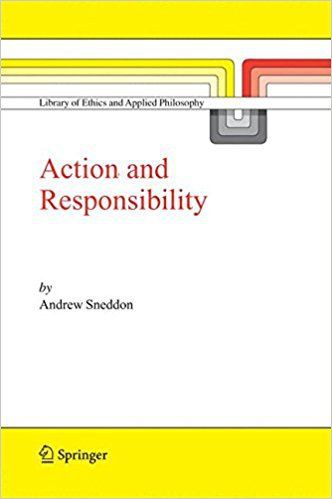
What makes an event count as an action? Typical answers appeal to the way in which the event was produced: e.g., perhaps an arm movement is an action when caused by mental states (in particular ways), but not when caused in other ways. Andrew Sneddon argues that this type of answer, which he calls “productionism”, is methodologically and substantially mistaken. In particular, productionist answers to this question tend to be either individualistic or foundationalist, or both, without explicit defence. Instead, Sneddon offers an externalist, anti-foundationalist account of what makes an event count as an action, which he calls neo-ascriptivism, after the work of H.L.A. Hart. Specifically, Sneddon argues that our practices of attributing moral responsibility to each other are at least partly constitutive of events as actions.
Russell Hardin presents a new explication of David Hume’s moral and political theory. With Hume, he holds that our normative views can be scientifically explained but they cannot be justified as true. Hume argued for the psychological basis of such views. In particular, he argued for sympathy as the mirroring of the psychological sensations and emotions of others. By placing Hume in the developing tradition of social science, as a strong forerunner of his younger friend Adam Smith, Hardin demonstrates Hume’s strong strategic sense, his nascent utilitarianism, his powerful theory of convention as a main source of social and political order, and his recognition of moral and political theory as a single enterprise.”Worthy of hearty recommendation.”–Lee Hardy, The Review of MetaphysicsRussell Hardin is Professor of Politics at New York University.Preface1. Hume’s Place in History2. Moral Psychology3. Strategic Analysis4. Convention5. Political Theory6. Justice As Order7. Utilitarianism8. Value Theory9. RetrospectiveReferencesEndnotes
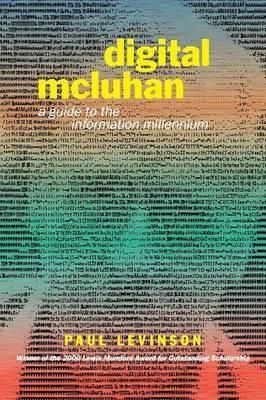
Marshall McLuhan died on the last day of 1980, on the doorstep of the personal computer revolution. Yet McLuhan’s ideas anticipated a world of media in motion, and its impact on our lives on the dawn of the new millennium.Paul Levinson examines why McLuhan’s theories about media are more important to us today than when they were first written, and why the Wired generation is now turning to McLuhan’s work to understand the global village in the digital age.
This book is a systematic and constructive treatment of a number of traditional issues at the foundations of ethics. These issues concern the objectivity of ethics, the possibility and nature of moral knowledge, the relationship between the moral point of view and a scientific or naturalist world-view, the nature of moral value and obligation, and the role of morality in a person’s rational lifeplan. In striking contrast to traditional and more recent work in the field, David Brink offers an integrated defense of the objectivity of ethics.
Is it possible for postmodernism to offer coherent accounts of ethics in a fragmented social and intellectual world? In this collection, a distinguished international gathering of philosophers and literary scholars address the renewed interest in the literary text as a focus for ethical issues. Exponents of this trend include Charles Taylor, Bernard Williams, Iris Murdoch, Cora Diamond, Richard Rorty and Martha Nussbaum–a contributor and a key figure in this volume. This book assesses the significance of this development for ethical and literary theory.
ما از اخلاق چه انتظاری داریم؟ این سوال شاید تاحدودی برای عموم مردم و یا متخصصان این رشته قابل پاسخ باشد؛ اینکه خوب بودن را به ما بیاموزد و در تنظیم روابط فردی م...

جشن کتاب تهران به ایستگاه سی و یکم رسیده است. حال و احوال نشر کتاب خوب نیست و باید فرهنگدوستان را به خرید و هدیه دادن کتاب ترغیب نمود. خانه اخلاقپژوهان جوان ب...

بنیاد کتابهای اخلاق اسلامی عمدتا پالایش جان از آلودگیها و آراستن آن به زیباییها است. اندیشه محوری این قبیل کتابها آن است که انسان فعلی آنی نیست که باید باشد...

-
0 Comments