Notice: تابع WP_Block_Type_Registry::register به طورنادرست فراخوانی شد. نامهای نوع بلوک نباید حروف بزرگ داشته باشند. لطفاً برای اطلاعات بیشتر، اشکال زدایی در وردپرس را مشاهده کنید. (این پیام در نگارش 5.0.0 افزوده شده است.) in /home/ethicsho/public_html/wp-includes/functions.php on line 5313
Warning: Use of undefined constant TDC_PATH_LEGACY - assumed 'TDC_PATH_LEGACY' (this will throw an Error in a future version of PHP) in /home/ethicsho/public_html/wp-content/plugins/td-composer/td-composer.php on line 109
Warning: Use of undefined constant TDSP_THEME_PATH - assumed 'TDSP_THEME_PATH' (this will throw an Error in a future version of PHP) in /home/ethicsho/public_html/wp-content/plugins/td-composer/td-composer.php on line 113 بایگانیهای 9780792369196 - خانه اخلاق پژوهان جوان Notice: Trying to access array offset on value of type bool in /home/ethicsho/public_html/wp-content/plugins/wp-ulike/inc/general-functions.php on line 807
As a continuation of the older tradition of classical liberalism, libertarian thinking draws on a rich body of thought and scholarship. Contemporary libertarian scholars are continuing that tradition by making substantial contributions to such fields as philosophy, jurisprudence, economics, evolutionary psychology, political theory, and history, in both academia and politics. With more than 300 A-to-Z signed entries written by top scholars, The Encyclopedia of Libertarianism is purposed to be a useful compilation of and introduction to libertarian scholarship. The Encyclopedia starts with an introductory essay offering an extensive historical and thematic overview of key thinkers, events, and publications in the development of libertarian thought. The Reader’s Guide groups content for researchers and students alike, allowing them to study libertarianism topically, biographically, and by public policy issues.Key FeaturesEntries conclude with bibliographies and references for further reading and cross-references to related entries.Each entry provides an introduction to a topic or policy question relevant to libertarianism or a biography of a person who has had an impact on libertarianism.Editors take special care to ensure entries clearly explain libertarian approaches to issues, do not take sides on disputed matters or engage in polemics, and represent the views of all sides fairly and accurately.
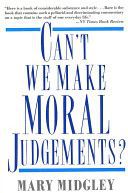
In this book, Mary Midgely turns a spotlight on the fashionable view that we no longer need or use moral judgements. She shows how the question of whether or not we can make moral judgements must inevitably affect our attitudes to the law and its institutions, but also to events that occur in our daily lives.
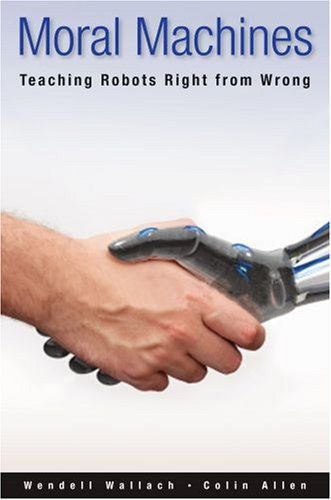
Computers are already approving financial transactions, controlling electrical supplies, and driving trains. Soon, service robots will be taking care of the elderly in their homes, and military robots will have their own targeting and firing protocols. Colin Allen and Wendell Wallach argue that as robots take on more and more responsibility, they must be programmed with moral decision-making abilities, for our own safety. Taking a fast paced tour through the latest thinking about philosophical ethics and artificial intelligence, the authors argue that even if full moral agency for machines is a long way off, it is already necessary to start building a kind of functional morality, in which artificial moral agents have some basic ethical sensitivity. But the standard ethical theories don’t seem adequate, and more socially engaged and engaging robots will be needed. As the authors show, the quest to build machines that are capable of telling right from wrong has begun. Moral Machines is the first book to examine the challenge of building artificial moral agents, probing deeply into the nature of human decision making and ethics.
This volume constitutes the thoroughly refereed post-conference proceedings of the Third International Conference on Ethics and Policy of Biometrics and International Data Sharing, ICEB 2010, held in Hong Kong, during January 4-5, 2010. The 25 revised full papers presented were carefully reviewed and selected for inlcusion in the book. The papers are organized in topical sections on Privacy Protection and Challenges, Legal Challenges, Engineering and Social Challenges, Ethical and Medical Concerns, Policiy Issues and Deployments in Asia, Challenges in Large Scale Biometrics Identification.
ما از اخلاق چه انتظاری داریم؟ این سوال شاید تاحدودی برای عموم مردم و یا متخصصان این رشته قابل پاسخ باشد؛ اینکه خوب بودن را به ما بیاموزد و در تنظیم روابط فردی م...

جشن کتاب تهران به ایستگاه سی و یکم رسیده است. حال و احوال نشر کتاب خوب نیست و باید فرهنگدوستان را به خرید و هدیه دادن کتاب ترغیب نمود. خانه اخلاقپژوهان جوان ب...

بنیاد کتابهای اخلاق اسلامی عمدتا پالایش جان از آلودگیها و آراستن آن به زیباییها است. اندیشه محوری این قبیل کتابها آن است که انسان فعلی آنی نیست که باید باشد...

-
0 Comments