Notice: تابع WP_Block_Type_Registry::register به طورنادرست فراخوانی شد. نامهای نوع بلوک نباید حروف بزرگ داشته باشند. لطفاً برای اطلاعات بیشتر، اشکال زدایی در وردپرس را مشاهده کنید. (این پیام در نگارش 5.0.0 افزوده شده است.) in /home/ethicsho/public_html/wp-includes/functions.php on line 5313
Warning: Use of undefined constant TDC_PATH_LEGACY - assumed 'TDC_PATH_LEGACY' (this will throw an Error in a future version of PHP) in /home/ethicsho/public_html/wp-content/plugins/td-composer/td-composer.php on line 109
Warning: Use of undefined constant TDSP_THEME_PATH - assumed 'TDSP_THEME_PATH' (this will throw an Error in a future version of PHP) in /home/ethicsho/public_html/wp-content/plugins/td-composer/td-composer.php on line 113 بایگانیهای 9780791415405 - خانه اخلاق پژوهان جوان Notice: Trying to access array offset on value of type bool in /home/ethicsho/public_html/wp-content/plugins/wp-ulike/inc/general-functions.php on line 807
One of this century’s most important philosophers here focuses on Plato’s PROTAGORAS, PHAEDO, REPUBLIC, and PHILEBUS and on Aristotle’s three moral treatises to show the essential continuity of Platonic and Aristotelian reflection on the nature of the good. In so doing Gadamer not only succeeds in giving us an incisive example of his interpretive art but also gives us a clearer picture of the ethical dimension of his own philosophy and the practical implications of hermeneutical theory.
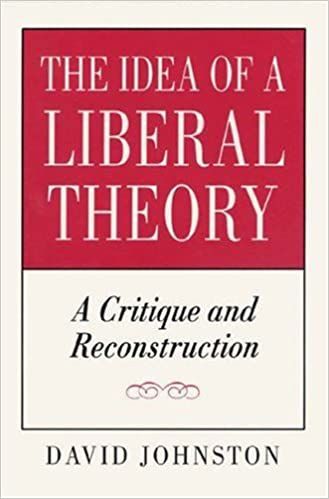
Liberalism, the founding philosophy of many constitutional democracies, has been criticized in recent years from both the left and the right for placing too much faith in individual rights and distributive justice. David Johnston argues for a reinterpretation of liberal principles he contends will restore liberalism to a position of intellectual leadership from which it can guide political and social reforms. He begins by surveying the three major contemporary schools of liberal political thought–rights-based, perfectionist, and political liberalism– and, by weeding out their weaknesses, sketches a new approach he calls humanist liberalism. Valuable not only for its contribution to academic scholarship but also as a means of introducing liberal political thought to serious undergraduate students.–Choice Raises … a tremendous number of criticisms of the standard accounts of liberal politics. The book is novel, built on solid foundations, [and] very powerful, clever, well thought out.–Alan Ryan, Princeton University This clear and useful new work moves through a swift yet thorough critique of three leading liberal philosophies to reach a sketch of a new, improved theory.–Virginia Quarterly Review
Robert Merrihew Adams has been a leader in renewing philosophical respect for the idea that moral obligation may be founded on the commands of God. This collection of Adams’ essays, two of which are previously unpublished, draws from his extensive writings on philosophical theology that discuss metaphysical, epistemological, and ethical issues surrounding the concept of God–whether God exists or not, what God is or would be like, and how we ought to relate ourselves to such a being. Adams studies the relation between religion and ethics, delving into an analysis of moral arguments for theistic belief. In several essays, he applies contemporary studies in the metaphysics of individuality, possibility and necessity, and counterfactual conditionals to issues surrounding the existence of God and problems of evil.
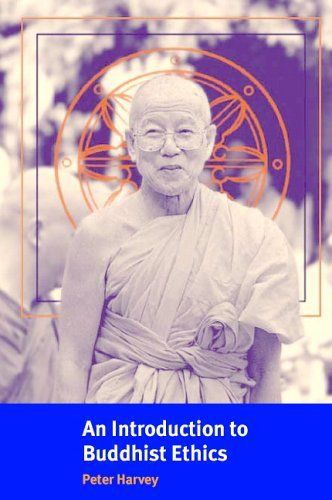
This systematic introduction to Buddhist ethics is aimed at anyone interested in Buddhism, including students, scholars and general readers. Peter Harvey is the author of the acclaimed Introduction to Buddhism (Cambridge, 1990), and his new book is written in a clear style, assuming no prior knowledge. At the same time it develops a careful, probing analysis of the nature and practical dynamics of Buddhist ethics in both its unifying themes and in the particularities of different Buddhist traditions. The book applies Buddhist ethics to a range of issues of contemporary concern: humanity’s relationship with the rest of nature; economics; war and peace; euthanasia; abortion; the status of women; and homosexuality. Professor Harvey draws on texts of the main Buddhist traditions, and on historical and contemporary accounts of the behaviour of Buddhists, to describe existing Buddhist ethics, to assess different views within it, and to extend its application into new areas.
ما از اخلاق چه انتظاری داریم؟ این سوال شاید تاحدودی برای عموم مردم و یا متخصصان این رشته قابل پاسخ باشد؛ اینکه خوب بودن را به ما بیاموزد و در تنظیم روابط فردی م...

جشن کتاب تهران به ایستگاه سی و یکم رسیده است. حال و احوال نشر کتاب خوب نیست و باید فرهنگدوستان را به خرید و هدیه دادن کتاب ترغیب نمود. خانه اخلاقپژوهان جوان ب...

بنیاد کتابهای اخلاق اسلامی عمدتا پالایش جان از آلودگیها و آراستن آن به زیباییها است. اندیشه محوری این قبیل کتابها آن است که انسان فعلی آنی نیست که باید باشد...

-
0 Comments