Notice: تابع WP_Block_Type_Registry::register به طورنادرست فراخوانی شد. نامهای نوع بلوک نباید حروف بزرگ داشته باشند. لطفاً برای اطلاعات بیشتر، اشکال زدایی در وردپرس را مشاهده کنید. (این پیام در نگارش 5.0.0 افزوده شده است.) in /home/ethicsho/public_html/wp-includes/functions.php on line 5313
Warning: Use of undefined constant TDC_PATH_LEGACY - assumed 'TDC_PATH_LEGACY' (this will throw an Error in a future version of PHP) in /home/ethicsho/public_html/wp-content/plugins/td-composer/td-composer.php on line 109
Warning: Use of undefined constant TDSP_THEME_PATH - assumed 'TDSP_THEME_PATH' (this will throw an Error in a future version of PHP) in /home/ethicsho/public_html/wp-content/plugins/td-composer/td-composer.php on line 113 بایگانیهای 9780786868919 - خانه اخلاق پژوهان جوان Notice: Trying to access array offset on value of type bool in /home/ethicsho/public_html/wp-content/plugins/wp-ulike/inc/general-functions.php on line 807
This book is about the gap between the moral demand on us and our natural capacities to meet it. John Hare starts with Kants statement of the moral demand and his acknowledgement of this gap. Hare then analyses Kants use of the resources of the Christian tradition to make sense of this gap,especially the notions of revelation, providence, and Gods grace. Kant reflects the traditional way of making sense of this gap, which is to invoke Gods assistance in bridging it. Hare goes on to examine various contemporary philosophers who do not use these resources. He considers three mainstrategies: exaggerating our natural capacities, diminishing the moral demand, and finding some naturalistic substitute for Gods assistance. He argues that these strategies do not work, and that we are therefore left with the gap and with the problem that it is unreasonable to demand of ourselves astandard which we cannot reach. In the final section of the book, Hare looks in more detail at the Christian doctrines of atonement, justification, and sanctification. He discusses Kierkegaards account of the relation between the ethical life and the Christian life, and ends by considering humanforgiveness, and the ways in which Gods forgiveness is both like and unlike our forgiveness of each other. The book is intended for those interested in both ethical theory and Christian theology.
Epistemology has for a long time focused on the concept of knowledge and tried to answer questions such as whether knowledge is possible and how much of it there is. Often missing from this inquiry, however, is a discussion on the value of knowledge. In The Value of Knowledge and the Pursuit of Understanding Jonathan Kvanvig argues that epistemology properly conceived cannot ignore the question of the value of knowledge. He also questions one of the most fundamental assumptions in epistemology, namely that knowledge is always more valuable than the value of its subparts. Taking Platos’ Meno as a starting point of his discussion, Kvanvig tackles the different arguments about the value of knowledge and comes to the conclusion that knowledge is less valuable than generally assumed. Clearly written and well argued, the book will appeal to students and professionals in epistemology.
K. Danner Clouser is one of the most important figures in establishing and shaping the fields of medical ethics, bioethics, and the philosophy of education in the second half of the twentieth century. Clouser challenged many established approaches to moral theory and offered innovative strategies for integrating the humanities into professional education, especially that of physicians and nurses. The contributions published in Building Bioethics: Conversations with Clouser and Friends on Medical Ethics are unique both in their devotion to a critical review of his contributions, and in bringing together internationally known figures in bioethics, medical ethics, and philosophy of medicine to comment upon Clouser’s work. These leaders of the field include Tom Beauchamp, Daniel Callahan, James Childress, Nancy Dubler, H. Tristram Engelhardt, Al Jonsen, Loretta Kopelman, Larry McCullough, John Moskop, and Robert Veatch. This book merits special attention from those interested in bioethics, philosophy of medicine, medical ethics, philosophy, medical education, religious studies, and nursing education.
In this important book, Dr. Laura Schlessinger shows men and women that they can have a Good Life no matter how Bad their Childhood. For each of us, there is a connection between our early family dynamics and experiences and our current attitudes and decisions. Many of the people Dr. Laura has helped did not realize how their histories impacted their adult lives, or how their choices in people, repetitive situations, and decisions — even their emotional reactions — were connected to those early negative experiences, playing a major role in their current unhappiness. For these people and millions like them, too much time is dedicated to repeating the ugly dynamics of childhood in a vain attempt to repair or cope with deep hurt and longings. Too often they use their emotional pain to control others or excuse their own inappropriate and destructive behaviors. Some turn to therapy, only to find themselves trapped in their self-pitying victim mode, robbed of optimism, confidence, and growth. Dr. Laura will help you realize that no matter what circumstances you came from or currently live in, you are ultimately responsible for how you react to them. The acceptance of this basic truth is the source of your power to secure the Good Life you long for. In her signature straightforward style, with real-life examples, Dr. Laura shows you what you will gain by not being satisfied with an identity as a victim, or even as a survivor — but striving to be a victor! In Bad Childhood — Good Life, Dr. Laura will guide you to accept the truth of the assaults on your psyche and soul, understand your unique coping style and how it impacts your daily thoughts and actions, and help you embrace a life of more peace and happiness. Bad Childhood — Good Life comes from a compassionate and personal place. Dr. Laura also reveals some of her own experiences with a difficult childhood and what efforts it took to attain a Good Life. She writes, “My resilience has paid off, and I’m doing the best I can with what I’ve got.” Now you can, too.
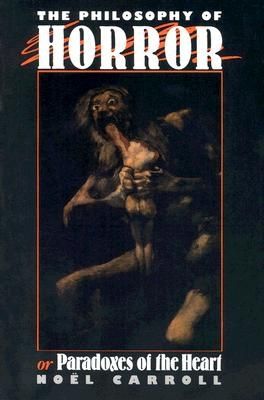
For decades, the horror genre has been a major popular entertainment and has dominated the publishing and film industries. Yet there exists no philosophical examination of the genre – the time for its aesthetic analysis is ripe. Noel Carroll, film scholar and philosopher, offers the first serious look at the aesthetics of horror. In this book he discusses the nature and narrative structures of the genre, dealing with horror as a “transmedia” phenomenon. A fan and serious student of the horror genre, Carroll brings to bear his comprehensive knowledge of obscure and forgotten works, as well as of the horror masterpieces. Working from a philosophical perspective, he tries to account for how people can find pleasure in having their wits scared out of them. What, after all, are those “paradoxes of the heart” that make us want to be horrified?
ما از اخلاق چه انتظاری داریم؟ این سوال شاید تاحدودی برای عموم مردم و یا متخصصان این رشته قابل پاسخ باشد؛ اینکه خوب بودن را به ما بیاموزد و در تنظیم روابط فردی م...

جشن کتاب تهران به ایستگاه سی و یکم رسیده است. حال و احوال نشر کتاب خوب نیست و باید فرهنگدوستان را به خرید و هدیه دادن کتاب ترغیب نمود. خانه اخلاقپژوهان جوان ب...

بنیاد کتابهای اخلاق اسلامی عمدتا پالایش جان از آلودگیها و آراستن آن به زیباییها است. اندیشه محوری این قبیل کتابها آن است که انسان فعلی آنی نیست که باید باشد...

-
0 Comments