Notice: تابع WP_Block_Type_Registry::register به طورنادرست فراخوانی شد. نامهای نوع بلوک نباید حروف بزرگ داشته باشند. لطفاً برای اطلاعات بیشتر، اشکال زدایی در وردپرس را مشاهده کنید. (این پیام در نگارش 5.0.0 افزوده شده است.) in /home/ethicsho/public_html/wp-includes/functions.php on line 5313
Warning: Use of undefined constant TDC_PATH_LEGACY - assumed 'TDC_PATH_LEGACY' (this will throw an Error in a future version of PHP) in /home/ethicsho/public_html/wp-content/plugins/td-composer/td-composer.php on line 109
Warning: Use of undefined constant TDSP_THEME_PATH - assumed 'TDSP_THEME_PATH' (this will throw an Error in a future version of PHP) in /home/ethicsho/public_html/wp-content/plugins/td-composer/td-composer.php on line 113 بایگانیهای 9780748622153 - خانه اخلاق پژوهان جوان Notice: Trying to access array offset on value of type bool in /home/ethicsho/public_html/wp-content/plugins/wp-ulike/inc/general-functions.php on line 807
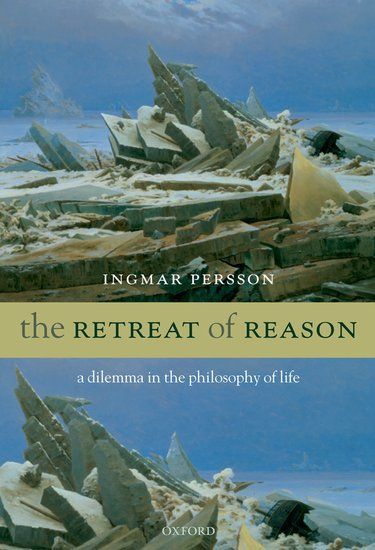
One of the main original aims of philosophy was to give us guidance about how to live our lives. The ancient Greeks typically assumed that a life led in accordance with reason, a rational life, would also be the happiest or most fulfilling. Ingmar Persson’s book resumes this project, which has been largely neglected in contemporary philosophy. But his conclusions are very different; by exploring the irrationality of our attitudes to time, our identity, and our responsibility,Persson shows that the aim of living rationally conflicts not only with the aim of leading the most fulfilling life, but also with the moral aim of promoting the maximization and just distribution of fulfilment for all. Persson also argues that neither the aim of living rationally nor any of the fulfilmentaims can be rejected as less rational than any other. We thus face a dilemma of either having to enter a retreat of reason, insulated from everyday attitudes, or making reason retreat from its aspiration to be the sole controller of our attitudes.The Retreat of Reason explores three areas in which there is a conflict between the rational life and a life dedicated to maximization of fulfilment. Persson contends that living rationally requires us to give up, first, our temporal biases; secondly, our bias towards ourselves; and, thirdly, our responsibility to the extent that it involves the notion of desert and desert-entailing notions. But giving up these attitudes is so overwhelmingly hard that the effort to do so not only makesour own lives less fulfilling, but also obstructs our efficient pursuit of the moral aim of promoting a maximum of justly distributed fulfilment.Ingmar Persson brings back to philosophy the ambition of offering a broad vision of the human condition. The Retreat of Reason challenges and disturbs some of our most fundamental ideas about ourselves.
Epistemology, or “the theory of knowledge,” is concerned with how we know what we know, what justifies us in believing what we believe, and what standards of evidence we should use in seeking truths about the world and human experience. This comprehensive introduction to the field of epistemology explains the concepts and theories central to understanding knowledge. Along with covering the traditional topics of the discipline in detail, Epistemology explores emerging areas of research. The third edition features new sections on such topics as the nature of intuition, the skeptical challenge of rational disagreement, and “the value problem” – the range of questions concerning why knowledge and justified true belief have value beyond that of merely true belief. Updated and expanded, Epistemology remains a superb introduction to one of the most fundamental fields of philosophy. Special features of the third edition of Epistemology include: * a comprehensive survey of basic concepts, major theories, and emerging research in the field* enhanced treatment of key topics such as contextualism, perception (including perceptual content), scientific hypotheses, self-evidence and the a priori, testimony, understanding, and virtue epistemology* expanded discussion of the relation between epistemology and related fields, especially philosophy of mind, philosophy of science, and ethics * increased clarity and ease of understanding for an undergraduate audience* an updated list of key literature and annotated bibliography.
Up-to-date and comprehensive, this practical best-selling text now available with an online personalized study plan, helps students learn how to deal with and apply ethical standards. The authors provide readers with the basis for discovering their own guidelines within the broad limits of professional codes of ethics and divergent theoretical positions. They raise what they consider to be central issues, present a range of diverse views on these issues, discuss their position, and provide readers with many opportunities to refine their own thinking and to actively develop their own position. The authors explore such questions as: What role do the therapist’s personal values play in the counseling relationship? What ethical responsibilities and rights do clients and therapists have? And, what considerations are involved in adapting counseling practice to diverse client populations?
Medicine and health care generate many bioethical problems and dilemmas that are of great academic, professional and public interest. This comprehensive resource is designed as a succinct yet authoritative text and reference for clinicians, bioethicists, and advanced students seeking a better understanding of ethics problems in the clinical setting. Each chapter illustrates an ethical problem that might be encountered in everyday practice; defines the concepts at issue; examines their implications from the perspectives of ethics, law and policy; and then provides a practical resolution. There are 10 key sections presenting the most vital topics and clinically relevant areas of modern bioethics. International, interdisciplinary authorship and cross-cultural orientation ensure suitability for a worldwide audience. This book will assist all clinicians in making well-reasoned and defensible decisions by developing their awareness of ethical considerations and teaching the analytical skills to deal with them effectively.
ما از اخلاق چه انتظاری داریم؟ این سوال شاید تاحدودی برای عموم مردم و یا متخصصان این رشته قابل پاسخ باشد؛ اینکه خوب بودن را به ما بیاموزد و در تنظیم روابط فردی م...

جشن کتاب تهران به ایستگاه سی و یکم رسیده است. حال و احوال نشر کتاب خوب نیست و باید فرهنگدوستان را به خرید و هدیه دادن کتاب ترغیب نمود. خانه اخلاقپژوهان جوان ب...

بنیاد کتابهای اخلاق اسلامی عمدتا پالایش جان از آلودگیها و آراستن آن به زیباییها است. اندیشه محوری این قبیل کتابها آن است که انسان فعلی آنی نیست که باید باشد...

-
0 Comments