Notice: تابع WP_Block_Type_Registry::register به طورنادرست فراخوانی شد. نامهای نوع بلوک نباید حروف بزرگ داشته باشند. لطفاً برای اطلاعات بیشتر، اشکال زدایی در وردپرس را مشاهده کنید. (این پیام در نگارش 5.0.0 افزوده شده است.) in /home/ethicsho/public_html/wp-includes/functions.php on line 5313
Warning: Use of undefined constant TDC_PATH_LEGACY - assumed 'TDC_PATH_LEGACY' (this will throw an Error in a future version of PHP) in /home/ethicsho/public_html/wp-content/plugins/td-composer/td-composer.php on line 109
Warning: Use of undefined constant TDSP_THEME_PATH - assumed 'TDSP_THEME_PATH' (this will throw an Error in a future version of PHP) in /home/ethicsho/public_html/wp-content/plugins/td-composer/td-composer.php on line 113 بایگانیهای 9780715605363 - خانه اخلاق پژوهان جوان Notice: Trying to access array offset on value of type bool in /home/ethicsho/public_html/wp-content/plugins/wp-ulike/inc/general-functions.php on line 807
Through a collection of new, previously unpublished essays, The Blackwell Guide to Kant’s Ethics addresses diverse topics crucial to our understanding of Kant’s moral philosophy and its implications for the modern age. Provides a fresh perspective on themes in Kant’s moral philosophy Addresses systematically Kant’s foundational work, Groundwork for the Metaphysics of Morals and his more specific treatment of justice and virtue in The Metaphysics of Morals Includes essays by both established scholars and rising stars Identifies common misperceptions of Kant’s thought and challenges some prevailing interpretations Shows how Kant developed and supplemented his earlier ethical thought with specific discussions of practical issues in law, international relations, personal relations, and self-regarding virtues and vices
Monte Johnson examines the most controversial aspects of Aristiotle’snatural philosophy: his teleology. Is teleology about causation or explanation?Does it exclude or obviate mechanism, determinism, or materialism? Is it focusedon the good of individual organisms, or is god or man the ultimate end of allprocesses and entities? Is teleology restricted to living things, or does itapply to the cosmos as a whole? Does it identify objectively existent causes inthe world, or is it merely a heuristic for our understanding of other causalprocesses? Johnson argues that Aristotle’s aporetic approach drives a middlecourse between these traditional oppositions, and avoids the dilemma, frequentlyurged against teleology, between backwards causation and anthropomorphism.Although these issues have been debated with extraordinary depth by Aristotlescholars, and touched upon by many in the wider philosophical and scientificcommunity as well, there is no comprehensive historical treatment of the issue. Aristotle is commonly considered the inventor of teleology, although the preciseterm originated in the eighteenth century. If teleology means the use of endsand goals in natural science, then Aristotle was rather a critical innovator ofteleological explanation. Teleological notions were widespread among hispredecessors, but Aristotle rejected their conception of extrinsic causes suchas mind or god as the primary causes for natural things. Aristotle’s radicalalternative was to assert nature itself as an internal principle of change andan end, and his teleological explanations focus on the intrinsic ends of naturalsubstances – those ends that benefit the natural thing itself. Aristotle’s use of ends was subsequently conflated with incompatible’teleological’ notions, including proofs for the existence of a providential ordesigner god, vitalism and animism, opposition to mechanism and non-teleologicalcausation, and anthropocentrism. Johnson addresses these misconceptions throughan elaboration of Aristotle’s methodological statements, as well as anexamination of the explanations actually offered in the scientific works.
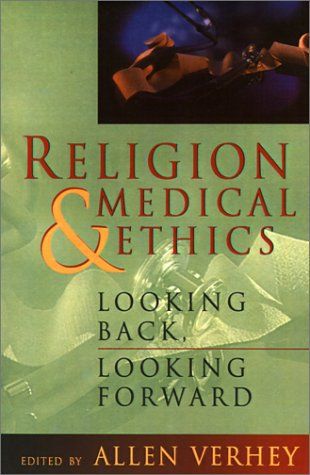
This collection of essays looks back at the contributions of theology to medical ethics in the past and sets an agenda for theological reflection on medical ethics in the future.
Larry Alexander offers a skeptical appraisal of the claim that freedom of expression is a human right. He examines the various contexts in which a right to freedom of expression might be asserted and concludes that it cannot be supported in any of these contexts. Alexander argues that the legal protection affording freedom of expression is definitely of value, although the form such protection takes will vary with historical and cultural circumstances–and, ultimately, is not a matter of human rights.
The Oxford Textbook of Clinical Research Ethics is the first systematic and comprehensive reference on clinical research ethics. Under the editorship of experts from the National Institute of Health of the United States, the book’s 73 chapters offer a wide-ranging and systematic examination of all aspects of research with human beings. Considering historical triumphs of research as well as tragedies, the textbook provides a framework for analyzing the ethical aspects of research studies with human beings. Through both conceptual analysis and systematic reviews of empirical data, the textbook examines issues ranging from scientific validity, fair subject selection, risk benefit ration, independent review, and informed consent as well as focused consideration of international research ethics, conflicts of interests and other aspects of responsible conduct of research. The editors of The Oxford Textbook of Clinical Research Ethics offer a work that critically assesses and advances scholarship in the field of human subjects research with human beings. Comprehensive in scope and research, this book will be a crucial resource for researchers in the medical sciences, as well as teachers and students alike.
ما از اخلاق چه انتظاری داریم؟ این سوال شاید تاحدودی برای عموم مردم و یا متخصصان این رشته قابل پاسخ باشد؛ اینکه خوب بودن را به ما بیاموزد و در تنظیم روابط فردی م...

جشن کتاب تهران به ایستگاه سی و یکم رسیده است. حال و احوال نشر کتاب خوب نیست و باید فرهنگدوستان را به خرید و هدیه دادن کتاب ترغیب نمود. خانه اخلاقپژوهان جوان ب...

بنیاد کتابهای اخلاق اسلامی عمدتا پالایش جان از آلودگیها و آراستن آن به زیباییها است. اندیشه محوری این قبیل کتابها آن است که انسان فعلی آنی نیست که باید باشد...

-
0 Comments