Notice: تابع WP_Block_Type_Registry::register به طورنادرست فراخوانی شد. نامهای نوع بلوک نباید حروف بزرگ داشته باشند. لطفاً برای اطلاعات بیشتر، اشکال زدایی در وردپرس را مشاهده کنید. (این پیام در نگارش 5.0.0 افزوده شده است.) in /home/ethicsho/public_html/wp-includes/functions.php on line 5313
Warning: Use of undefined constant TDC_PATH_LEGACY - assumed 'TDC_PATH_LEGACY' (this will throw an Error in a future version of PHP) in /home/ethicsho/public_html/wp-content/plugins/td-composer/td-composer.php on line 109
Warning: Use of undefined constant TDSP_THEME_PATH - assumed 'TDSP_THEME_PATH' (this will throw an Error in a future version of PHP) in /home/ethicsho/public_html/wp-content/plugins/td-composer/td-composer.php on line 113 بایگانیهای 9780691125633 - خانه اخلاق پژوهان جوان Notice: Trying to access array offset on value of type bool in /home/ethicsho/public_html/wp-content/plugins/wp-ulike/inc/general-functions.php on line 807
Most people believe that there are limits to the sacrifices that morality can demand. Although it would often be meritorious, we are not, in fact, morally required to do all that we can to promote overall good. What’s more, most people also believe that certain types of acts are simply forbidden, morally off limits, even when necessary for promoting the overall good. In this provocative analysis Kagan maintains that despite the intuitive appeal of these views, they cannot be adequately defended. In criticizing arguments for limited moral requirements as well as those for unconditionally prohibited acts, Kagan offers a sustained attack on two of the most basic features of ordinary common sense morality.
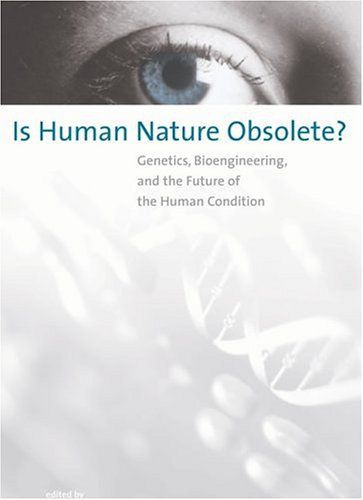
As our scientific and technical abilities expand at breathtaking speeds, concern that modern genetics and bioengineering are leading us to a posthuman future is growing. Is Human Nature Obsolete? poses the overarching question of what it is to be human against the background of these current advances in biotechnology. Its perspective is philosophical and interdisciplinary rather than technical; the focus is on questions of fundamental ontological importance rather than the specifics of medical or scientific practice.The authors—all distinguished scholars in their fields—take on questions about technology’s goals and values that are often ignored or sidelined in the face of rapid scientific advances and the highly specialized nature of technical knowledge. The essays included represent a rich variety of thought, ranging from finely nuanced philosophical and theological arguments to historical studies and cultural commentaries. Several explore the historical background of today’s biotechnology: Timothy Casey traces such developments as the emergence of cybernetic humanity from Cartesian dualism, and Diane Paul presents the history of “positive” versus coerced eugenics. Jean Bethke Elshtain discusses cloning as a “messianic project” to perfect the body and exclude natural diversity—giving as an example the elimination of Down Syndrome as an acceptable human type—while Harold Baillie calls for an examination of the metaphysical roots of personhood. Robert Proctor finds no evidence in paleontology for any “essence of humanity,” and Tom Shannon argues against materialist reductionism. Addressing social concerns, Lisa Sowle Cahill finds the possibility of a political solution to the problems raised by genetic engineering in Catholic teachings on social justice, and Langdon Winner looks critically at the “scientific enthusiasts of a posthuman future.” Taken as a whole, the book provides a humanistic overview of a subject too often considered only in its technological aspect.
(۳)۴z(BThis book is a comprehensive and comprehensible coverage of the philosophical underpinning of the integrity construct as reflected in the Western literature—a must read for researchers and scholars interested in integrity assessments. The authors have integrated insights from several disciplines, and have written in a clear and engaging style. The Czech historical sketch gives an interesting background to these discussions.(3)4y (BProfessor Vish C. Viswesvaran, Florida International University, USA This book discusses outcomes of a study by the National Institute of Mental Health, Czech Republic, examining moral integrity in the post-communist Czech-speaking environment. Chapters map the history of the Euro-Atlantic ethical disciplines from moral philosophy and psychology to evolutionary neuroscience and socio-biology. The authors emphasize the biological and social conditionality of ethics and call for greater differentiation of both research and applied psychological standards in today’s globalised world. Using a non-European ethical system – Theravada Buddhism – as a case study, the authors explore the differences in English and Czech interpretations of the religion. They analyse cognitive styles and language as central variables in formatting and interpreting moral values, with important consequences for cultural transferability of psychological instruments. This book will appeal to academics and other specialists in psychology, psychiatry, sociology and related fields, as well as to readers interested in the psychology of ethics. .
ما از اخلاق چه انتظاری داریم؟ این سوال شاید تاحدودی برای عموم مردم و یا متخصصان این رشته قابل پاسخ باشد؛ اینکه خوب بودن را به ما بیاموزد و در تنظیم روابط فردی م...

جشن کتاب تهران به ایستگاه سی و یکم رسیده است. حال و احوال نشر کتاب خوب نیست و باید فرهنگدوستان را به خرید و هدیه دادن کتاب ترغیب نمود. خانه اخلاقپژوهان جوان ب...

بنیاد کتابهای اخلاق اسلامی عمدتا پالایش جان از آلودگیها و آراستن آن به زیباییها است. اندیشه محوری این قبیل کتابها آن است که انسان فعلی آنی نیست که باید باشد...

-
0 Comments