Notice: تابع WP_Block_Type_Registry::register به طورنادرست فراخوانی شد. نامهای نوع بلوک نباید حروف بزرگ داشته باشند. لطفاً برای اطلاعات بیشتر، اشکال زدایی در وردپرس را مشاهده کنید. (این پیام در نگارش 5.0.0 افزوده شده است.) in /home/ethicsho/public_html/wp-includes/functions.php on line 5313
Warning: Use of undefined constant TDC_PATH_LEGACY - assumed 'TDC_PATH_LEGACY' (this will throw an Error in a future version of PHP) in /home/ethicsho/public_html/wp-content/plugins/td-composer/td-composer.php on line 109
Warning: Use of undefined constant TDSP_THEME_PATH - assumed 'TDSP_THEME_PATH' (this will throw an Error in a future version of PHP) in /home/ethicsho/public_html/wp-content/plugins/td-composer/td-composer.php on line 113 بایگانیهای 9780674013407 - خانه اخلاق پژوهان جوان Notice: Trying to access array offset on value of type bool in /home/ethicsho/public_html/wp-content/plugins/wp-ulike/inc/general-functions.php on line 807
If globalization is to be a benefit and not a burden to humankind, it must be governed by global institutions that are perceived by all people to be democratic and just. But before we can create such institutions, we must imagine them, and that requires a rethinking and extension of normative political theory. Global Justice and Transnational Politics encourages and advances that work.The book’s first part, “Weak Universalism,” contains essays by Amartya Sen and Leif Wenar that offer constructive developments of John Rawls’s statement of the principles a liberal polity might reasonably propose to govern its relations with other peoples. The second part, “Strong Universalism and Transnational Commitments,” contains essays by Jurgen Habermas, David Luban, Martha Nussbaum, and Thomas Pogge examining the normative sources and possible types of cross-border commitments. In the third part, “Transnational Politics and National Identities,” Habermas discusses the possibility of a democratic political order developing within the institutional framework of the European Union; Thomas McCarthy draws on Kant to show how cosmopolitanism might be reconciled with the legacy of nationalism; and Craig Calhoun tries to retrieve a positive aspect of the tradition of nationalism, namely that it provides large populations with a powerful way of imagining political community across space and time.
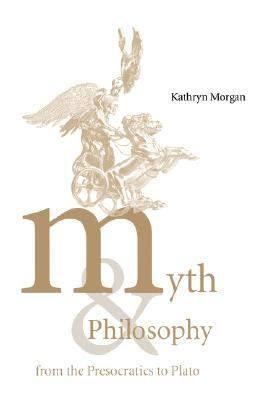
This book explores the complex relationship between myth and philosophy in writings by Greek intellectuals between the late-sixth and mid-fourth centuries BC. Although philosophy may seem far removed from mythological stories, closer examination reveals that Plato and others realized that philosophic accounts too were “stories” about reality. Kathryn Morgan shows how these philosophers used myth to express philosophic problems. Her book traces a tradition of strictly rational and philosophical myth through two centuries.
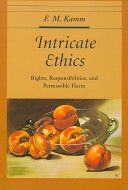
“Reading F.M. Kamm’s latest book is like watching a brilliant astronomer map an uncharted galaxy–the meticulousness and the display of mental stamina must inspire awe. There is a kind of beauty in the performance alone. Intricate Ethics is a major event in normative ethical theory by a living master of the subject…. In the end, professional moral philosophers cannot reasonably ignore Intricate Ethics…. Kamm continues to prove herself the most imaginative, detail-oriented deontologist writing in English today… Professor Kamm is in a class by herself.”–Jeffrey Brand-Ballard, Notre Dame Philosophical Reviews “The operative word in this masterful work is ‘intricate.’ Watching Kamm’s mind dissect and reconstruct different cases is like watching a juggler, riding a unicycle, carrying on a conversation, while getting dressed. It is a glorious celebration of what moral philosophy does best, and what one of its most gifted practitioners can do to enlighten our understanding of the most pressing ethical issues of our time. But it is also a rich playground for empirically minded philosophers and psychologists who want to play with the clever class of dilemmas that Kamm has created, dilemmas that will both amuse and torture generations of people.”–Marc Hauser is a Harvard College Professor and author of “Moral Minds” “Frances Kamm once again proves herself to be an astonishingly subtle and creative defender of a deontological outlook. Anyone at all interested in normative ethics will find something of value in Intricate Ethics. There are striking and original views on a wide range of topics. And no one–absolutely no one–compares to Kamm when it comes to constructing relevant test cases and carefully assessing our intuitive reactions to them. This is a master at work, at the height of her powers.”–Shelly Kagan, Clark Professor of Philosophy, Yale University “Intricate Ethics fully justifies its title. It is as deep, subtle, imaginative, and analytically rigorous as any work in moral philosophy written in a great many years. It is dense with highly original and fertile ideas supported by powerful and ingenious arguments. This book amply confirms Frances Kamm’s standing as one of the greatest living philosophers.–Jeff McMahan, Rutgers University “Kamm’s virtuosity in hypothesizing cases in defense or refutation of moral principles remains unsurpassed. Intricate Ethics is also a testament to the fruitfulness of this rarefied method of ethics. One might have thought that, having already devoted several hundred path-breaking pages to the topic of nonconsequentialism in her earlier two-volume Morality, Mortality, it would have been impossible to break much new ground in this sequel. Yet what Kamm has to say here on the topics of harming and saving from harm is as novel, arresting, and insightful as ever.”–Michael Otsuka, Professor of Philosophy, University College London “Kamm …is the most sophisticated of the contemporary exponents of “intuitionist” or “nonconsequentialist” ethics…No one else makes such extraordinarily meticulous and penetrating attempts to extract the principles behind our ordinary moral intuitions…I highly recommend it as an inclusive and subtle attempt to work out nonconsequentialism on an intuitionist basis. As a bonus, Intricate Ethics also offers searching analyses of the work of Peter Unger, Peter Singer, Bernard Gert, T.M. Scanlon, Daniel Kahneman and Amos Tversky.”–Ingmar Persson, Times Literary Supplement
Adam Smith is best known as the founder of scientific economics and as an early proponent of the modern market economy. Political economy, however, was only one part of Smith’s comprehensive intellectual system. Consisting of a theory of mind and its functions in language, arts, science, and social intercourse, Smith’s system was a towering contribution to the Scottish Enlightenment. His ideas on social intercourse also served as the basis for a moral theory that provided both historical and theoretical accounts of law, politics, and economics. This Companion volume provides an examination of all aspects of Smith’s thought. Collectively, the essays take into account Smith’s multiple contexts – Scottish, British, European, Atlantic; biographical, institutional, political, philosophical – and they draw on all of his works, including student notes from his lectures. Pluralistic in approach, the volume provides a contextualist history of Smith, as well as direct philosophical engagement with his ideas.
ما از اخلاق چه انتظاری داریم؟ این سوال شاید تاحدودی برای عموم مردم و یا متخصصان این رشته قابل پاسخ باشد؛ اینکه خوب بودن را به ما بیاموزد و در تنظیم روابط فردی م...

جشن کتاب تهران به ایستگاه سی و یکم رسیده است. حال و احوال نشر کتاب خوب نیست و باید فرهنگدوستان را به خرید و هدیه دادن کتاب ترغیب نمود. خانه اخلاقپژوهان جوان ب...

بنیاد کتابهای اخلاق اسلامی عمدتا پالایش جان از آلودگیها و آراستن آن به زیباییها است. اندیشه محوری این قبیل کتابها آن است که انسان فعلی آنی نیست که باید باشد...

-
0 Comments