Notice: تابع WP_Block_Type_Registry::register به طورنادرست فراخوانی شد. نامهای نوع بلوک نباید حروف بزرگ داشته باشند. لطفاً برای اطلاعات بیشتر، اشکال زدایی در وردپرس را مشاهده کنید. (این پیام در نگارش 5.0.0 افزوده شده است.) in /home/ethicsho/public_html/wp-includes/functions.php on line 5313
Warning: Use of undefined constant TDC_PATH_LEGACY - assumed 'TDC_PATH_LEGACY' (this will throw an Error in a future version of PHP) in /home/ethicsho/public_html/wp-content/plugins/td-composer/td-composer.php on line 109
Warning: Use of undefined constant TDSP_THEME_PATH - assumed 'TDSP_THEME_PATH' (this will throw an Error in a future version of PHP) in /home/ethicsho/public_html/wp-content/plugins/td-composer/td-composer.php on line 113 بایگانیهای 9780671834654 - خانه اخلاق پژوهان جوان Notice: Trying to access array offset on value of type bool in /home/ethicsho/public_html/wp-content/plugins/wp-ulike/inc/general-functions.php on line 807
In this major new book, Matthew Kramer seeks to establish two main conclusions. On the one hand, moral requirements and other elements of ethics are strongly objective in a number of senses that that Kramer elaborates. On the other hand, the objectivity of ethics is itself an ethical matter that rests primarily on ethical considerations. Moral realism ? the doctrine that morality is indeed objective in the various respects which Kramer expounds ? is a moral doctrine. This volume therefore fights battles on two complicatedly criss-crossing fronts. Many philosophers who deny the objectivity of ethics have sought to base their arguments on non-ethical considerations. They take themselves to be impugning the intellectual solidity of ethical claims and values without advancing any such claims or endorsing any such values in the course of their reflections. Quite a few champions of ethical objectivity have responded in kind by seeking to adduce alternative non-ethical considerations. Kramer, while aiming to dispel doubts about ethical objectivity, goes against both the doubters and their realist opponents by insisting that the key questions concerning ethical objectivity are not only about the domain of ethics but also within it. Distinguished by its originality, ambition and quality of scholarship, “Moral Realism as a Moral Doctrine” will be of interest to a wide range of readers in metaethics and moral philosophy more broadly.
Why is ethics part of philosophy? Stephen Darwall’s Philosophical Ethicsintroduces students to ethics from a distinctively philosophical perspective, one that weaves together central ethical questions such as “What has value?” and “What are our moral obligations?” with fundamental philosophical issues such as “What is value?” and “What can a moral obligation consist in?”With one eye on contemporary discussions and another on classical texts, Philosophical Ethicsshows how Hobbes, Mill, Kant, Aristotle, and Nietzsche all did ethical philosophy–how, for example, they sought to gain insight into what has value through understanding what value itself is. After an introductory section, and one on main approaches to metaethics, chapters discuss “modern” philosophical moralists–Hobbes, Mill, and Kant–and pre- and postmodern philosophical approaches to ethics in Aristotle, Nietzsche, and the ethics of care.Throughout, the reader is invited to do–rather than just read about–philosophical ethics and, in doing so, to think through questions that face all thoughtful human beings. Themes include the nature of value and moral obligation, freedom and choice, human flourishing, excellence and merit, radical critiques of morality, and the importance of relationships for human life.
Expanding on the theory of ethics first posited by Brentano in The Origin of our Knowledge of Right and Wrong this re-issued work, first published posthumously in 1952, is based on series of lectures on practical philosophy, given at the university of Vienna from 1876 to 1894.The English-speaking reader will find it interesting to examine the step-by-step development of Brentano’s ethical theory, his extensive critique of British moral philosophers, and his unusually detailed section on casuistry.
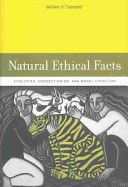
In Natural Ethical Facts William Casebeer argues that we can articulate a fully naturalized ethical theory using concepts from evolutionary biology and cognitive science, and that we can study moral cognition just as we study other forms of cognition. His goal is to show that we have “softly fixed” human natures, that these natures are evolved, and that our lives go well or badly depending on how we satisfy the functional demands of these natures. Natural Ethical Facts is a comprehensive examination of what a plausible moral science would look like.Casebeer begins by discussing the nature of ethics and the possible relationship between science and ethics. He then addresses David Hume’s naturalistic fallacy and G. E. Moore’s open-question argument, drawing on the work of John Dewey and W. V. O. Quine. He then proposes a functional account of ethics, offering corresponding biological and moral descriptions. Discussing in detail the neural correlates of moral cognition, he argues that neural networks can be used to model ethical function. He then discusses the impact his views of moral epistemology and ontology will have on traditional ethical theory and moral education, concluding that there is room for other moral theories as long as they take into consideration the functional aspect of ethics; the pragmatic neo-Aristotelian virtue theory he proposes thus serves as a moral “big tent.” Finally, he addresses objections to ethical naturalism that may arise, and calls for a reconciliation of the sciences and the humanities. “Living well,” Casebeer writes, “depends upon reweaving our ethical theories into the warp and woof of our scientific heritage, attending to the myriad consequences such a project will have for the way we live our lives and the manner in which we structure our collective moral institutions.”
ما از اخلاق چه انتظاری داریم؟ این سوال شاید تاحدودی برای عموم مردم و یا متخصصان این رشته قابل پاسخ باشد؛ اینکه خوب بودن را به ما بیاموزد و در تنظیم روابط فردی م...

جشن کتاب تهران به ایستگاه سی و یکم رسیده است. حال و احوال نشر کتاب خوب نیست و باید فرهنگدوستان را به خرید و هدیه دادن کتاب ترغیب نمود. خانه اخلاقپژوهان جوان ب...

بنیاد کتابهای اخلاق اسلامی عمدتا پالایش جان از آلودگیها و آراستن آن به زیباییها است. اندیشه محوری این قبیل کتابها آن است که انسان فعلی آنی نیست که باید باشد...

-
0 Comments