Notice: تابع WP_Block_Type_Registry::register به طورنادرست فراخوانی شد. نامهای نوع بلوک نباید حروف بزرگ داشته باشند. لطفاً برای اطلاعات بیشتر، اشکال زدایی در وردپرس را مشاهده کنید. (این پیام در نگارش 5.0.0 افزوده شده است.) in /home/ethicsho/public_html/wp-includes/functions.php on line 5313
Warning: Use of undefined constant TDC_PATH_LEGACY - assumed 'TDC_PATH_LEGACY' (this will throw an Error in a future version of PHP) in /home/ethicsho/public_html/wp-content/plugins/td-composer/td-composer.php on line 109
Warning: Use of undefined constant TDSP_THEME_PATH - assumed 'TDSP_THEME_PATH' (this will throw an Error in a future version of PHP) in /home/ethicsho/public_html/wp-content/plugins/td-composer/td-composer.php on line 113 بایگانیهای 9780521529952 - خانه اخلاق پژوهان جوان Notice: Trying to access array offset on value of type bool in /home/ethicsho/public_html/wp-content/plugins/wp-ulike/inc/general-functions.php on line 807
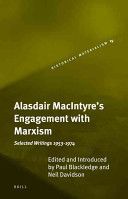
Although Alasdair MacIntyre is best known today as the author of “After Virtue” (1981), he was, in the 1950s and 1960s, one of the most erudite members of Britain’s Marxist Left: being a militant within, first, the Communist Party, then the New Left, and finally the heterodox Trotskyist International Socialism group. This selection of his essays on Marxism from that period aims to show that his youthful thought profoundly informed his mature ethics, and that, in the wake of the collapse of the state-capitalist regimes in Russia and Eastern Europe, the powerful and optimistic revolutionary Marxist ethics of liberation he articulated in that period is arguably as salient to anti-capitalist activists today as it was half a century ago.
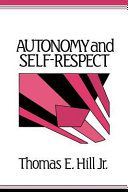
This stimulating collection of essays in ethics eschews the simple exposition and refinement of abstract theories. Rather, the author focuses on everyday moral issues, often neglected by philosophers, and explores the deeper theoretical questions which they raise. Such issues are: Is it wrong to tell a lie to protect someone from a painful truth? Should one commit a lesser evil to prevent another from doing something worse? Can one be both autonomous and compassionate? Other topics discussed are servility, weakness of will, suicide, obligations to oneself, snobbery, and environmental concerns. A feature of the collection is the contrast of Kantian and utilitarian answers to these problems. The essays are crisply and lucidly written and will appeal to both teachers and students of philosophy.
If philosophy has any business in the world, it is the clarification of our thinking and the clearing away of ideas that cloud the mind. In this book, one of the world’s preeminent philosophers takes issue with an idea that has found an all-too-prominent place in popular culture and philosophical thought: the idea that while factual claims can be rationally established or refuted, claims about value are wholly subjective, not capable of being rationally argued for or against. Although it is on occasion important and useful to distinguish between factual claims and value judgments, the distinction becomes, Hilary Putnam argues, positively harmful when identified with a dichotomy between the objective and the purely “subjective.”Putnam explores the arguments that led so much of the analytic philosophy of language, metaphysics, and epistemology to become openly hostile to the idea that talk of value and human flourishing can be right or wrong, rational or irrational; and by which, following philosophy, social sciences such as economics have fallen victim to the bankrupt metaphysics of Logical Positivism. Tracing the problem back to Hume’s conception of a “matter of fact” as well as to Kant’s distinction between “analytic” and “synthetic” judgments, Putnam identifies a path forward in the work of Amartya Sen. Lively, concise, and wise, his book prepares the way for a renewed mutual fruition of philosophy and the social sciences.
ما از اخلاق چه انتظاری داریم؟ این سوال شاید تاحدودی برای عموم مردم و یا متخصصان این رشته قابل پاسخ باشد؛ اینکه خوب بودن را به ما بیاموزد و در تنظیم روابط فردی م...

جشن کتاب تهران به ایستگاه سی و یکم رسیده است. حال و احوال نشر کتاب خوب نیست و باید فرهنگدوستان را به خرید و هدیه دادن کتاب ترغیب نمود. خانه اخلاقپژوهان جوان ب...

بنیاد کتابهای اخلاق اسلامی عمدتا پالایش جان از آلودگیها و آراستن آن به زیباییها است. اندیشه محوری این قبیل کتابها آن است که انسان فعلی آنی نیست که باید باشد...

-
0 Comments