Notice: تابع WP_Block_Type_Registry::register به طورنادرست فراخوانی شد. نامهای نوع بلوک نباید حروف بزرگ داشته باشند. لطفاً برای اطلاعات بیشتر، اشکال زدایی در وردپرس را مشاهده کنید. (این پیام در نگارش 5.0.0 افزوده شده است.) in /home/ethicsho/public_html/wp-includes/functions.php on line 5313
Warning: Use of undefined constant TDC_PATH_LEGACY - assumed 'TDC_PATH_LEGACY' (this will throw an Error in a future version of PHP) in /home/ethicsho/public_html/wp-content/plugins/td-composer/td-composer.php on line 109
Warning: Use of undefined constant TDSP_THEME_PATH - assumed 'TDSP_THEME_PATH' (this will throw an Error in a future version of PHP) in /home/ethicsho/public_html/wp-content/plugins/td-composer/td-composer.php on line 113 بایگانیهای 9780471209492 - خانه اخلاق پژوهان جوان Notice: Trying to access array offset on value of type bool in /home/ethicsho/public_html/wp-content/plugins/wp-ulike/inc/general-functions.php on line 807
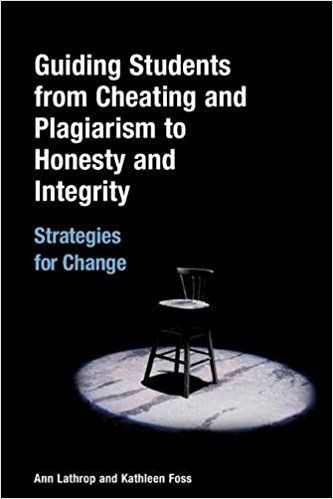
Argues for a change in school culture from one that tolerates cheating to one in which every effort is made to support honesty and offers practical ideas that can be used in the classroom or at home.
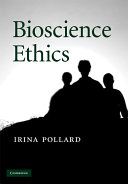
Bioscience ethics facilitates free and accurate information transfer from applied science to applied bioethics. Its major elements are: increased understanding of biological systems, responsible use of technology, and attuning ethnocentric debates to new scientific insights. Pioneered by Irina Pollard in 1994, bioscience ethics has become an internationally recognized discipline, interfacing science and bioethics within professional perspectives such as medical, legal, bio-engineering, and economics. Written for students and professionals alike, the fundamental feature of this book is its breadth, important because bioscience ethics interweaves many diverse subjects in the process of gathering specialist scientific knowledge for bioethical review. It contains chapters which embrace topics affecting human reproduction, end-of-life care and euthanasia, challenge human-dominated ecosystems, and review population growth, economic activity and warfare. A background section describes the evolution of ethical consciousness, explores the future, and proposes that the reworking of ethical boundaries can enhance mature decision-making in harmony with changing technology.
A new volume of philosophical essays by Bernard Williams. The book is a successor to Problems of the Self, but whereas that volume dealt mainly with questions of personal identity, Moral Luck centres on questions of moral philosophy and the theory of rational action. That whole area has of course been strikingly reinvigorated over the last deacde, and philosophers have both broadened and deepened their concerns in a way that now makes much earlier moral and political philosophy look sterile and trivial. Moral Luck contains a number of essays that have contributed influentially to this development. Among the recurring themes are the moral and philosophical limitations of utilitarianism, the notion of integrity, relativism, and problems of moral conflict and rational choice. The work presented here is marked by a high degree of imagination and acuity, and also conveys a strong sense of psychological reality. The volume will be a stimulating source of ideas and arguments for all philosophers and a wide range of other readers.
Is the point of belief and assertion invariably to think or say something true? Is the truth of a belief or assertion absolute, or is it only relative to human interests? Most philosophers think it incoherent to profess to believe something but not think it true, or to say that some of the things we believe are only relatively true. Common sense disagrees. It sees many opinions, such as those about matters of taste, as neither true nor false; it takes it as obvious that some ofthe truth is relative.Mark Richard’s accessible book argues that when it comes to truth, common sense is right, philosophical orthodoxy wrong. The first half of the book examines connections between the performative aspects of talk (what we do when we speak), our emotions and evaluations, and the conditions under which talk and thought qualifies as true or false. It argues that the performative and expressive sometimes trump the semantic, making truth and falsity the wrong dimension of evaluation for belief orassertion. Among the topics taken up are: racial slurs and other epithets; relations between logic and truth; the status of moral and ethical talk; vagueness and the liar paradox. The book’s second half defends the idea that much of everyday thought and talk is only relatively true or false. Truth isinevitably relative, given that we cannot work out in advance how our concepts will apply to the world. Richard explains what it is for truth to be relative, rebuts standard objections to relativism, and argues that relativism is consistent with the idea that one view can be objectively better than another. The book concludes with an account of matters of taste and of how it is possible for divergent views of such matters to be equally valid, even if not true or false.When Truth Gives Out will be of interest not only to philosophers who work on language, ethics, knowledge, or logic, but to any thoughtful person who has wondered what it is, or isn’t, for something to be true.
ما از اخلاق چه انتظاری داریم؟ این سوال شاید تاحدودی برای عموم مردم و یا متخصصان این رشته قابل پاسخ باشد؛ اینکه خوب بودن را به ما بیاموزد و در تنظیم روابط فردی م...

جشن کتاب تهران به ایستگاه سی و یکم رسیده است. حال و احوال نشر کتاب خوب نیست و باید فرهنگدوستان را به خرید و هدیه دادن کتاب ترغیب نمود. خانه اخلاقپژوهان جوان ب...

بنیاد کتابهای اخلاق اسلامی عمدتا پالایش جان از آلودگیها و آراستن آن به زیباییها است. اندیشه محوری این قبیل کتابها آن است که انسان فعلی آنی نیست که باید باشد...

-
0 Comments