Notice: تابع WP_Block_Type_Registry::register به طورنادرست فراخوانی شد. نامهای نوع بلوک نباید حروف بزرگ داشته باشند. لطفاً برای اطلاعات بیشتر، اشکال زدایی در وردپرس را مشاهده کنید. (این پیام در نگارش 5.0.0 افزوده شده است.) in /home/ethicsho/public_html/wp-includes/functions.php on line 5313
Warning: Use of undefined constant TDC_PATH_LEGACY - assumed 'TDC_PATH_LEGACY' (this will throw an Error in a future version of PHP) in /home/ethicsho/public_html/wp-content/plugins/td-composer/td-composer.php on line 109
Warning: Use of undefined constant TDSP_THEME_PATH - assumed 'TDSP_THEME_PATH' (this will throw an Error in a future version of PHP) in /home/ethicsho/public_html/wp-content/plugins/td-composer/td-composer.php on line 113 بایگانیهای 9780415654753 - خانه اخلاق پژوهان جوان Notice: Trying to access array offset on value of type bool in /home/ethicsho/public_html/wp-content/plugins/wp-ulike/inc/general-functions.php on line 807
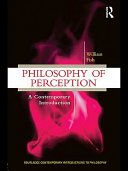
The philosophy of perception investigates the nature of our sensory experiences and their relation to reality. Raising questions about the conscious character of perceptual experiences, how they enable us to acquire knowledge of the world in which we live, and what exactly it is we are aware of when we hallucinate or dream, the philosophy of perception is a growing area of interest in metaphysics, epistemology, and philosophy of mind.William Fish’s Philosophy of Perception introduces the subject thematically, setting out the major theories of perception together with their motivations and attendant problems. While providing historical background to debates in the field, this comprehensive overview focuses on recent presentations and defenses of the different theories, and looks beyond visual perception to take into account the role of other senses.Topics covered include:The Phenomenal PrinciplePerception and HallucinationPerception and ContentSense-Data, Adverbialism and IdealismDisjunctivism and RelationalismIntentionalism and Combined TheoriesThe Nature of ContentVeridicalityPerception and Empirical ScienceNon-Visual PerceptionWith summaries and suggested further reading at the end of each chapter, this is an ideal introduction to the philosophy of perception.
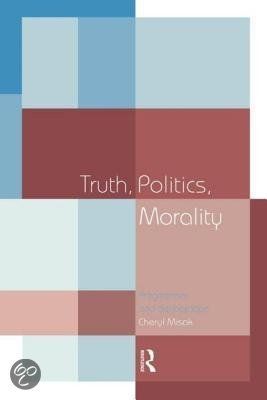
Can we criticize those who hold beliefs which are likely to be wrong? Or must we abandon notions of truth and objectivity and claim that certain beliefs are best for us while incompatible beliefs are best for others? Truth, Politics, Moralityaddresses this crucial issue and its implications for democracy by arguing that the notion of truth ought to be returned to the center of moral and political philosophy. Cheryl Misak persuasively makes a case for a certain kind of pragmatism in which a true belief is one that could not be improved by inquiry, nor defeated by experience or argument. Her compelling discussion makes sense of the idea that, despite conflict, pluralism, and the expression of difference, our moral and political beliefs aim at truth and can be subject to justified criticism.
Social justice: an ideal, forever beyond our grasp; or one of many practical possibilities? More than a matter of intellectual discourse, the idea of justice plays a real role in how—and how well—people live. And in this book the distinguished scholar Amartya Sen offers a powerful critique of the theory of social justice that, in its grip on social and political thinking, has long left practical realities far behind.The transcendental theory of justice, the subject of Sen’s analysis, flourished in the Enlightenment and has proponents among some of the most distinguished philosophers of our day; it is concerned with identifying perfectly just social arrangements, defining the nature of the perfectly just society. The approach Sen favors, on the other hand, focuses on the comparative judgments of what is “more” or “less” just, and on the comparative merits of the different societies that actually emerge from certain institutions and social interactions.At the heart of Sen’s argument is a respect for reasoned differences in our understanding of what a “just society” really is. People of different persuasions—for example, utilitarians, economic egalitarians, labor right theorists, no-nonsense libertarians—might each reasonably see a clear and straightforward resolution to questions of justice; and yet, these clear and straightforward resolutions would be completely different. In light of this, Sen argues for a comparative perspective on justice that can guide us in the choice between alternatives that we inevitably face.
ما از اخلاق چه انتظاری داریم؟ این سوال شاید تاحدودی برای عموم مردم و یا متخصصان این رشته قابل پاسخ باشد؛ اینکه خوب بودن را به ما بیاموزد و در تنظیم روابط فردی م...

جشن کتاب تهران به ایستگاه سی و یکم رسیده است. حال و احوال نشر کتاب خوب نیست و باید فرهنگدوستان را به خرید و هدیه دادن کتاب ترغیب نمود. خانه اخلاقپژوهان جوان ب...

بنیاد کتابهای اخلاق اسلامی عمدتا پالایش جان از آلودگیها و آراستن آن به زیباییها است. اندیشه محوری این قبیل کتابها آن است که انسان فعلی آنی نیست که باید باشد...

-
0 Comments