Notice: تابع WP_Block_Type_Registry::register به طورنادرست فراخوانی شد. نامهای نوع بلوک نباید حروف بزرگ داشته باشند. لطفاً برای اطلاعات بیشتر، اشکال زدایی در وردپرس را مشاهده کنید. (این پیام در نگارش 5.0.0 افزوده شده است.) in /home/ethicsho/public_html/wp-includes/functions.php on line 5313
Warning: Use of undefined constant TDC_PATH_LEGACY - assumed 'TDC_PATH_LEGACY' (this will throw an Error in a future version of PHP) in /home/ethicsho/public_html/wp-content/plugins/td-composer/td-composer.php on line 109
Warning: Use of undefined constant TDSP_THEME_PATH - assumed 'TDSP_THEME_PATH' (this will throw an Error in a future version of PHP) in /home/ethicsho/public_html/wp-content/plugins/td-composer/td-composer.php on line 113 بایگانیهای 9780415466097 - خانه اخلاق پژوهان جوان Notice: Trying to access array offset on value of type bool in /home/ethicsho/public_html/wp-content/plugins/wp-ulike/inc/general-functions.php on line 807
Rethinking Virtue Ethics offers a model of Aristotelian virtue ethics based on a deductive paradigm. This book argues that, contrary to what many contemporary thinkers are inclined to believe, Aristotelian virtue ethics is consistent with at least some action-guiding moral principles being true unconditionally, and that a justification for general moral principles can be grounded in fundamental concepts within Aristotle’s theory. An analysis of ethical propositions that hold for the most part is proposed that fits well within the deductive paradigm developed. This unique interpretation of virtue ethics has implications for recent discussions of the virtues in social psychology, issues about how fundamental moral principles are known, questions about the justification of inalienable rights, debates about moral particularism and generalism, and discussions of moral realism and anti-realism.
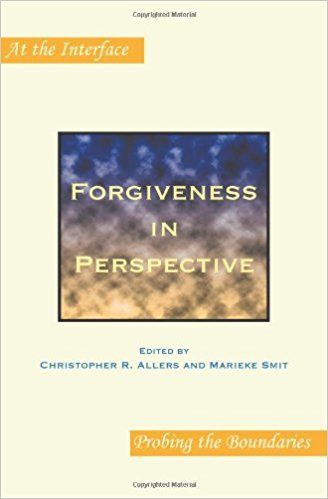
Amidst the cacophony of claims made about forgiveness, this book serves to aid in an effort to put żforgiveness in perspective.ż Marieke Smit and Christopher R. Allers have collected here ten essays written by twelve authors from around the world and across the disciplinary spectrum including philosophers, practitioners, psychologists, literary theorists, and prison chaplains. All the essays offer a perspective on forgiveness and put forgiveness in perspective whether by tracing what forgiveness żis,ż how this religious inheritance is worked out in our secularizing societies, how forgiveness works in our quotidian experience, or a particular manifestation in a particular context such as marriage, prison, or after an abortion, to name a few. The multi-disciplinary character of this book provides a multi-disciplinary appeal as well as a resource to enlarge oneżs own perspective on this perplexing, enigmatic, and wonderfully complex concept of forgiveness.Marieke Smit is a researcher at the Centre for Prison Pastoral Care at the University of Tilburg, The Netherlands. Her research concerns the role of forgiveness in detention. She is also working as a prison chaplain in Dutch prisons.Christopher R. Allers (M.A., Institute for Christian Studies, Toronto) is Adjunct Professor of Philosophy at Cornerstone University (Grand Rapids, MI) and Sessional Instructor in Philosophy at the Institute for Christian Studies, Toronto (ICS) where he is also a doctoral student in the conjoint degree program between ICS and the Vrije Universiteit, Amsterdam. He is currently working on a dissertation on forgiveness which is tentatively titled The Miracle of Forgiveness.
In this multi-faceted volume, Christian and other religiously committed theorists find themselves at an uneasy point in history — between premodernity, modernity, and postmodernity — where disciplines and methods, cultural and linguistic traditions, and religious commitments tangle and cross. Here, leading theorists explore the state of the art of the contemporary hermeneutical terrain. As they address the work of Gadamer, Ricoeur, and Derrida, the essays collected in this wide-ranging work engage key themes in philosophical hermeneutics, hermeneutics and religion, hermeneutics and the other arts, hermeneutics and literature, and hermeneutics and ethics. Readers will find lively exchanges and reflections that meet the intellectual and philosophical challenges posed by hermeneutics at the crossroads.Contributors are Bruce Ellis Benson, Christina Bieber Lake, John D. Caputo, Eduardo J. Echeverria, Benne Faber, Norman Lillegard, Roger Lundin, Brian McCrea, James K. A. Smith, Michael VanderWeele, Kevin Vanhoozer, and Nicholas Wolterstorff.
This innovative study of ethics in Meiji Japan (1868-1912) explores the intense struggle to define a common morality for the emerging nation-state. In the Social Darwinist atmosphere of the time, the Japanese state sought to quell uprisings and overcome social disruptions so as to produce national unity and defend its sovereignty against Western encroachment. Morality became a crucial means to attain these aims. Moral prescriptions for re-ordering the population came from all segments of society, including Buddhist, Christian, and Confucian apologists; literary figures and artists; advocates of natural rights; anarchists; and women defending nontraditional gender roles. Each envisioned a unity grounded in its own moral perspective. It was in this tumultuous atmosphere that the academic discipline of ethics (rinrigaku) emerged–not as a value-neutral, objective form of inquiry as its practitioners claimed, but a state-sponsored program with its own agenda. After examining the broad moral space of “civilization,” Richard Reitan turns to the dominant moral theories of early Meiji and the underlying epistemology that shaped and authorized them. He considers the fluidity of moral subjectivity (the constantly shifting nature of norms to which we are subject and how we apprehend, resist, or practice them) by juxtaposing rinrigaku texts with moral writings by religious apologists. By the beginning of the 1890s, moral philosophers in Japan were moving away from the empiricism and utilitarianism of the prior decade and beginning to place “spirit” at the center of ethical inquiry. This shift is explored through the works of two thinkers, Inoue Tetsujiro (1856-1944) and Nakashima Rikizo (1858-1918), the first chair of ethics at Tokyo Imperial University. Finally, Reitan takes a detailed look at the national morality movement (kokumin dotoku) and its close association with the state before concluding with an outline of some conceptual linkages between the Meiji and later periods.
ما از اخلاق چه انتظاری داریم؟ این سوال شاید تاحدودی برای عموم مردم و یا متخصصان این رشته قابل پاسخ باشد؛ اینکه خوب بودن را به ما بیاموزد و در تنظیم روابط فردی م...

جشن کتاب تهران به ایستگاه سی و یکم رسیده است. حال و احوال نشر کتاب خوب نیست و باید فرهنگدوستان را به خرید و هدیه دادن کتاب ترغیب نمود. خانه اخلاقپژوهان جوان ب...

بنیاد کتابهای اخلاق اسلامی عمدتا پالایش جان از آلودگیها و آراستن آن به زیباییها است. اندیشه محوری این قبیل کتابها آن است که انسان فعلی آنی نیست که باید باشد...

-
0 Comments