Notice: تابع WP_Block_Type_Registry::register به طورنادرست فراخوانی شد. نامهای نوع بلوک نباید حروف بزرگ داشته باشند. لطفاً برای اطلاعات بیشتر، اشکال زدایی در وردپرس را مشاهده کنید. (این پیام در نگارش 5.0.0 افزوده شده است.) in /home/ethicsho/public_html/wp-includes/functions.php on line 5313
Warning: Use of undefined constant TDC_PATH_LEGACY - assumed 'TDC_PATH_LEGACY' (this will throw an Error in a future version of PHP) in /home/ethicsho/public_html/wp-content/plugins/td-composer/td-composer.php on line 109
Warning: Use of undefined constant TDSP_THEME_PATH - assumed 'TDSP_THEME_PATH' (this will throw an Error in a future version of PHP) in /home/ethicsho/public_html/wp-content/plugins/td-composer/td-composer.php on line 113 بایگانیهای 9780415311328 - خانه اخلاق پژوهان جوان Notice: Trying to access array offset on value of type bool in /home/ethicsho/public_html/wp-content/plugins/wp-ulike/inc/general-functions.php on line 807
In this multi-faceted volume, Christian and other religiously committed theorists find themselves at an uneasy point in history — between premodernity, modernity, and postmodernity — where disciplines and methods, cultural and linguistic traditions, and religious commitments tangle and cross. Here, leading theorists explore the state of the art of the contemporary hermeneutical terrain. As they address the work of Gadamer, Ricoeur, and Derrida, the essays collected in this wide-ranging work engage key themes in philosophical hermeneutics, hermeneutics and religion, hermeneutics and the other arts, hermeneutics and literature, and hermeneutics and ethics. Readers will find lively exchanges and reflections that meet the intellectual and philosophical challenges posed by hermeneutics at the crossroads.Contributors are Bruce Ellis Benson, Christina Bieber Lake, John D. Caputo, Eduardo J. Echeverria, Benne Faber, Norman Lillegard, Roger Lundin, Brian McCrea, James K. A. Smith, Michael VanderWeele, Kevin Vanhoozer, and Nicholas Wolterstorff.
Lies are often so subtle, so deftly woven into easily acceptable truths, that we can fail to recognize them. Turning Sisela Bok’s defense of truth in her book Lying on its head, Jeremy Campbell argues that deception should no longer be seen as artificial or deviant, but as a natural part of our world. Beginning with a study of evolutionary biology and the necessity (and ultimate value) of deceit in the animal kingdom, Campbell asks the difficult question of whether falsehood might, in fact, be instinctual. Guiding the reader through classical philosophy to more contemporary thinkers such as Freud and Nietzsche, Campbell links a multitude of disciplines and ideas in lucid and engaging prose. Unsettling some of our most firmly held beliefs about truth and ethics, The Liar’s Tale is a riveting work of intellectual history. “This challenging romp through the underbelly of intellectual history…is fascinating and troublesome.”–New York Times Book Review “[A] beautifully written book….a crisp and remarkably readable discussion.”–John Frohnmayer, The Wilson Quarterly
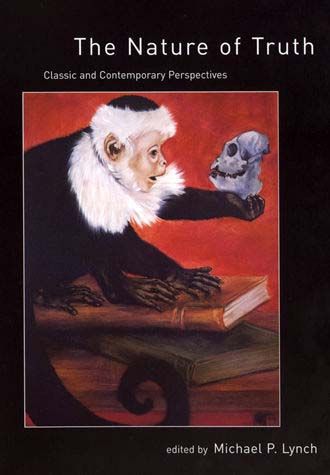
“What is truth?” has long been the philosophical question par excellence. The Nature of Truth collects in one volume the twentieth century’s most influential philosophical work on the subject. The coverage strikes a balance between classic works and the leading edge of current philosophical research.The essays center around two questions: Does truth have an underlying nature? And if so, what sort of nature does it have? Thus the book discusses both traditional and deflationary theories of truth, as well as phenomenological, postmodern, and pluralist approaches to the problem. The essays are organized by theory. Each of the seven sections opens with a detailed introduction that not only discusses the essays in that section but relates them to other relevant essays in the book. Eleven of the essays are previously unpublished or substantially revised. The book also includes suggestions for further reading.Contributors:Linda Martin Alcoff, William P. Alston, J. L. Austin, Brand Blanshard, Marian David, Donald Davidson, Michael Devitt, Michael Dummett, Hartry Field, Michel Foucault, Dorothy Grover, Anil Gupta, Martin Heidegger, Terence Horgan, Jennifer Hornsby, Paul Horwich, William James, Michael P. Lynch, Charles Sanders Pierce, Hilary Putnam, W. V. O. Quine, F. P. Ramsey, Richard Rorty, Bertrand Russell, Scott Soames, Ernest Sosa, P. F. Strawson, Alfred Tarski, Ralph C. Walker, Crispin Wright.
In this engaging book, Leon R. Kass, the noted teacher, scientist, and humanist, and James Q. Wilson, the preeminent political scientist to whom four U.S. presidents have turned for advice on crime, drug abuse, education, and other crises in American life, explore the ethics of human cloning, reproductive technology, and the teleology of human sexuality. Although in their lively dialogue both authors share a fundamental distrust of the notion of human cloning, they base their reticence on different views of the role of sexual reproduction and the role of the family. Professor Kass contends that in vitro fertilization and other assisted reproduction technologies that place the origin of human life in human hands have eroded the respect for the mystery of sexuality and human renewal. Professor Wilson, on the other hand, asserts that whether a human life is created naturally or artificially is immaterial as long as the child is raised by loving parents in a two-parent family and is not harmed by the means of its conception. This accessible volume promises to inform the public policy debate over the permissible conduct of genetic research and the permissible uses of its discoveries.
ما از اخلاق چه انتظاری داریم؟ این سوال شاید تاحدودی برای عموم مردم و یا متخصصان این رشته قابل پاسخ باشد؛ اینکه خوب بودن را به ما بیاموزد و در تنظیم روابط فردی م...

جشن کتاب تهران به ایستگاه سی و یکم رسیده است. حال و احوال نشر کتاب خوب نیست و باید فرهنگدوستان را به خرید و هدیه دادن کتاب ترغیب نمود. خانه اخلاقپژوهان جوان ب...

بنیاد کتابهای اخلاق اسلامی عمدتا پالایش جان از آلودگیها و آراستن آن به زیباییها است. اندیشه محوری این قبیل کتابها آن است که انسان فعلی آنی نیست که باید باشد...

-
0 Comments