Notice: تابع WP_Block_Type_Registry::register به طورنادرست فراخوانی شد. نامهای نوع بلوک نباید حروف بزرگ داشته باشند. لطفاً برای اطلاعات بیشتر، اشکال زدایی در وردپرس را مشاهده کنید. (این پیام در نگارش 5.0.0 افزوده شده است.) in /home/ethicsho/public_html/wp-includes/functions.php on line 5313
Warning: Use of undefined constant TDC_PATH_LEGACY - assumed 'TDC_PATH_LEGACY' (this will throw an Error in a future version of PHP) in /home/ethicsho/public_html/wp-content/plugins/td-composer/td-composer.php on line 109
Warning: Use of undefined constant TDSP_THEME_PATH - assumed 'TDSP_THEME_PATH' (this will throw an Error in a future version of PHP) in /home/ethicsho/public_html/wp-content/plugins/td-composer/td-composer.php on line 113 بایگانیهای 9780415212441 - خانه اخلاق پژوهان جوان Notice: Trying to access array offset on value of type bool in /home/ethicsho/public_html/wp-content/plugins/wp-ulike/inc/general-functions.php on line 807
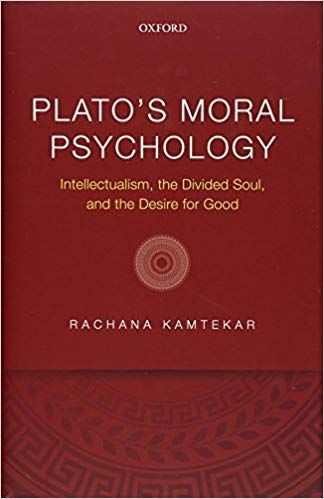
Plato’s Moral Psychology is concerned with Plato’s account of the soul and its impact on our living well or badly, virtuously or viciously. The core of Plato’s moral psychology is his account of human motivation, and Rachana Kamtekar argues that throughout the dialogues Plato maintains that human beings have a natural desire for our own good, and that actions and conditions contrary to this desire are involuntary (from which follows the ‘Socratic paradox’ that wrongdoing is involuntary). Our natural desire for our own good may be manifested in different ways: by our pursuit of what we calculate is best, but also by our pursuit of pleasant or fine things – pursuits which Plato assigns to distinct parts of the soul. Kamtekar develops a very different interpretation of Plato’s moral psychology from the mainstream interpretation, according to which Plato first proposes that human beings only do what we believe to be the best of the things we can do (‘Socratic intellectualism’) and then in the middle dialogues rejects this in favour of the view that the soul is divided into parts with some good-dependent and some good-independent motivations (‘the divided soul’).
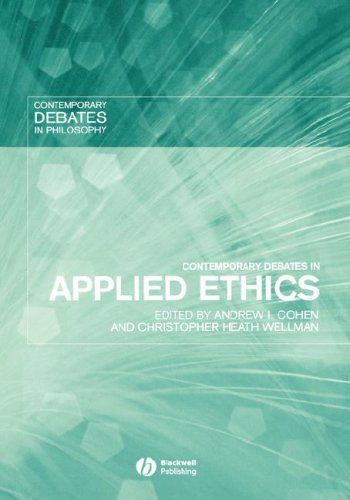
Contemporary Debates in Applied Ethics features pairs of newly commissioned essays by some of the leading theorists working in the field today. Brings together fresh debates on eleven of the most controversial issues in applied ethics Topics addressed include abortion, affirmative action, animals, capital punishment, cloning, euthanasia, immigration, pornography, privacy in civil society, values in nature, and world hunger. Lively debate format sharply defines the issues, and paves the way for further discussion. Will serve as an accessible introduction to the major topics in applied ethics, whilst also capturing the imagination of professional philosophers.
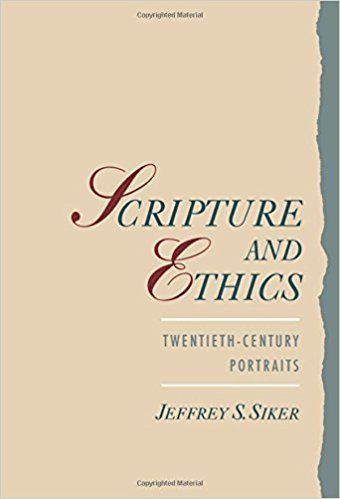
How should the Bible be used in Christian ethics? Although this question has been addressed many times, little attention has gone to how the Bible actually has functioned in constructing theological ethics. In this book, Siker describes and analyzes the Bible’s various uses in the theology and ethics of eight of the twentieth century’s most important and influential Christian theologians: Reinhold Niebuhr, H. Richard Niebuhr, Bernhard Haring, Paul Ramsey, Stanley Hauerwas, Gustavo Gutierrez, James Cone, and Rosemary Radford Ruether. Of each author Siker asks five related questions: which biblical texts does the author in fact use; in what ways are the texts used; how does the author envision the authority of the Bible; what kind of hermeneutic does the author employ; and what has each author’s approach to the Bible yielded in terms of Christian ethics? Siker ends each chapter with a critical evaluation of the various problems and prospects for the author’s use of Scripture, and concludes the study with a comparison and contrast of the authors’ respective appropriations of the Sermon on the Mount.
ما از اخلاق چه انتظاری داریم؟ این سوال شاید تاحدودی برای عموم مردم و یا متخصصان این رشته قابل پاسخ باشد؛ اینکه خوب بودن را به ما بیاموزد و در تنظیم روابط فردی م...

جشن کتاب تهران به ایستگاه سی و یکم رسیده است. حال و احوال نشر کتاب خوب نیست و باید فرهنگدوستان را به خرید و هدیه دادن کتاب ترغیب نمود. خانه اخلاقپژوهان جوان ب...

بنیاد کتابهای اخلاق اسلامی عمدتا پالایش جان از آلودگیها و آراستن آن به زیباییها است. اندیشه محوری این قبیل کتابها آن است که انسان فعلی آنی نیست که باید باشد...

-
0 Comments