Notice: تابع WP_Block_Type_Registry::register به طورنادرست فراخوانی شد. نامهای نوع بلوک نباید حروف بزرگ داشته باشند. لطفاً برای اطلاعات بیشتر، اشکال زدایی در وردپرس را مشاهده کنید. (این پیام در نگارش 5.0.0 افزوده شده است.) in /home/ethicsho/public_html/wp-includes/functions.php on line 5313
Warning: Use of undefined constant TDC_PATH_LEGACY - assumed 'TDC_PATH_LEGACY' (this will throw an Error in a future version of PHP) in /home/ethicsho/public_html/wp-content/plugins/td-composer/td-composer.php on line 109
Warning: Use of undefined constant TDSP_THEME_PATH - assumed 'TDSP_THEME_PATH' (this will throw an Error in a future version of PHP) in /home/ethicsho/public_html/wp-content/plugins/td-composer/td-composer.php on line 113 بایگانیهای 9780387489063 - خانه اخلاق پژوهان جوان Notice: Trying to access array offset on value of type bool in /home/ethicsho/public_html/wp-content/plugins/wp-ulike/inc/general-functions.php on line 807
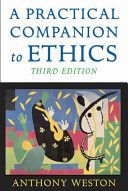
A Practical Companion to Ethics, Third Edition, is a concise and accessible introduction to the basic attitudes and skills that make ethics work, like thinking for oneself, creative and integrative problem-solving, and keeping an open mind. This unique volume illuminates the broad kinds of practical intelligence required in moral judgment, complementing the narrower theoretical considerations that often dominate ethics courses. It offers practical instruction in problem-solving by demonstrating how to frame an ethical problem and deal effectively with ethical disagreements. The book also presents ethics as an ongoing learning experience, helping students to deal with both the complexities of their individual lives and with the larger issues that exist in the world around them. The third edition retains the most popular features of the previous edition, including challenging and relevant end-of-chapter exercises; brief text boxes that define key terms and review core strategies; and short dialogues that illustrate ethical dilemmas. The optimistic tone and brisk pace of the narrative provide an entertaining and intelligent guide to “everyday” morality. The third edition includes a more extensive treatment of ethics and religion (Chapter 2), which provides the framework for a moral dialogue that reaches across sectarian divides. It also contains a revised final chapter on the continuously unfolding nature of ethical understanding and an expanded appendix that gives detailed advice on writing various types of ethics papers. Ideal for introductory courses in ethics and applied ethics, A Practical Companion to Ethics, Third Edition, can also be used in any course related to critical thinking.
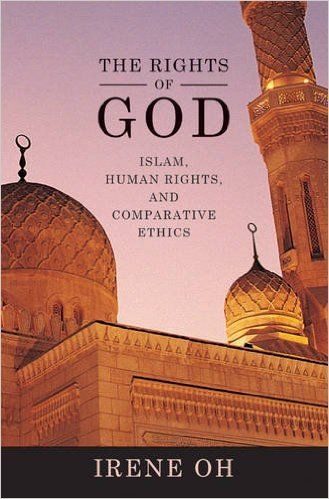
Promoting Islam as a defender of human rights is laden with difficulties. Advocates of human rights will readily point out numerous humanitarian failures carried out in the name of Islam. In The Rights of God, Irene Oh looks at human rights and Islam as a religious issue rather than a political or legal one and draws on three revered Islamic scholars to offer a broad range of perspectives that challenge our assumptions about the role of religion in human rights. The theoretical shift from the conception of morality based in natural duty and law to one of rights has created tensions that hinder a fruitful exchange between human rights theorists and religious thinkers. Does the static identification of human rights with lists of specific rights, such as those found in the Universal Declaration of Human Rights, make sense given the cultural, historical, and religious diversity of the societies in which these rights are to be respected and implemented? In examining human rights issues of the contemporary Islamic world, Oh illustrates how the value of religious scholarship cannot be overestimated. Oh analyzes the commentaries of Abul A’la Maududi, Sayyid Qutb, and Abdolkarim Soroush — all prominent and often controversial Islamic thinkers — on the topics of political participation, religious toleration, and freedom of conscience. While Maududi and Qutb represent traditional Islam, and Soroush a more reform and Western-friendly approach, all three contend that Islam is indeed capable of accommodating and advocating human rights. Whereas disentangling politics and culture from religion is never easy, Oh shows that the attempt must be made in order to understand and overcome the historical obstacles that prevent genuine dialogue from taking place across religious and cultural boundaries.
This book is a systematic and constructive treatment of a number of traditional issues at the foundations of ethics. These issues concern the objectivity of ethics, the possibility and nature of moral knowledge, the relationship between the moral point of view and a scientific or naturalist world-view, the nature of moral value and obligation, and the role of morality in a person’s rational lifeplan. In striking contrast to traditional and more recent work in the field, David Brink offers an integrated defense of the objectivity of ethics.
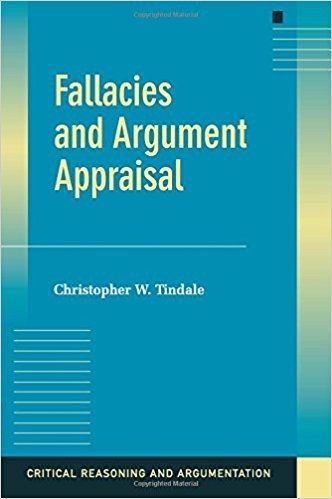
Fallacies and Argument Appraisal presents an introduction to the nature, identification, and causes of fallacious reasoning, along with key questions for evaluation. Drawing from the latest work on fallacies as well as some of the standard ideas that have remained relevant since Aristotle, Christopher Tindale investigates central cases of major fallacies in order to understand what has gone wrong and how this has occurred. Dispensing with the approach that simply assigns labels and brief descriptions of fallacies, Tindale provides fuller treatments that recognize the dialectical and rhetorical contexts in which fallacies arise. This volume analyzes major fallacies through accessible, everyday examples. Critical questions are developed for each fallacy to help the student identify them and provide considered evaluations.
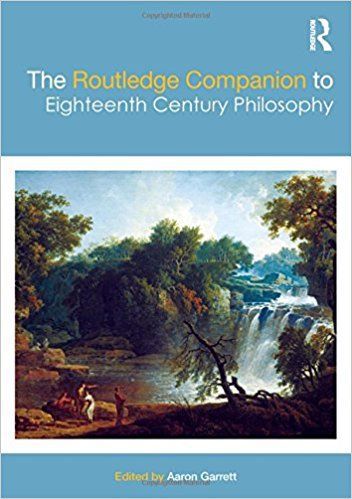
“The Eighteenth century is one of the most important periods in the history of Western philosophy, witnessing the philosophical, scientific, religious, and social and political change of the Enlightenment on a massive scale. In spite of this, there are few overviews of the philosophy of the period as a whole. The Routledge Companion to Eighteenth Century Philosophy is an authoritative survey and assessment of this momentous period, covering major thinkers, topics and movements in Eighteenth century philosophy. The thirty-six specially commissioned chapters by a team of international contributors offer an extensive treatment of the Enlightenment, metaphysics and religion, mind, knowledge, perception, passions, morals, politics and aesthetics. A section on Philosophy and the Arts and Sciences shows the connections between philosophy and other areas of inquiry, and the final part is devoted to major figures of the period: Hume, Kant, and Rousseau. The Routledge Companion to Eighteenth Century Philosophy provides students of philosophy and those from related disciplines with an outstanding and accessible guide to this fascinating period in the history of philosophy”–
ما از اخلاق چه انتظاری داریم؟ این سوال شاید تاحدودی برای عموم مردم و یا متخصصان این رشته قابل پاسخ باشد؛ اینکه خوب بودن را به ما بیاموزد و در تنظیم روابط فردی م...

جشن کتاب تهران به ایستگاه سی و یکم رسیده است. حال و احوال نشر کتاب خوب نیست و باید فرهنگدوستان را به خرید و هدیه دادن کتاب ترغیب نمود. خانه اخلاقپژوهان جوان ب...

بنیاد کتابهای اخلاق اسلامی عمدتا پالایش جان از آلودگیها و آراستن آن به زیباییها است. اندیشه محوری این قبیل کتابها آن است که انسان فعلی آنی نیست که باید باشد...

-
0 Comments