Notice: تابع WP_Block_Type_Registry::register به طورنادرست فراخوانی شد. نامهای نوع بلوک نباید حروف بزرگ داشته باشند. لطفاً برای اطلاعات بیشتر، اشکال زدایی در وردپرس را مشاهده کنید. (این پیام در نگارش 5.0.0 افزوده شده است.) in /home/ethicsho/public_html/wp-includes/functions.php on line 5313
Warning: Use of undefined constant TDC_PATH_LEGACY - assumed 'TDC_PATH_LEGACY' (this will throw an Error in a future version of PHP) in /home/ethicsho/public_html/wp-content/plugins/td-composer/td-composer.php on line 109
Warning: Use of undefined constant TDSP_THEME_PATH - assumed 'TDSP_THEME_PATH' (this will throw an Error in a future version of PHP) in /home/ethicsho/public_html/wp-content/plugins/td-composer/td-composer.php on line 113 بایگانیهای 9780275957889 - خانه اخلاق پژوهان جوان Notice: Trying to access array offset on value of type bool in /home/ethicsho/public_html/wp-content/plugins/wp-ulike/inc/general-functions.php on line 807
Book Summary of Guilt And Its Vicissitudes: Psychoanalytic Reflections On MoralityHow do psychoanalysts explain human morality? Guilt and Its Vicissitudes: Psychoanalytic Reflections on Morality focuses on the way Melanie Klein and successive generations of her followers pursued and deepened Freud’s project of explaining man’s moral sense as a wholly natural phenomenon. With the introduction of the superego, Freud laid claim to the study of moral development as part of the psychoanalytic enterprise. At the same time he reconceptualized guilt: he thought of it not only as conscious, but as unconscious as well, and it was the unconscious sense of guilt that became a particular concern of the discipline he was founding. As Klein saw it, his work merely pointed the way. Judith M. Hughes argues that Klein and contemporary Kleinians went on to provide a more consistent and comprehensive psychological account of moral development. Hughes shows how Klein and her followers came to appreciate that moral and cognitive questions are complexly interwoven and makes clear how this complexity prompted them to extend the range of their theory. Hughes demonstrates both a detailed knowledge of the major figures in post-war British psychoanalysis, and a keen sensitivity to the way clinical experience informed theory-building. She writes with vigor and grace, not only about Freud and Klein, but also about such key thinkers as Riviere, Isaacs, Heimann, Segal, Bion and Joseph. Guilt and Its Vicissitudes speaks to those concerned with the clinical application of psychoanalytic theory and to those interested in the contribution psychoanalysis makes to understanding questions of human morality..
This book comes against the unchallenged methods in medicine, such as “evidence-based medicine,” which claim to be, but often are not, scientific. It completes medical care by adding the comprehensive humanistic perspectives and philosophy of medicine.No specific or absolute recommendations are given regarding medical treatment, moral approaches, or legal advice. Given rather is discussion about each issue involved and the strongest arguments indicated. Each argument is subject to further critical analysis. This is the same position as with any philosophical, medical or scientific view.The argument that decision-making in medicine is inadequate unless grounded on a philosophy of medicine is not meant to include all of philosophy and every philosopher. On the contrary, it includes only sound, practical and humanistic philosophy and philosophers who are creative and critical thinkers and who have concerned themselves with the topics relevant to medicine. These would be those philosophers who engage in practical philosophy, such as the pragmatists, humanists, naturalists, and ordinary-language philosophers.A new definition of our own philosophy of life emerges and it is necessary to have one. Good lifestyle no longer means just abstaining from cigarettes, alcohol and getting exercise. It also means living a holistic life, which includes all of one’s thinking, personality and actions.This book also includes new ways of thinking. In this regard the “Metaphorical Method” is explained, used, and exemplified in depth, for example in the chapters on care, egoism and altruism, letting die, etc.
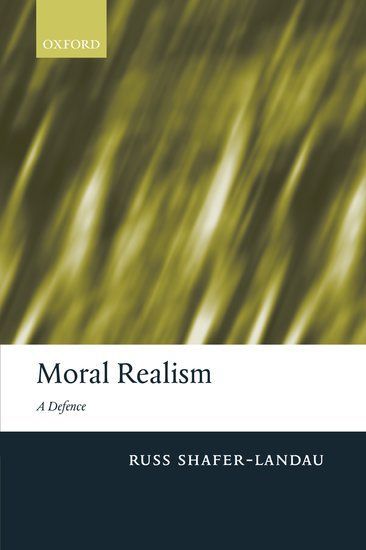
Moral Realism is a systematic defence of the idea that there are objective moral standards. Russ Shafer-Landau argues that there are moral principles that are true independently of what anyone, anywhere, happens to think of them. His central thesis, as well as the many novel supporting arguments used to defend it, will spark much controversy among those concerned with the foundations of ethics.
In this significant contribution to Hegel scholarship, Robert Williams develops the most comprehensive account to date of Hegel’s concept of recognition (Anerkennung). Fichte introduced the concept of recognition as a presupposition of both Rousseau’s social contract and Kant’s ethics. Williams shows that Hegel appropriated the concept of recognition as the general pattern of his concept of ethical life, breaking with natural law theory yet incorporating the Aristotelian view that rights and virtues are possible only within a certain kind of community.He explores Hegel’s intersubjective concept of spirit (Geist) as the product of affirmative mutual recognition and his conception of recognition as the right to have rights. Examining Hegel’s Jena manuscripts, his Philosophy of Right, the Phenomenology of Spirit, and other works, Williams shows how the concept of recognition shapes and illumines Hegel’s understandings of crime and punishment, morality, the family, the state, sovereignty, international relations, and war. A concluding chapter on the reception and reworking of the concept of recognition by contemporary thinkers including Derrida, Levinas, and Deleuze demonstrates Hegel’s continuing centrality to the philosophical concerns of our age.
ما از اخلاق چه انتظاری داریم؟ این سوال شاید تاحدودی برای عموم مردم و یا متخصصان این رشته قابل پاسخ باشد؛ اینکه خوب بودن را به ما بیاموزد و در تنظیم روابط فردی م...

جشن کتاب تهران به ایستگاه سی و یکم رسیده است. حال و احوال نشر کتاب خوب نیست و باید فرهنگدوستان را به خرید و هدیه دادن کتاب ترغیب نمود. خانه اخلاقپژوهان جوان ب...

بنیاد کتابهای اخلاق اسلامی عمدتا پالایش جان از آلودگیها و آراستن آن به زیباییها است. اندیشه محوری این قبیل کتابها آن است که انسان فعلی آنی نیست که باید باشد...

-
0 Comments