Notice: تابع WP_Block_Type_Registry::register به طورنادرست فراخوانی شد. نامهای نوع بلوک نباید حروف بزرگ داشته باشند. لطفاً برای اطلاعات بیشتر، اشکال زدایی در وردپرس را مشاهده کنید. (این پیام در نگارش 5.0.0 افزوده شده است.) in /home/ethicsho/public_html/wp-includes/functions.php on line 5313
Warning: Use of undefined constant TDC_PATH_LEGACY - assumed 'TDC_PATH_LEGACY' (this will throw an Error in a future version of PHP) in /home/ethicsho/public_html/wp-content/plugins/td-composer/td-composer.php on line 109
Warning: Use of undefined constant TDSP_THEME_PATH - assumed 'TDSP_THEME_PATH' (this will throw an Error in a future version of PHP) in /home/ethicsho/public_html/wp-content/plugins/td-composer/td-composer.php on line 113 بایگانیهای 9780268018849 - خانه اخلاق پژوهان جوان Notice: Trying to access array offset on value of type bool in /home/ethicsho/public_html/wp-content/plugins/wp-ulike/inc/general-functions.php on line 807
The philosophy of religion as a distinct discipline is an innovation of the last two hundred years, but its central topics–the existence and nature of the divine, humankind’s relation to it, the nature of religion and its place in human life–have been with us since the inception ofphilosophy. Philosophers have long critically examined the truth of (and rational justification for) religious claims, and have explored such philosophically interesting phenomena as faith, religious experience and the distinctive features of religious discourse. The second half of thetwentieth-century has been an especially fruitful period, with philosophers using new developments in logic and epistemology to mount both sophisticated defenses of, and attacks on, religious claims. The Oxford Handbook of Philosophy of Religion contains newly commissioned chapters by 21 prominent experts who cover the field in a comprehensive but accessible manner. Each chapter is expository, critical, and representative of a distinctive viewpoint. The Handbook is divided into two sections.The first, “Problems,” covers the most frequently discussed topics, among them arguments for God’s existence, the problem of evil, and religious epistemology. The second is called “Approaches” and contains four essays assessing the advantages and disadvantages of different methods of practicingphilosophy of religion. The Handbook offers contributors of high stature who present substantive and in-depth treatment of the most central topics. It is a must-have reference for anyone with an interest in philosophy and religion.
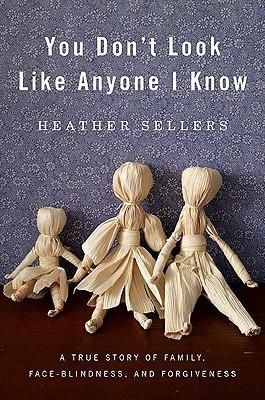
An unusual and uncommonly moving family memoir, with a twist that give new meaning to hindsight, insight, and forgiveness. Heather Sellers is face-blind-that is, she has prosopagnosia, a rare neurological condition that prevents her from reliably recognizing people’s faces. Growing up, unaware of the reason for her perpetual confusion and anxiety, she took what cues she could from speech, hairstyle, and gait. But she sometimes kissed a stranger, thinking he was her boyfriend, or failed to recognize even her own father and mother. She feared she must be crazy. Yet it was her mother who nailed windows shut and covered them with blankets, made her daughter walk on her knees to spare the carpeting, had her practice secret words to use in the likely event of abduction. Her father went on weeklong “fishing trips” (aka benders), took in drifters, wore panty hose and bras under his regular clothes. Heather clung to a barely coherent story of a “normal” childhood in order to survive the one she had. That fairy tale unraveled two decades later when Heather took the man she would marry home to meet her parents and began to discover the truth about her family and about herself. As she came at last to trust her own perceptions, she learned the gift of perspective: that embracing the past as it is allows us to let it go. And she illuminated a deeper truth-that even in the most flawed circumstances, love may be seen and felt.
In this elegant critique, Amartya Sen argues that welfare economics can be enriched by paying more explicit attention to ethics, and that modern ethical studies can also benefit from a closer contact with economies. He argues further that even predictive and descriptive economics can be helped by making more room for welfare-economic considerations in the explanation of behaviour.
Religion is a dominant force in the lives of many Americans. It animates, challenges, directs and shapes, as well, the legal, political, and scientific agendas of the new Age of Biotechnology. In a very real way, religion, biomedical technology and law are – epistemologically – different. Yet, they are equal vectors of force in defining reality and approaching an understanding of it. Indeed, all three share a synergetic relationship, for they seek to understand and improve the human condition. This book strikes a rich balance between thorough analysis (in the body), anchored in sound references to religion, law and medical scientific analysis, and a strong scholarly direction in the end notes. It presents new insights into the decision-making processes of the new Age of Biotechnology and shows how religion, law and medical science interact in shaping, directing and informing the political processes. This volume will be of interest to both scholars and practitioners in the fields of religion and theology, philosophy, ethics, (family) law, science, medicine, political science and public policy, and gender studies. It will serve as a reference source and can be used in graduate and undergraduate courses in law, medicine and religion.
Distributed networks such as the Internet have altered the fundamental way a record is created, captured, accessed and managed over time. Law and ethics provide the major sources of regulatory controls over participants in such networks. This book analyses the interrelationship of recordkeeping, ethics and law in terms of existing regulatory models and their application to the Internet environment. It proposes an Internet model based on the notion of a legal and social relationship as a means of identifying the legal and ethical rights and obligations of recordkeeping participants in networked transactions. Medical, business and governmental relationships within communities of common interest based on trust illustrate the practical application of the model. As legal relationships have their basis in the law of obligations found in common and civil law systems, as well as archival science, the model has a broad-based application. The relationship model also provides a unique ethical and legal approach to property, access, privacy and evidence. Most importantly, the book provides an interdisciplinary approach to Internet regulation, which contributes to closer ties between those who research, teach and work in fields of ethics, law and archival science.
ما از اخلاق چه انتظاری داریم؟ این سوال شاید تاحدودی برای عموم مردم و یا متخصصان این رشته قابل پاسخ باشد؛ اینکه خوب بودن را به ما بیاموزد و در تنظیم روابط فردی م...

جشن کتاب تهران به ایستگاه سی و یکم رسیده است. حال و احوال نشر کتاب خوب نیست و باید فرهنگدوستان را به خرید و هدیه دادن کتاب ترغیب نمود. خانه اخلاقپژوهان جوان ب...

بنیاد کتابهای اخلاق اسلامی عمدتا پالایش جان از آلودگیها و آراستن آن به زیباییها است. اندیشه محوری این قبیل کتابها آن است که انسان فعلی آنی نیست که باید باشد...

-
0 Comments