Notice: تابع WP_Block_Type_Registry::register به طورنادرست فراخوانی شد. نامهای نوع بلوک نباید حروف بزرگ داشته باشند. لطفاً برای اطلاعات بیشتر، اشکال زدایی در وردپرس را مشاهده کنید. (این پیام در نگارش 5.0.0 افزوده شده است.) in /home/ethicsho/public_html/wp-includes/functions.php on line 5313
Warning: Use of undefined constant TDC_PATH_LEGACY - assumed 'TDC_PATH_LEGACY' (this will throw an Error in a future version of PHP) in /home/ethicsho/public_html/wp-content/plugins/td-composer/td-composer.php on line 109
Warning: Use of undefined constant TDSP_THEME_PATH - assumed 'TDSP_THEME_PATH' (this will throw an Error in a future version of PHP) in /home/ethicsho/public_html/wp-content/plugins/td-composer/td-composer.php on line 113 بایگانیهای 9780262083492 - خانه اخلاق پژوهان جوان Notice: Trying to access array offset on value of type bool in /home/ethicsho/public_html/wp-content/plugins/wp-ulike/inc/general-functions.php on line 807
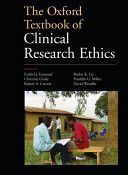
The Oxford Textbook of Clinical Research Ethics is the first systematic and comprehensive reference on clinical research ethics. Under the editorship of experts from the National Institute of Health of the United States, the book’s 73 chapters offer a wide-ranging and systematic examination of all aspects of research with human beings. Considering historical triumphs of research as well as tragedies, the textbook provides a framework for analyzing the ethical aspects of research studies with human beings. Through both conceptual analysis and systematic reviews of empirical data, the textbook examines issues ranging from scientific validity, fair subject selection, risk benefit ration, independent review, and informed consent as well as focused consideration of international research ethics, conflicts of interests and other aspects of responsible conduct of research. The editors of The Oxford Textbook of Clinical Research Ethics offer a work that critically assesses and advances scholarship in the field of human subjects research with human beings. Comprehensive in scope and research, this book will be a crucial resource for researchers in the medical sciences, as well as teachers and students alike.
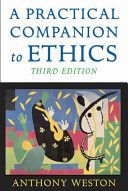
A Practical Companion to Ethics, Third Edition, is a concise and accessible introduction to the basic attitudes and skills that make ethics work, like thinking for oneself, creative and integrative problem-solving, and keeping an open mind. This unique volume illuminates the broad kinds of practical intelligence required in moral judgment, complementing the narrower theoretical considerations that often dominate ethics courses. It offers practical instruction in problem-solving by demonstrating how to frame an ethical problem and deal effectively with ethical disagreements. The book also presents ethics as an ongoing learning experience, helping students to deal with both the complexities of their individual lives and with the larger issues that exist in the world around them. The third edition retains the most popular features of the previous edition, including challenging and relevant end-of-chapter exercises; brief text boxes that define key terms and review core strategies; and short dialogues that illustrate ethical dilemmas. The optimistic tone and brisk pace of the narrative provide an entertaining and intelligent guide to “everyday” morality. The third edition includes a more extensive treatment of ethics and religion (Chapter 2), which provides the framework for a moral dialogue that reaches across sectarian divides. It also contains a revised final chapter on the continuously unfolding nature of ethical understanding and an expanded appendix that gives detailed advice on writing various types of ethics papers. Ideal for introductory courses in ethics and applied ethics, A Practical Companion to Ethics, Third Edition, can also be used in any course related to critical thinking.
In this book Uwe Steinhoff describes and explains the basic tenets of just war theory and gives a precise, succinct and highly critical account of its present status and of the most important and controversial current debates surrounding it. Rejecting certain in effect medieval assumptions of traditional just war theory and advancing a liberal outlook, Steinhoff argues that every single individual is a legitimate authority and has under certain circumstances the right to declare war on others or the state. He also argues that the just cause cannot be established independently of the other criteria of jus ad bellum (the justification of entering a war), except for right intention, which he interprets more leniently than the tradition does. Turning to jus in bello (which governs the conduct of a war) he criticizes the Doctrine of Double Effect and concludes that insofar as wars kill innocents, and be it as “collateral damage”, they cannot be just but at best justified as the lesser evil. Steinhoff gives particular attention to the question why soldiers, allegedly, are legitimate targets and civilians not. Discussing four approaches to the explanation of the difference he argues that the four principles underlying them all need to be taken into account and outlines how their weighing can proceed if applied to concrete cases. The resulting approach does not square the distinction between legitimate and illegitimate targets with the distinction between soldiers and civilians, which has extremely important consequences for the conduct of war. Finally, Steinhoff analyses the concept of terrorism and argues that some forms of “terrorism” are actually not terrorism at all and that even terrorism proper can under certain circumstances be justified.
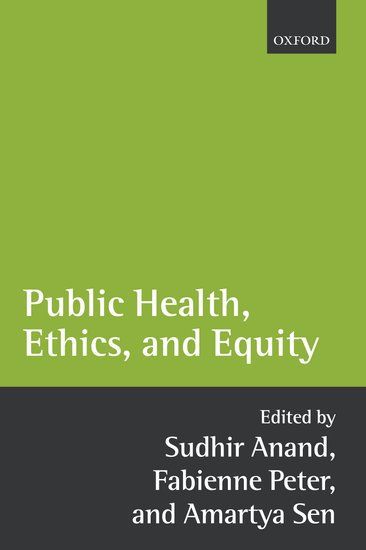
This book builds an interdisciplinary understanding of health equity. With contributions from distinguished philosophers, anthropologists, economists, and public-health specialists, it centres on five major themes: what is health equity?; health equity and social justice; responsibilities for health; ethical issues in health evaluation; and anthropological perspectives.
ما از اخلاق چه انتظاری داریم؟ این سوال شاید تاحدودی برای عموم مردم و یا متخصصان این رشته قابل پاسخ باشد؛ اینکه خوب بودن را به ما بیاموزد و در تنظیم روابط فردی م...

جشن کتاب تهران به ایستگاه سی و یکم رسیده است. حال و احوال نشر کتاب خوب نیست و باید فرهنگدوستان را به خرید و هدیه دادن کتاب ترغیب نمود. خانه اخلاقپژوهان جوان ب...

بنیاد کتابهای اخلاق اسلامی عمدتا پالایش جان از آلودگیها و آراستن آن به زیباییها است. اندیشه محوری این قبیل کتابها آن است که انسان فعلی آنی نیست که باید باشد...

-
0 Comments