Notice: تابع WP_Block_Type_Registry::register به طورنادرست فراخوانی شد. نامهای نوع بلوک نباید حروف بزرگ داشته باشند. لطفاً برای اطلاعات بیشتر، اشکال زدایی در وردپرس را مشاهده کنید. (این پیام در نگارش 5.0.0 افزوده شده است.) in /home/ethicsho/public_html/wp-includes/functions.php on line 5313
Warning: Use of undefined constant TDC_PATH_LEGACY - assumed 'TDC_PATH_LEGACY' (this will throw an Error in a future version of PHP) in /home/ethicsho/public_html/wp-content/plugins/td-composer/td-composer.php on line 109
Warning: Use of undefined constant TDSP_THEME_PATH - assumed 'TDSP_THEME_PATH' (this will throw an Error in a future version of PHP) in /home/ethicsho/public_html/wp-content/plugins/td-composer/td-composer.php on line 113 بایگانیهای 9780253346469 - خانه اخلاق پژوهان جوان Notice: Trying to access array offset on value of type bool in /home/ethicsho/public_html/wp-content/plugins/wp-ulike/inc/general-functions.php on line 807
According to an ancient and still popular view — sometimes known as ‘eudaimonism’ — a person’s well-being, or quality of life, is ultimately determined by his or her level of happiness. According to this view, the happier a person is, the better off he is. The doctrine is controversial in part because the nature of happiness is controversial. In What Is This Thing Called Happiness? Fred Feldman presents a study of the nature and value of happiness. Part One contains critical discussions of the main philosophical and psychological theories of happiness. Feldman presents arguments designed to show that each of these theories is problematic. Part Two contains his presentation and defense of his own theory of happiness, which is a form of attitudinal hedonism. On this view, a person’s level of happiness may be identified with the extent to which he or she takes pleasure in things. Feldman shows that if we understand happiness as he proposes, it becomes reasonable to suppose that a person’s well-being is determined by his or her level of happiness. This view has important implications not only for moral philosophy, but also for the emerging field of hedonic psychology. Part Three contains discussions of some interactions between the proposed theory of happiness and empirical research into happiness.
C. Stephen Evans explains and defends Kierkegaard’s account of moral obligations as rooted in God’s commands, the fundamental command being `You shall love your neighbour as yourself’. The work will be of interest not only to those interested in Kierkegaard, but also to those interested in the relation between ethics and religion, especially questions about whether morality can or must have a religious foundation. As well as providing a comprehensive reading of Kierkegaard as an ethical thinker, Evans puts him into conversation with contemporary moral theorists. Kierkegaard’s divine command theory is shown to be an account that safeguards human flourishing, as well as protecting the proper relations between religion and state in a pluralistic society.
This revised edition of IEthics and StatecraftR has been reorganized to better situate chapters that play to one another thematically, on peacemaking, the ethics and statecraft of war, and the statecraft of major international reform, and two new chapters, on Theodore Roosevelt and the Vietnam War, respectively, have been added to this classic work. The contributions remain centrally concerned with moral reasoning about important decisions taken by key statesmen in times of war, peace, and transformation, arguing that national leaders-including realists-have always concerned themselves with normative constraints on power, both their own and that of others. This revised edition of IEthics and StatecraftR has been reorganized to better situate chapters that play to one another thematically, on peacemaking, the ethics and statecraft of war, and the statecraft of major international reform, and two new chapters, on Theodore Roosevelt and the Vietnam War, respectively, have been added to this classic work. The contributions remain centrally concerned with moral reasoning about important decisions taken by key statesmen in times of war, peace, and transformation, arguing that national leaders-including realists-have always concerned themselves with normative constraints on power, both their own and that of others. This book posits that the problems of ethics in international relations are always conditioned by uncertainty, actors’ inexact knowledge of real-world conditions, and morally ambiguous outcomes. Contrary to the course assumptions of much IR theory, individual leaders remain the major conduit by which ethical concerns are deployed or ignored in the foreign policy of states. To ignore moral norms, which already govern international relations, is to ignore a key dimension of the subject; such an oversight will necessarily lead to a shallow analysis and a basic misunderstanding of how and why states behave as they do.
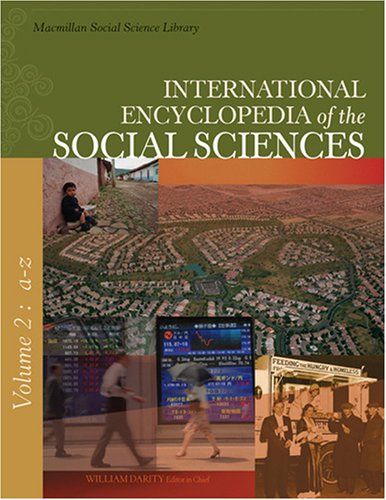
Covers scholarship and fields that have emerged and matured since the publication of the original international edition. Highlights the expanding influence of economics in social science research and features new articles and biographies contributed by scholars from around the world on a wide array of global topics in the social sciences.
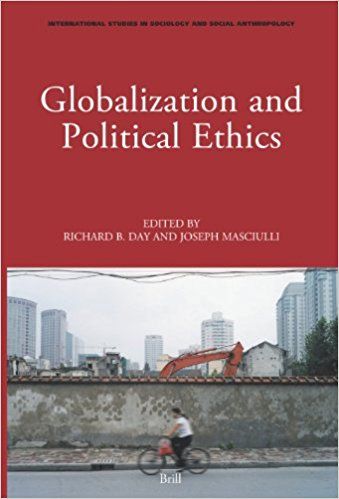
Rational exercise of our responsibility requires us to relate the globalization process to the ends and purposes that properly befit human life and human community. Economic ‘ends’ are merely the ‘means’ to ends of a higher order, which can only be specified in terms of moral duty and ethical purpose. The contributors to this book explore political-ethical issues of globalization, including terrorism, institutional change and distribution in the world economy, the role of the United Nations and international financial institutions, the regimes of international trade and technology transfer, the effects of regionalism in the European Union and the Association of Southeast Asian Nations, the failure of Russia, human rights enforcement in Africa, and the prospects for global governance. This book was originally published as Volume 4 no. 3-4 (2005) of Brill’s journal “Perspectives on Global Development and Technology,”
ما از اخلاق چه انتظاری داریم؟ این سوال شاید تاحدودی برای عموم مردم و یا متخصصان این رشته قابل پاسخ باشد؛ اینکه خوب بودن را به ما بیاموزد و در تنظیم روابط فردی م...

جشن کتاب تهران به ایستگاه سی و یکم رسیده است. حال و احوال نشر کتاب خوب نیست و باید فرهنگدوستان را به خرید و هدیه دادن کتاب ترغیب نمود. خانه اخلاقپژوهان جوان ب...

بنیاد کتابهای اخلاق اسلامی عمدتا پالایش جان از آلودگیها و آراستن آن به زیباییها است. اندیشه محوری این قبیل کتابها آن است که انسان فعلی آنی نیست که باید باشد...

-
0 Comments