Notice: تابع WP_Block_Type_Registry::register به طورنادرست فراخوانی شد. نامهای نوع بلوک نباید حروف بزرگ داشته باشند. لطفاً برای اطلاعات بیشتر، اشکال زدایی در وردپرس را مشاهده کنید. (این پیام در نگارش 5.0.0 افزوده شده است.) in /home/ethicsho/public_html/wp-includes/functions.php on line 5313
Warning: Use of undefined constant TDC_PATH_LEGACY - assumed 'TDC_PATH_LEGACY' (this will throw an Error in a future version of PHP) in /home/ethicsho/public_html/wp-content/plugins/td-composer/td-composer.php on line 109
Warning: Use of undefined constant TDSP_THEME_PATH - assumed 'TDSP_THEME_PATH' (this will throw an Error in a future version of PHP) in /home/ethicsho/public_html/wp-content/plugins/td-composer/td-composer.php on line 113 بایگانیهای 9780230232679 - خانه اخلاق پژوهان جوان Notice: Trying to access array offset on value of type bool in /home/ethicsho/public_html/wp-content/plugins/wp-ulike/inc/general-functions.php on line 807
This stimulating and wide-ranging book mounts a profound enquiry into some of the most pressing questions of our age, by examining the relationship between biological science and Christianity. The history of biological discovery is explored from the point of view of a leading philosopher and ethicist. What effect should modern biological theory and practice have on Christian understanding of ethics? How much of that theory and practice should Christians endorse? To what extent can “nature” set our standards? Professor Clark takes a reasoned look at biological theory since Darwin and argues that an orthodox Christian philosophy is better able to accommodate the truth of such theory than is the sort of progressive, meliorist interpretation of Christian doctrine that is usually offered as the properly “modern” option.
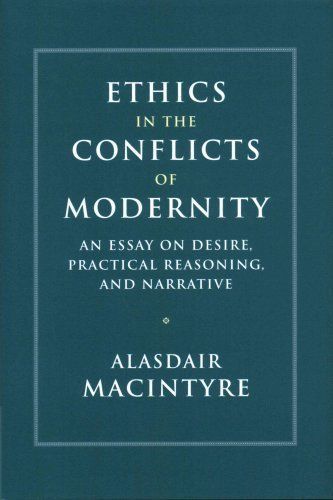
“This essay is divided into five chapters. In the first the questions initially posed about our desires and how we should think about them are questions that plain non philosophical persons often find themselves asking. When however they carry their attempt to answer these questions a little further, they find that they have, perhaps inadvertently, become philosophers, and that they need some at least of the conceptual and argumentative resources which professional philosophers provide. So their enquiry, like this one, becomes philosophical. But philosophy in our culture has become an almost exclusively specialized academic discipline whose practitioners for the most part address only each other rather than the educated lay person. Moreover those same practitioners have for the last fifty years been harassed by the academic system into publishing more and more as a condition for academic survival, so that on most topics of philosophical interest there is by now an increasingly large, an often unmanageable large body of literature that has to be read as a prologue before adding to it one more item. Readers should be warned that my references to this literature are selective and few. Had I conscientiously attempted not only to find my way through all the relevant published writing in the philosophy of mind and in ethics, but then also explained how I had come to terms with the claims advanced by its authors, I would have had to write at impossible length and in a format that would have made this essay inaccessible to the lay reader for whom it is written”–
It is well over a decade since John Fischer and Mark Ravizza – and before them, Jay Wallace and Daniel Dennett – defended responsibility from the threat of determinism. But defending responsibility from determinism is a potentially endless and largely negative enterprise; it can go on for as long as dissenting voices remain, and although such work strengthens the theoretical foundations of these theories, it won’t necessarily build anything on top of those foundations, nor will it move these theories into new territory or explain how to apply them to practical contexts.To this end, the papers in this volume address these more positive challenges by exploring how compatibilist responsibility theory can be extended and/or applied in a range of practical contexts. For instance, how is the narrow philosophical concept of responsibility that was defended from the threat of determinism related to the plural notions of responsibility present in everyday discourse, and how might this more fine-grained understanding of responsibility open up new vistas and challenges for compatibilist theory? What light might compatibilism shed, and what light might be shed upon it, by political debates about access to public welfare in the context of responsibility for one’s own health, and by legal debates about the impact of self-intoxication on responsibility. Does compatibilist theory, which was originally designed to cater for analysis of individual actions, scale to scenarios that involve group action and collective responsibility – e.g. for harms due to human-induced climate change? This book’s chapters deal with a range of theoretical problems discussed in classic compatibilist literature – e.g. the relationship between responsibility and capacity, the role of historical tracing in discounting the exculpatory value of incapacities, and the justifiability of retributive punishment. But instead of motivating their discussions by focusing on the alleged threat that determinism poses to responsibility, these chapters’ authors have animated their discussions by tackling important practical problems which crop up in contemporary debates about responsibility.
ما از اخلاق چه انتظاری داریم؟ این سوال شاید تاحدودی برای عموم مردم و یا متخصصان این رشته قابل پاسخ باشد؛ اینکه خوب بودن را به ما بیاموزد و در تنظیم روابط فردی م...

جشن کتاب تهران به ایستگاه سی و یکم رسیده است. حال و احوال نشر کتاب خوب نیست و باید فرهنگدوستان را به خرید و هدیه دادن کتاب ترغیب نمود. خانه اخلاقپژوهان جوان ب...

بنیاد کتابهای اخلاق اسلامی عمدتا پالایش جان از آلودگیها و آراستن آن به زیباییها است. اندیشه محوری این قبیل کتابها آن است که انسان فعلی آنی نیست که باید باشد...

-
0 Comments