Notice: تابع WP_Block_Type_Registry::register به طورنادرست فراخوانی شد. نامهای نوع بلوک نباید حروف بزرگ داشته باشند. لطفاً برای اطلاعات بیشتر، اشکال زدایی در وردپرس را مشاهده کنید. (این پیام در نگارش 5.0.0 افزوده شده است.) in /home/ethicsho/public_html/wp-includes/functions.php on line 5313
Warning: Use of undefined constant TDC_PATH_LEGACY - assumed 'TDC_PATH_LEGACY' (this will throw an Error in a future version of PHP) in /home/ethicsho/public_html/wp-content/plugins/td-composer/td-composer.php on line 109
Warning: Use of undefined constant TDSP_THEME_PATH - assumed 'TDSP_THEME_PATH' (this will throw an Error in a future version of PHP) in /home/ethicsho/public_html/wp-content/plugins/td-composer/td-composer.php on line 113 بایگانیهای 9780230117822 - خانه اخلاق پژوهان جوان Notice: Trying to access array offset on value of type bool in /home/ethicsho/public_html/wp-content/plugins/wp-ulike/inc/general-functions.php on line 807
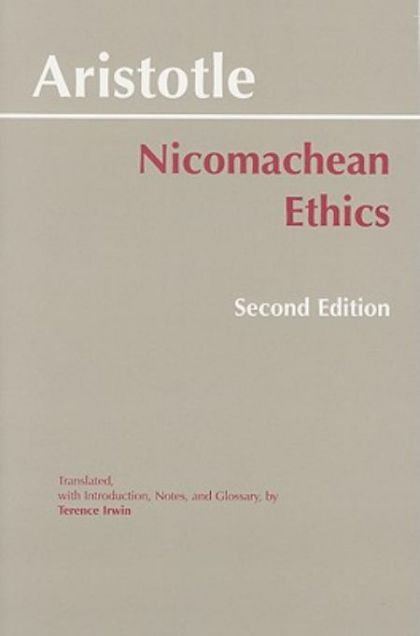
Of Aristotleas works, few have had as lasting an influence on subsequent Western thought as “The Nicomachean Ethics,” In it, he argues that happiness consists in aactivity of the soul in accordance with virtue, a defining avirtuea as both moral (courage, generosity, and justice) and intellectual (knowledge, wisdom, and insight). Aristotle also discusses the nature of practical reasoning, the different forms of friendship, and the relationship between individual virtue and the state. Featuring a lucid translation, a new introduction, updated suggestions for further reading, and a chronology of Aristotleas life and works, this is the authoritative edition of a seminal intellectual masterpiece.
How can the one influence the many? From posing seminal questions about what comprises a human individual, to asking whether human evolution is alive and well, favoring individuals or the species, this work is a daring, up-to-the-minute overview of an urgent, multidisciplinary premise. It explores the extent to which human history provides empirical evidence for the capacity of an individual to exert meaningful suasion over their species, and asks: Can an individual influence the survival of the human species and the planet? If there are to be cultures of transformation dedicated to seeing us all through the Sixth Extinction Spasm, the Anthropocene, inflicting as little biological havoc as possible, what might such orientations—a collective, widespread biophilia, or reverence for nature—look like? In this powerful work, with a combination of data and direct observation, the authors invite readers to explore how such transformations might resonate throughout the human community; in what ways a person might overcome the seemingly insurmountable environmental tumult our species has unleashed; the clear and salient motives, ethics, aspirations and pragmatic idealism he/she might mirror and embrace in order to effect a profound difference—at the individual level—for all of life and life’s myriad habitats. Chapters illuminate an ambitiously broad digest of research from two-dozen disciplines. Those include ecodynamics, biosemiotics, neural plasticity, anthropology, paleontology and the history of science, among others. All converge upon a set of ethics-based scenarios for mitigating ecological damage to ourselves and other life forms. This highly readable and tightly woven treatise speaks to scientists, students and all those who are concerned about ethical activism and the future of the biosphere. Michael Charles Tobias and Jane Gray Morrison are ecological philosophers and animal liberation activists who have worked for decades to help enrich our understanding of ecosystem dynamics and humanity’s ambiguous presence amid that great orchestra that is nature.
Mark Sagoff draws on the last twenty years of debate over the foundations of environmentalism in this comprehensive revision of The Economy of the Earth. Posing questions pertinent to consumption, cost-benefit analysis, the normative implications of neo-Darwinism, the role of the natural in national history, and the centrality of the concept of place in environmental ethics, he analyzes social policy in relation to the environment, pollution, the workplace, and public safely and health. Sagoff distinguishes ethical from economic questions and explains which kinds of concepts, arguments, and processes are appropriate to each.
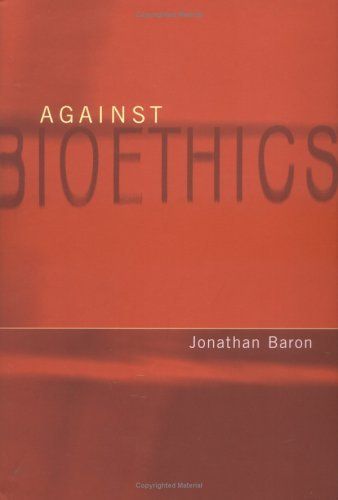
Governments, health professionals, patients, research institutions, and research subjects look to bioethicists for guidance in making important decisions about medical treatment and research. And yet, argues Jonathan Baron in Against Bioethics, applied bioethics lacks the authority of a coherent guiding theory and is based largely on intuitive judgments. Baron proposes an alternative, arguing that bioethics could have a coherent theory based on utilitarianism and decision analysis. Utilitarianism holds that the best option is the one that does the most expected good. Decision analysis provides a way of thinking about the risks and trade-offs of specific options. Like economics, utilitarian decision analysis makes predictions of expected good in complex situations, using data when possible, and focusing human judgment on the issues relevant to consequences. With such a guiding theory, bioethics would never yield decisions that clearly go against the expected good of those involved, as some do now. Baron discusses issues in bioethics that can be illuminated by such analysis, including “enhancements” to nature in the form of genetics, drugs, and mind control; reproduction; death and end-of-life issues, including advance directives, euthanasia, and organ donation; coercion and consent; conflict of interest and the reform of internal review boards; and drug research. Although Baron opposes current practice in bioethics, he argues that by combining utilitarianism and decision analysis, bioethics can achieve its aims of providing authoritative guidance in resolving thorny medical and ethical issues.
Good Medical Practice: Professionalism, Ethics and Law brings together information that is central to the professional, ethical and legal requirements of being a doctor. It covers a core curriculum for medical students, doctors in training and international medical graduates preparing for the Australian Medical Council examinations. A useful guide for busy doctors, giving sound advice for issues that arise in practice, ensuring that all approaches meet professional standards. Effective and compassionate practice depends equally upon good communication skills, an empathetic attitude, truthfulness, self-reflection and an awareness of the responsibilities arising under relevant laws. Good Medical Practice encapsulates these attributes and includes practice management, inter-professional relationships, sexual misconduct, complaints processes, the Australian health care system and doctors’ health within its broad and comprehensive purview. Written by specialist practitioners with vast teaching experience, this is a unique, timely and accessible text that reinforces a contemporary focus on professionalism in medical practice.
ما از اخلاق چه انتظاری داریم؟ این سوال شاید تاحدودی برای عموم مردم و یا متخصصان این رشته قابل پاسخ باشد؛ اینکه خوب بودن را به ما بیاموزد و در تنظیم روابط فردی م...

جشن کتاب تهران به ایستگاه سی و یکم رسیده است. حال و احوال نشر کتاب خوب نیست و باید فرهنگدوستان را به خرید و هدیه دادن کتاب ترغیب نمود. خانه اخلاقپژوهان جوان ب...

بنیاد کتابهای اخلاق اسلامی عمدتا پالایش جان از آلودگیها و آراستن آن به زیباییها است. اندیشه محوری این قبیل کتابها آن است که انسان فعلی آنی نیست که باید باشد...

-
0 Comments