Notice: تابع WP_Block_Type_Registry::register به طورنادرست فراخوانی شد. نامهای نوع بلوک نباید حروف بزرگ داشته باشند. لطفاً برای اطلاعات بیشتر، اشکال زدایی در وردپرس را مشاهده کنید. (این پیام در نگارش 5.0.0 افزوده شده است.) in /home/ethicsho/public_html/wp-includes/functions.php on line 5313
Warning: Use of undefined constant TDC_PATH_LEGACY - assumed 'TDC_PATH_LEGACY' (this will throw an Error in a future version of PHP) in /home/ethicsho/public_html/wp-content/plugins/td-composer/td-composer.php on line 109
Warning: Use of undefined constant TDSP_THEME_PATH - assumed 'TDSP_THEME_PATH' (this will throw an Error in a future version of PHP) in /home/ethicsho/public_html/wp-content/plugins/td-composer/td-composer.php on line 113 بایگانیهای 9780226007281 - خانه اخلاق پژوهان جوان Notice: Trying to access array offset on value of type bool in /home/ethicsho/public_html/wp-content/plugins/wp-ulike/inc/general-functions.php on line 807
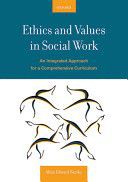
In a unique and student-friendly package, Ethics and Values in Social Work offers a series of learning modules that will ensure graduates receive a comprehensive ethics and values education. Designed to be easily incorporated into any curriculum, each module helps students integrate the knowledge, skills, self-awareness, and critical thinking abilities required for dealing with ethical issues. From applying basic ethical standards of practice to managing complex ethical dilemmas, this textbook equips readers with a range of tools and strategies for responding to ethical questions and concerns. Traditional ethics textbooks provide students with a model for ethical decision making. This breakthrough textbook goes beyond ethical decision making by providing students with a strategic framework for managing ethical issues that includes guidelines for engaging others in ethical discussions and using conflict resolution theory to promote collaborative solutions. Some textbooks introduce students to ethical theories, such as deontology, teleology, and virtue ethics. This textbook goes beyond describing these theories by providing students with opportunities to apply, compare, and contrast these approaches as they relate to various contexts of social work practice. A wealth of case scenarios, discussion questions, and role-play exercises make this an engaging, thought-provoking teaching and learning tool. At a basic level, this textbook teaches students the essential principles and standards that define ethical practice. At a more profound level, Ethics and Values in Social Work inspires students to reach for the highest values of profession: service, dignity and worth of the person, human relationships, integrity, competence, social justice, human rights, and scientific inquiry. Format and contents help social work programs meet and exceed CSWE accreditation standards, providing a clear structure for integrating ethics and values content throughout foundation and advanced courses The six-stage framework for managing ethical issues provides a range of tools and strategies for identifying, analyzing, and responding to ethical problems, dilemmas, and breaches A developmental approach to learning ethics supports students in engaging in higher levels of understanding, abstraction, application, and synthesis of ethics material Experiential exercises prepare students for managing the ethical and values issues that may arise in field placements Fun, engaging activities encourage students to reflect, question, and apply theory to practice Thought-provoking and reality-based case examples illustrate thorny ethical issues that professionals may encounter, ranging from end-of-life decision making to boundary crossings to rationing resources during a national crisis
Xiaohe Lu is Professor at the Institute of Philosophy and Executive Director of the Centre for Business Ethics, Shanghai Academy of Social Sciences. Georges Enderle is Arthur and Mary O’Neil Professor of International Business Ethics at the Mendoza College of Business, University of Notre Dame.
Do the reasons we have for acting as we do derive from our concerns and desires, or are there objective values in the world that we are rationally required to pursue and protect? Alan Goldman argues for the internalist or subjectivist view of practical reasons on the grounds that it is simpler, more unified, and more comprehensible than the rival objectivist position. He provides a naturalistic account of practical rationality in terms of coherence within sets of desires or motivational states, and between motivations, intentions, and actions. Coherence is defined as the avoidance of self-defeat, the defeat of one’s own deepest concerns. The demand for coherence underlies both practical and theoretical reason and derives from the natural aims of belief and action. In clarifying which desires create reasons, drawing on the literature of cognitive psychology, Goldman offers conceptual analyses of desires, emotions, and attitudes. Reasons are seen to derive ultimately from our deepest occurrent concerns. These concerns require no reasons themselves but provide reasons for many more superficial desires. In defense of this theory, Goldman argues that rational agents need not be morally motivated or concerned for their narrow self-interest. Objective values would demand such concern. They would be independent of our desires but would provide reasons for us to pursue and protect them. They would require rational agents to be motivated by them. But, Goldman argues, we are not motivated in that way, and it makes no sense to demand that our informed and coherent desires be generally other than they are. We need not appeal to such objective values in order to explain how our lives can be good and meaningful. Reasons from Within will appeal to anyone interested in the nature of values and reasons, particularly students of philosophy, psychology, and decision theory.
Alasdair MacIntyre argues that Freud’s conception of the unconscious is complicated by his tendency to use the term in two different ways. MacIntyre shows how Freud uses the term “unconscious” both as a straightforward description of psychological phenomena, and as an evaluative notion to explain the links between childhood events and adult behavior. This clarification helps to shed light on the many misunderstandings of psychoanalysis, and to separate out what is and what is not of lasting value in Freud’s account of the unconscious. This new edition includes a substantial new preface by the author, in which he discusses repression, determinism, transference, and “practical rationality,” and offers a rare comparison of Aristotle and Lacan on the concept of desire. MacIntyre takes the opportunity to reflect both on the reviews and criticisms of the first edition and also on his own philosophical stance.
ما از اخلاق چه انتظاری داریم؟ این سوال شاید تاحدودی برای عموم مردم و یا متخصصان این رشته قابل پاسخ باشد؛ اینکه خوب بودن را به ما بیاموزد و در تنظیم روابط فردی م...

جشن کتاب تهران به ایستگاه سی و یکم رسیده است. حال و احوال نشر کتاب خوب نیست و باید فرهنگدوستان را به خرید و هدیه دادن کتاب ترغیب نمود. خانه اخلاقپژوهان جوان ب...

بنیاد کتابهای اخلاق اسلامی عمدتا پالایش جان از آلودگیها و آراستن آن به زیباییها است. اندیشه محوری این قبیل کتابها آن است که انسان فعلی آنی نیست که باید باشد...

-
0 Comments