Notice: تابع WP_Block_Type_Registry::register به طورنادرست فراخوانی شد. نامهای نوع بلوک نباید حروف بزرگ داشته باشند. لطفاً برای اطلاعات بیشتر، اشکال زدایی در وردپرس را مشاهده کنید. (این پیام در نگارش 5.0.0 افزوده شده است.) in /home/ethicsho/public_html/wp-includes/functions.php on line 5313
Warning: Use of undefined constant TDC_PATH_LEGACY - assumed 'TDC_PATH_LEGACY' (this will throw an Error in a future version of PHP) in /home/ethicsho/public_html/wp-content/plugins/td-composer/td-composer.php on line 109
Warning: Use of undefined constant TDSP_THEME_PATH - assumed 'TDSP_THEME_PATH' (this will throw an Error in a future version of PHP) in /home/ethicsho/public_html/wp-content/plugins/td-composer/td-composer.php on line 113 بایگانیهای 9780199773558 - خانه اخلاق پژوهان جوان Notice: Trying to access array offset on value of type bool in /home/ethicsho/public_html/wp-content/plugins/wp-ulike/inc/general-functions.php on line 807
Sentimental Rules is an ambitious and highly interdisciplinary work, which proposes and defends a new theory about the nature and evolution of moral judgment. In it, philosopher Shaun Nichols develops the theory that emotions play a critical role in both the psychological and the cultural underpinnings of basic moral judgment. Nichols argues that our norms prohibiting the harming of others are fundamentally associated with our emotional responses to those harms, and that such “sentimental rules” enjoy an advantage in cultural evolution, which partly explains the success of certain moral norms. This has sweeping and exciting implications for philosophical ethics. Nichols builds on an explosion of recent intriguing experimental work in psychology on our capacity for moral judgment and shows how this empirical work has broad import for enduring philosophical problems. The result is an account that illuminates fundamental questions about the character of moral emotions and the role of sentiment and reason in how we make our moral judgments. This work should appeal widely across philosophy and the other disciplines that comprise cognitive science.
The scale and variety of acts of religious intolerance evident in so many countries today are of enormous contemporary concern. This timely study attempts a thorough and systematic treatment of both Universal and European practice. The standards applicable to freedom of religion are subjected to a detailed critique, and their development and implementation within the UN is distinguished from that within Strasbourg, in order to discern trends and obstacles to their advancement and to highlight the rationale for any apparent departures between the two systems. This dual focus also demonstrates the acute need for the European Court to heed the warnings from various patterns of violation throughout the world illustrated by the Human Rights Committee and the Special Rapporteur on freedom of religion or belief.
Susan K. Sell s book shows how power in international politics is increasingly exercised by private interests rather than governments. In 1994 the WTO adopted the Agreement on Trade-Related Aspects of Intellectual Property Rights (TRIPS), which dictated to states how they should regulate the protection of intellectual property. This book argues that TRIPS resulted from lobbying by twelve powerful CEOs of multinational corporations who wished to mould international law to protect their markets. This book examines the politics leading up to TRIPS, the first seven years of its implementation, and the political backlash against TRIPS in the face of the HIV/AIDS crisis. Focusing on global capitalism, ideas, and economic coercion, this work explains the politics behind TRIPS and the controversies created in its wake. It is a fascinating study of the influence of private interests in government decision-making, and in the shaping of the global economy.
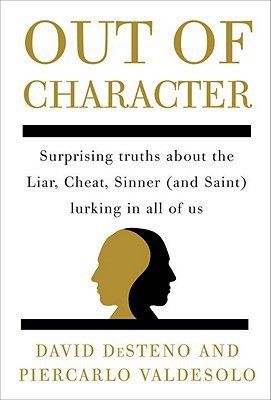
Have you ever wondered why a trumpeter of family values would suddenly turn around and cheat on his wife? Why jealousy would send an otherwise level-headed person into a violent rage? What could drive a person to blow a family fortune at the blackjack tables? Or have you ever pondered what might make Mr. Right leave his beloved at the altar, why hypocrisy seems to be rampant, or even why, every once in awhile, even you are secretly tempted, to lie, cheat, or steal (or, conversely, help someone you never even met)? This book answers these questions and more, and in doing so, turns the prevailing wisdom about who we are upside down. Our character, argue psychologists DeSteno and Valdesolo, isn’t a stable set of traits, but rather a shifting state that is subject to the constant push and pull of hidden mechanisms in our mind. And it’s the battle between these dueling psychological forces that determine how we act at any given point in time. Drawing on the surprising results of the clever experiments concocted in their own laboratory, DeSteno and Valdesolo shed new scientific light on so many of the puzzling behaviors that regularly grace the headlines. For example, you’ll learn: • Why Tiger Woods just couldn’t resist the allure of his mistresses even though he had a picture-perfect family at home. And why no one, including those who knew him best, ever saw it coming. • Why even the shrewdest of investors can be tempted to gamble their fortunes away (and why risky financial behavior is driven by the same mechanisms that compel us to root for the underdog in sports). • Why Eliot Spitzer, who made a career of crusading against prostitution, turned out to be one of the most famous johns of all time. • Why Mel Gibson, a noted philanthropist and devout Catholic, has been repeatedly caught spewing racist rants, even though close friends say he doesn’t have a racist bone in his body. • And why any of us is capable of doing the same, whether we believe it or not!A surprising look at the hidden forces driving the saint and sinner lurking in us all, Out of Character reveals why human behavior is so much more unpredictable than we ever realized.
ما از اخلاق چه انتظاری داریم؟ این سوال شاید تاحدودی برای عموم مردم و یا متخصصان این رشته قابل پاسخ باشد؛ اینکه خوب بودن را به ما بیاموزد و در تنظیم روابط فردی م...

جشن کتاب تهران به ایستگاه سی و یکم رسیده است. حال و احوال نشر کتاب خوب نیست و باید فرهنگدوستان را به خرید و هدیه دادن کتاب ترغیب نمود. خانه اخلاقپژوهان جوان ب...

بنیاد کتابهای اخلاق اسلامی عمدتا پالایش جان از آلودگیها و آراستن آن به زیباییها است. اندیشه محوری این قبیل کتابها آن است که انسان فعلی آنی نیست که باید باشد...

-
0 Comments