Notice: تابع WP_Block_Type_Registry::register به طورنادرست فراخوانی شد. نامهای نوع بلوک نباید حروف بزرگ داشته باشند. لطفاً برای اطلاعات بیشتر، اشکال زدایی در وردپرس را مشاهده کنید. (این پیام در نگارش 5.0.0 افزوده شده است.) in /home/ethicsho/public_html/wp-includes/functions.php on line 5313
Warning: Use of undefined constant TDC_PATH_LEGACY - assumed 'TDC_PATH_LEGACY' (this will throw an Error in a future version of PHP) in /home/ethicsho/public_html/wp-content/plugins/td-composer/td-composer.php on line 109
Warning: Use of undefined constant TDSP_THEME_PATH - assumed 'TDSP_THEME_PATH' (this will throw an Error in a future version of PHP) in /home/ethicsho/public_html/wp-content/plugins/td-composer/td-composer.php on line 113 بایگانیهای 9780199673438 - خانه اخلاق پژوهان جوان Notice: Trying to access array offset on value of type bool in /home/ethicsho/public_html/wp-content/plugins/wp-ulike/inc/general-functions.php on line 807
Teams of scientists around the world are racing to create protocells—microscopic, self-organizing entities that spontaneously assemble from simple organic and inorganic materials. The creation of fully autonomous protocells—a technology that can, for all intents and purposes, be considered literally alive—is only a matter of time. This book examines the pressing social and ethical issues raised by the creation of life in the laboratory. Protocells might offer great medical and social benefits and vast new economic opportunities, but they also pose potential risks and threaten cultural and moral norms against tampering with nature and “playing God.” The Ethics of Protocells offers a variety of perspectives on these concerns.After a brief survey of current protocell research (including the much-publicized “top-down” strategy of J. Craig Venter and Hamilton Smith, for which they have received multimillion dollar financing from the U.S. Department of Energy), the chapters treat risk, uncertainty, and precaution; lessons from recent history and related technologies; and ethics in a future society with protocells. The discussions range from new considerations of the precautionary principle and the role of professional ethicists to explorations of what can be learned from society’s experience with other biotechnologies and the open-source software movement.Contributors: Mark A. Bedau, Gaymon Bennett, Giovanni Boniolo, Carl Cranor, Bill Durodie, Mickey Gjerris, Brigitte Hantsche-Tangen, Christine Hauskeller, Andrew Hessel, Brian Johnson, George Khushf, Emily C. Parke, Alain Pottage, Paul Rabinow, Per Sandin, Joachim Schummer, Mark Triant, Laurie ZolothBasic Bioethics series
The Golden Rule: treat others as you would like to be treated. This ethical dictum is a part of most of the world’s religions and has been considered by numerous religious figures and philosophers over the centuries. This new collection contains specially
This accessible introduction to religious ethics focuses on the major forms of moral reasoning encompassing the three ‘Abrahamic’ religions: Judaism, Christianity, and Islam. Draws on a range of moral issues, such as examples arising from friendship, marriage, homosexuality, lying, forgiveness and its limits, the death penalty, the environment, warfare, and the meaning of work, career, and vocation Looks at both ethical reasoning and importantly, “how” that reasoning reveals insights into a religious tradition Investigates the resources available to address common problems confronting Abrahamic faiths, and how each faith explains and defends its moral viewpoints Offering concrete topics for interfaith discussions, this is a timely and insightful introduction to a fast-growing field of interest
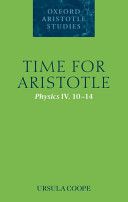
What is the relation between time and change? Does time depend on the mind? Is the present always the same or is it always different? Aristotle tackles these questions in the Physics, and Time for Aristotle is the first book in English devoted to this discussion. Aristotle claims that time is not a kind of change, but that it is something dependent on change; he defines it as a kind of “number of change.” Ursula Coope argues that what this means is that time is a kind of order (not, as is commonly supposed, a kind of measure). It is universal order within which all changes are related to each other. This interpretation enables Coope to explain two puzzling claims that Aristotle makes: that the now is like a moving thing, and that time depends for its existence on the mind. Brilliantly lucid in its explanation of this challenging section of the Physics, Time for Aristotle shows his discussion to be of enduring philosophical interest.
Book Summary of Commitment, Value, And Moral RealismDespite the importance of commitment in moral and political philosophy, there has hitherto been little extended analysis of it. Marcel Lieberman examines the conditions under which commitment is possible, and offers at the same time an indirect argument for moral realism. His ambitious study addresses questions that are of great interest to analytic philosophers but also makes many connections with continental philosophy and with folk psychology, sociology and cognitive science. It will be seen as a novel and distinctive intervention in the debate about moral realism..
ما از اخلاق چه انتظاری داریم؟ این سوال شاید تاحدودی برای عموم مردم و یا متخصصان این رشته قابل پاسخ باشد؛ اینکه خوب بودن را به ما بیاموزد و در تنظیم روابط فردی م...

جشن کتاب تهران به ایستگاه سی و یکم رسیده است. حال و احوال نشر کتاب خوب نیست و باید فرهنگدوستان را به خرید و هدیه دادن کتاب ترغیب نمود. خانه اخلاقپژوهان جوان ب...

بنیاد کتابهای اخلاق اسلامی عمدتا پالایش جان از آلودگیها و آراستن آن به زیباییها است. اندیشه محوری این قبیل کتابها آن است که انسان فعلی آنی نیست که باید باشد...

-
0 Comments