Notice: تابع WP_Block_Type_Registry::register به طورنادرست فراخوانی شد. نامهای نوع بلوک نباید حروف بزرگ داشته باشند. لطفاً برای اطلاعات بیشتر، اشکال زدایی در وردپرس را مشاهده کنید. (این پیام در نگارش 5.0.0 افزوده شده است.) in /home/ethicsho/public_html/wp-includes/functions.php on line 5313
Warning: Use of undefined constant TDC_PATH_LEGACY - assumed 'TDC_PATH_LEGACY' (this will throw an Error in a future version of PHP) in /home/ethicsho/public_html/wp-content/plugins/td-composer/td-composer.php on line 109
Warning: Use of undefined constant TDSP_THEME_PATH - assumed 'TDSP_THEME_PATH' (this will throw an Error in a future version of PHP) in /home/ethicsho/public_html/wp-content/plugins/td-composer/td-composer.php on line 113 بایگانیهای 9780199570362 - خانه اخلاق پژوهان جوان Notice: Trying to access array offset on value of type bool in /home/ethicsho/public_html/wp-content/plugins/wp-ulike/inc/general-functions.php on line 807
Eight Theories of Ethicsis a comprehensive introduction to the fundamental theories of ethics . Gordon Graham begins by introducing fundamental issues that underpin the concept of ethics, such as relativism and objectivity, before introducing eight major theories: * Egoism * Hedonism * Naturalism and Virtue Theory * Existentialism * Kantianism * Utilitarianism * Contractualism * Religion The author brings often abstract issues to life by drawing on examples from the great moral philosophers, including Plato, Aristotle, Hume, Mill, Nietzsche, Kant and Sartre. Contemporary examples, such as Darwinism, debates over human nature, the environment and citizenship are given.
This is an EXACT reproduction of a book published before 1923. This IS NOT an OCR’d book with strange characters, introduced typographical errors, and jumbled words. This book may have occasional imperfections such as missing or blurred pages, poor pictures, errant marks, etc. that were either part of the original artifact, or were introduced by the scanning process. We believe this work is culturally important, and despite the imperfections, have elected to bring it back into print as part of our continuing commitment to the preservation of printed works worldwide. We appreciate your understanding of the imperfections in the preservation process, and hope you enjoy this valuable book.
Talking to patients and their families about end-of-life issues can be difficult and stressful. End of Life Communication in the ICU looks at ways different cultures view death and then further explores how health care providers around the world communicate about such sensitive issues as withholding or withdrawing life support and discussing options when the outcome is uncertain. Through a better understanding of cultural differences in attitudes about death and methods of communications about end-of-life issues, practitioners can be better prepared to communicate with their own patients and their patientsa (TM) families.
“Very few works in the subject can compare with Parfit’s in scope, fertility, imaginative resource, and cogency of reasoning.”–P.F. Strawson, The New York Review of Books. “Extraordinary…Brilliant…Astonishingly rich in ideas…Reasons and Persons is a major contribution to philosophy: it will be read, honoured, and argued about for many years to come.”–Samuel Scheffler, Times Literary Supplement. “A brilliantly clever and imaginative book…Strange and excitingly intense.”–Alan Ryan, Sunday Times (London). “Not many books reset the philosophical agenda in the way that his one does…Western philosophy, especially systematic ethics, will not be the same again.”–Annette Baier, Philosophical Books. Challenging, with several powerful arguments, some of our deepest beliefs about rationality, morality, and personal identity, Parfit claims that we have a false view about our own nature. It is often rational to act against our own best interersts, he argues, and most of us have moral views that are self-defeating. We often act wrongly, although we know there will be no one with serious grounds for complaint, and when we consider future generations it is very hard to avoid conclusions that most of us will find very disturbing.
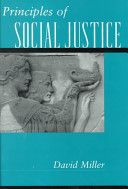
Social justice has been the animating ideal of democratic governments throughout the twentieth century. Even those who oppose it recognize its potency. Yet the meaning of social justice remains obscure, and existing theories put forward by political philosophers to explain it have failed to capture the way people in general think about issues of social justice. This book develops a new theory. David Miller argues that principles of justice must be understood contextually, with each principle finding its natural home in a different form of human association. Because modern societies are complex, the theory of justice must be complex, too. The three primary components in Miller’s scheme are the principles of desert, need, and equality.The book uses empirical research to demonstrate the central role played by these principles in popular conceptions of justice. It then offers a close analysis of each concept, defending principles of desert and need against a range of critical attacks, and exploring instances when justice requires equal distribution and when it does not. Finally, it argues that social justice understood in this way remains a viable political ideal even in a world characterized by economic globalization and political multiculturalism. Accessibly written, and drawing upon the resources of both political philosophy and the social sciences, this book will appeal to readers with interest in public policy as well as to students of politics, philosophy, and sociology.
ما از اخلاق چه انتظاری داریم؟ این سوال شاید تاحدودی برای عموم مردم و یا متخصصان این رشته قابل پاسخ باشد؛ اینکه خوب بودن را به ما بیاموزد و در تنظیم روابط فردی م...

جشن کتاب تهران به ایستگاه سی و یکم رسیده است. حال و احوال نشر کتاب خوب نیست و باید فرهنگدوستان را به خرید و هدیه دادن کتاب ترغیب نمود. خانه اخلاقپژوهان جوان ب...

بنیاد کتابهای اخلاق اسلامی عمدتا پالایش جان از آلودگیها و آراستن آن به زیباییها است. اندیشه محوری این قبیل کتابها آن است که انسان فعلی آنی نیست که باید باشد...

-
0 Comments