Notice: تابع WP_Block_Type_Registry::register به طورنادرست فراخوانی شد. نامهای نوع بلوک نباید حروف بزرگ داشته باشند. لطفاً برای اطلاعات بیشتر، اشکال زدایی در وردپرس را مشاهده کنید. (این پیام در نگارش 5.0.0 افزوده شده است.) in /home/ethicsho/public_html/wp-includes/functions.php on line 5313
Warning: Use of undefined constant TDC_PATH_LEGACY - assumed 'TDC_PATH_LEGACY' (this will throw an Error in a future version of PHP) in /home/ethicsho/public_html/wp-content/plugins/td-composer/td-composer.php on line 109
Warning: Use of undefined constant TDSP_THEME_PATH - assumed 'TDSP_THEME_PATH' (this will throw an Error in a future version of PHP) in /home/ethicsho/public_html/wp-content/plugins/td-composer/td-composer.php on line 113 بایگانیهای 9780199548569 - خانه اخلاق پژوهان جوان Notice: Trying to access array offset on value of type bool in /home/ethicsho/public_html/wp-content/plugins/wp-ulike/inc/general-functions.php on line 807
The result of two key social developments in recent years are examined here: the partial dismantling of the welfare state and the progress of genetics. Genetic insights are becoming increasingly valuable for risk assessment, and insurers would like to use these insights to help determine premiums. Combined with the fact that social welfare is being curtailed, this could potentially create an uninsured high-risk population. Along with considerations of autonomy and privacy, this is the basis for an ethical critique of insurer’s access to information. The result has often been regulation of such information; but the authors argues that due to adverse selection, regulation will not solve these problems, and this may jeopardize the survival of private personal insurance. Instead, we should look towards the resurrection of social insurance, a key component of the welfare state. This will interest academic researchers as well as professonials involved with genetics and insurance.
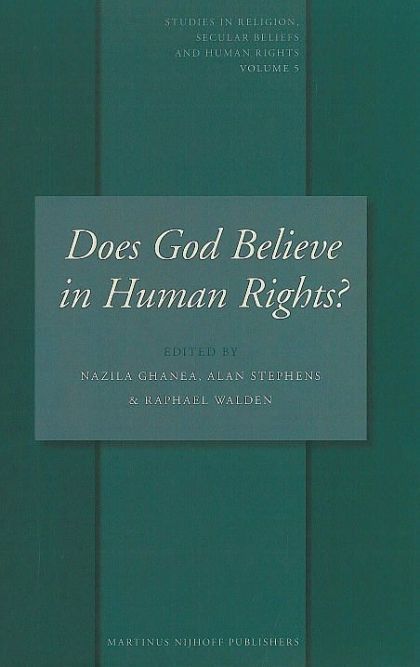
Where can religions find sources of legitimacy for human rights? How do, and how should, religious leaders and communities respond to human rights as defined in modern International Law? When religious precepts contradict human rights standards – for example in relation to freedom of expression or in relation to punishments – which should trump the other, and why? Can human rights and religious teachings be interpreted in a manner which brings reconciliation closer? Do the modern concept and system of human rights undermine the very vision of society that religions aim to impart? Is a reference to God in the discussion of human rights misplaced? Do human fallibilities with respect to interpretation, judicial reasoning and the understanding of human oneness and dignity provide the key to the undeniable and sometimes devastating conflicts that have arisen between, and within, religions and the human rights movement? In this volume, academics and lawyers tackle these most difficult questions head-on, with candour and creativity, and the collection is rendered unique by the further contributions of a remarkable range of other professionals, including senior religious leaders and representatives, journalists, diplomats and civil servants, both national and international. Most notably, the contributors do not shy away from the boldest question of all – summed up in the book’s title. The thoroughly edited and revised papers which make up this collection were originally prepared for a ground-breaking conference organised by the Clemens Nathan Research Centre, the University of London Institute of Commonwealth Studies and Martinus Nijhoff/Brill.
Memory and forgetting are inextricably intertwined. In order to understand how memory works we need to understand how and why we forget. The topic of forgetting is therefore hugely important, despite the fact that it has often been neglected in comparison with other features of memory.This volume addresses various aspects of forgetting, drawing from several disciplines, including experimental and cognitive psychology, cognitive and clinical neuropsychology, behavioural neuroscience, neuroimaging, clinical neurology, and computational modeling. The first chapters of the book discuss the history of forgetting, its theories and accounts, the difference between short-term and long-term forgetting as well as the relevance of forgetting within each of the numerous components of memory taxonomy. The central part summarizes and discusses what we have learned about forgetting from animal work, from computational modeling, and from neuroimaging. Further chapters discuss pathological forgetting in patients with amnesia and epilepsy, as well as psychogenic forgetting. The book concludes by focusing on the difference between forgetting of autobiographical memories versus collective memory forgetting.This book is the first to address the issue of forgetting from an interdisciplinary point of view, but with a particular emphasis on psychology. The book is scientific and yet accessible in tone, and as such is suitable for advanced undergraduate and postgraduate students of psychology and related subjects, such as science and neuroscience.
How do we form and modify our beliefs about the world? It is widely accepted that what we believe is determined by evidence, and is therefore not directly under our control; but according to what criteria is the credibility of the evidence established? Professor Helm argues that no theory of knowledge is complete without standards for accepting and rejecting evidence as belief-worthy.
ما از اخلاق چه انتظاری داریم؟ این سوال شاید تاحدودی برای عموم مردم و یا متخصصان این رشته قابل پاسخ باشد؛ اینکه خوب بودن را به ما بیاموزد و در تنظیم روابط فردی م...

جشن کتاب تهران به ایستگاه سی و یکم رسیده است. حال و احوال نشر کتاب خوب نیست و باید فرهنگدوستان را به خرید و هدیه دادن کتاب ترغیب نمود. خانه اخلاقپژوهان جوان ب...

بنیاد کتابهای اخلاق اسلامی عمدتا پالایش جان از آلودگیها و آراستن آن به زیباییها است. اندیشه محوری این قبیل کتابها آن است که انسان فعلی آنی نیست که باید باشد...

-
0 Comments