Notice: تابع WP_Block_Type_Registry::register به طورنادرست فراخوانی شد. نامهای نوع بلوک نباید حروف بزرگ داشته باشند. لطفاً برای اطلاعات بیشتر، اشکال زدایی در وردپرس را مشاهده کنید. (این پیام در نگارش 5.0.0 افزوده شده است.) in /home/ethicsho/public_html/wp-includes/functions.php on line 5313
Warning: Use of undefined constant TDC_PATH_LEGACY - assumed 'TDC_PATH_LEGACY' (this will throw an Error in a future version of PHP) in /home/ethicsho/public_html/wp-content/plugins/td-composer/td-composer.php on line 109
Warning: Use of undefined constant TDSP_THEME_PATH - assumed 'TDSP_THEME_PATH' (this will throw an Error in a future version of PHP) in /home/ethicsho/public_html/wp-content/plugins/td-composer/td-composer.php on line 113 بایگانیهای 9780199271658 - خانه اخلاق پژوهان جوان Notice: Trying to access array offset on value of type bool in /home/ethicsho/public_html/wp-content/plugins/wp-ulike/inc/general-functions.php on line 807
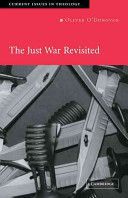
Leading political theologian Oliver ODonovan here takes a fresh look at some traditional moral arguments about war. Modern Christians differ widely on this issue. A few hold that absolute pacifism is the only viable Christian position, others subscribe in various ways to concepts of ‘just war developed out of a Western tradition that arose from the legacies of Augustine and Aquinas, while others still adopt more pragmatically realist postures. Professor ODonovan re-examines questions of contemporary urgency including the use of biological and nuclear weapons, military intervention, economic sanctions, war crimes trials and the roles of the Geneva Convention, international conventions and the UN. His enquiry opens with a challenging dedication to the new Archbishop of Canterbury and proceeds to shed new light on vital topics with which the Archbishop and others will be very directly engaged. It should be read by anyone concerned with the ethics of warfare.
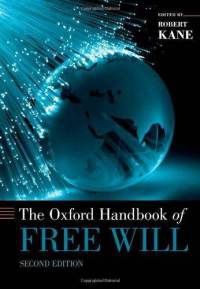
This second edition of the Oxford Handbook of Free Will is intended to be a sourcebook and guide to current work on free will and related subjects. Its focus is on writings of the past forty years, in which there has been a resurgence of interest in traditional issues about the freedom of the will in the light of new developments in the sciences, philosophy and humanistic studies. Special attention is given to research on free will of the first decade of the twenty-first century since the publication of the first edition of the Handbook. All the essays have been newly written or rewritten for this volume. In addition, there are new essayists and essays surveying topics that have become prominent in debates about free will in the past decade, including new work on the relation of free will to physics, the neurosciences, cognitive science, psychology and empirical philosophy, new versions of traditional views (compatibilist, incompatibilist, libertarian, etc.) and new views (e.g., revisionism) that have emerged. The twenty-eight essays by prominent international scholars and younger scholars cover a host of free will related issues, such as moral agency and responsibility, accountability and blameworthiness in ethics, autonomy, coercion and control in social theory, criminal liability, responsibility and punishment in legal theory, issues about the relation of mind to body, consciousness and the nature of action in philosophy of mind and the cognitive and neurosciences, questions about divine foreknowledge, providence and human freedom in philosophy of religion, and general metaphysical questions about necessity and possibility, determinism, time and chance, quantum reality, causation and explanation.
ما از اخلاق چه انتظاری داریم؟ این سوال شاید تاحدودی برای عموم مردم و یا متخصصان این رشته قابل پاسخ باشد؛ اینکه خوب بودن را به ما بیاموزد و در تنظیم روابط فردی م...

جشن کتاب تهران به ایستگاه سی و یکم رسیده است. حال و احوال نشر کتاب خوب نیست و باید فرهنگدوستان را به خرید و هدیه دادن کتاب ترغیب نمود. خانه اخلاقپژوهان جوان ب...

بنیاد کتابهای اخلاق اسلامی عمدتا پالایش جان از آلودگیها و آراستن آن به زیباییها است. اندیشه محوری این قبیل کتابها آن است که انسان فعلی آنی نیست که باید باشد...

-
0 Comments