Notice: تابع WP_Block_Type_Registry::register به طورنادرست فراخوانی شد. نامهای نوع بلوک نباید حروف بزرگ داشته باشند. لطفاً برای اطلاعات بیشتر، اشکال زدایی در وردپرس را مشاهده کنید. (این پیام در نگارش 5.0.0 افزوده شده است.) in /home/ethicsho/public_html/wp-includes/functions.php on line 5313
Warning: Use of undefined constant TDC_PATH_LEGACY - assumed 'TDC_PATH_LEGACY' (this will throw an Error in a future version of PHP) in /home/ethicsho/public_html/wp-content/plugins/td-composer/td-composer.php on line 109
Warning: Use of undefined constant TDSP_THEME_PATH - assumed 'TDSP_THEME_PATH' (this will throw an Error in a future version of PHP) in /home/ethicsho/public_html/wp-content/plugins/td-composer/td-composer.php on line 113 بایگانیهای 9780198293507 - خانه اخلاق پژوهان جوان Notice: Trying to access array offset on value of type bool in /home/ethicsho/public_html/wp-content/plugins/wp-ulike/inc/general-functions.php on line 807
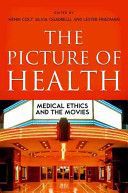
Film and literature have long been mined for interesting examples and case studies in order to teach biomedical ethics to students. This volume presents a collection of about 80 very brief, accessible essays written by international experts from medicine, social sciences, and the humanities, all of whom have experience using film in their teaching of medical ethics. Each essay focuses on a single scene and the ethical issues it raises, and the volume editors have provided strict guidelines for what each essay must do, while also allowing for some creative freedom. While some of the films are obvious candidates with medical themes — “Million Dollar Baby”, “The Diving Bell and the Butterfly” — some are novel choices, such as “Pan’s Labyrinth” or “As Good as it Gets”. The book will contain several general introductory chapters to major sections, and a complete filmography and cross-index at the end of the book where readers can look up individual films or ethical issues.
How do the hard facts of political responsibility shape and constrain the demands of ethical life? That question lies at the heart of the problem of ‘dirty hands’ in public life. Those who exercise political power often feel they must act in ways that would otherwise be considered immoral: indeed, paradoxically, they sometimes feel that it would be immoral of them not to perform or condone such acts as killing or lying. John Parrish offers a wide-ranging account of how this important philosophical problem emerged and developed, tracing it – and its proposed solutions – from ancient Greece through the Enlightenment. His central argument is that many of our most familiar concepts and institutions – from Augustine’s interiorised ethics, to Hobbes’s sovereign state, to Adam Smith’s ‘invisible hand’, understanding of the modern commercial economy – were designed partly as responses to the ethical problem of dirty hands in public life.
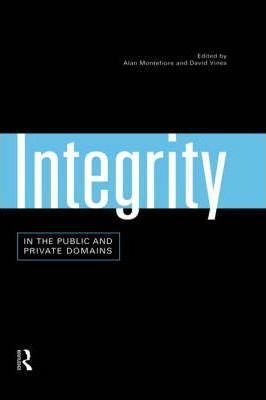
Integrity in the Private and Public Domains explores the issue of public and private integrity in politics, the media, health, science, fund-raising, the economy and the public sector. Over twenty essays by well-known figures such as Amelie Rorty, David Vines, the late Hugo Gryn, Alan Montefiore and Hilary Lawson present a compelling insight into debates over integrity today. A key chapter of the book concerns the highly publicised donation to Oxford University by Gert-Rudolf Flick, an issue which attracted wide media attention by raising questions of fund-raising and the holocaust.
Sorting Out Ethics is a characteristically lucid and lively survey of rival ethical theories by one of the most influential moral philosophers of the century. It also constitutes a definitive summary of Hare’s own fundamental ethical position. The book’s main theme is that objectivity in moral thinking is not to be sought by making moral questions into questions of fact; this leads inevitably to relativism, tying us to particular cultures and languages. Objectivity is to be sought, rather, by emphasizing the universally prescriptive character of moral language, which all cultures can share, and so using it to resolve their moral differences. An objective moral prescription, as Kant saw, is one upon which all rational thinkers can agree.
ما از اخلاق چه انتظاری داریم؟ این سوال شاید تاحدودی برای عموم مردم و یا متخصصان این رشته قابل پاسخ باشد؛ اینکه خوب بودن را به ما بیاموزد و در تنظیم روابط فردی م...

جشن کتاب تهران به ایستگاه سی و یکم رسیده است. حال و احوال نشر کتاب خوب نیست و باید فرهنگدوستان را به خرید و هدیه دادن کتاب ترغیب نمود. خانه اخلاقپژوهان جوان ب...

بنیاد کتابهای اخلاق اسلامی عمدتا پالایش جان از آلودگیها و آراستن آن به زیباییها است. اندیشه محوری این قبیل کتابها آن است که انسان فعلی آنی نیست که باید باشد...

-
0 Comments