Notice: تابع WP_Block_Type_Registry::register به طورنادرست فراخوانی شد. نامهای نوع بلوک نباید حروف بزرگ داشته باشند. لطفاً برای اطلاعات بیشتر، اشکال زدایی در وردپرس را مشاهده کنید. (این پیام در نگارش 5.0.0 افزوده شده است.) in /home/ethicsho/public_html/wp-includes/functions.php on line 5313
Warning: Use of undefined constant TDC_PATH_LEGACY - assumed 'TDC_PATH_LEGACY' (this will throw an Error in a future version of PHP) in /home/ethicsho/public_html/wp-content/plugins/td-composer/td-composer.php on line 109
Warning: Use of undefined constant TDSP_THEME_PATH - assumed 'TDSP_THEME_PATH' (this will throw an Error in a future version of PHP) in /home/ethicsho/public_html/wp-content/plugins/td-composer/td-composer.php on line 113 بایگانیهای 9780195399691 - خانه اخلاق پژوهان جوان Notice: Trying to access array offset on value of type bool in /home/ethicsho/public_html/wp-content/plugins/wp-ulike/inc/general-functions.php on line 807
“Journalism, Ethics and Society provides a comprehensive overview and critical analysis of debates within media ethics in relation to the purpose of news and journalism for society. It assesses how the meaning of news and journalism is central to a discourse in ethics and further evaluates the continuing role of liberalism in helping to define both theory and practice.” “A timely and topical book, providing new ways of thinking about media ethics, Journalism, Ethics and Society will be of interest to students and researchers working within the field of media, cultural studies and journalism, as well as to scholars of philosophy.”–BOOK JACKET.
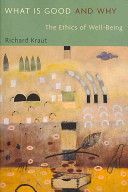
What is good? How can we know, and how important is it? In this book Richard Kraut, one of our most respected analytical philosophers, reorients these questions around the notion of what causes human beings to flourish–that is, what is good for us. Observing that we can sensibly talk about what is good for plants and animals no less than what is good for people, Kraut advocates a general principle that applies to the entire world of living things: what is good for complex organisms consists in the maturation and exercise of their natural powers.Drawing on the insights of ancient Greek philosophy, Kraut develops this thought into a good-centered moral philosophy, an “ethics of well-being” that requires all of our efforts to do some good. Even what is good of a kind–good poems no less than good people–must be good for someone. Pleasure plays a key role in this idea of flourishing life, but Kraut opposes the current philosophical orthodoxy of well-being, which views a person’s welfare as a construct of rational desires or plans, actual or ideal. The practical upshot of Kraut’s theory is that many common human pursuits–for riches, fame, domination–are in themselves worthless, while some of the familiar virtues–justice, honesty, and autonomy–are good for every human being.
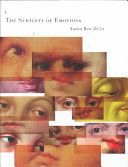
Why do we cry at the movies? What is the best way to manage destructive feelings such as jealousy? Although emotions pervade our lives, their nature, causes, and effects have only recently been studied by social scientists and philosophers. Despite growing scientific interest in the subject, empirical findings have not yet caught up with our intuitive knowledge. In this book Aaron Ben-Ze’ev carries out what he calls “a careful search for general patterns in the primeval jungle of emotions.” In an engaging, informal style he draws on a variety of theoretical approaches and popular sources to produce a coherent account of emotions in all their subtlety. All of the ideas are illustrated with examples drawn from everyday life.The book is organized into two parts. The first presents an overall conceptual framework for understanding emotions. It looks at the typical characteristics and components of emotions, distinguishes emotions from other affective phenomena, classifies the emotions, and covers such related issues as emotional intelligence, regulating emotions, and emotions and morality. The second part discusses individual emotions, including envy, jealousy, pleasure-in-others’-misfortune, pity, compassion, anger, hate, disgust, love, sexual desire, happiness, sadness, pride, regret, and shame. The text is laced with insightful and often amusing quotations from sources ranging from Mae West to Montesquieu.
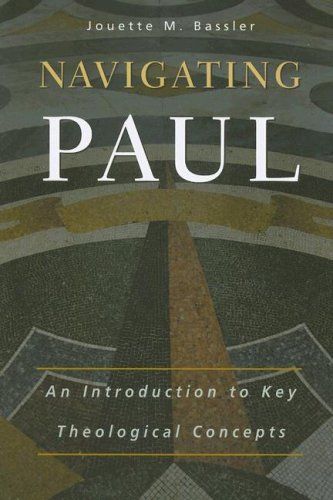
Jouette Bassler, one of the foremost experts on Pauline theology, offers her wisdom and insight into the core of Paul’s thought in this brief and accessible book. She focuses on major themes in Paul, such as grace, law, faith, righteousness, Israel, resurrection, and what it means to be “in Christ.” Through each of these themes, she explores the wealth of Paul’s various writings, lifting up the most important and basic of Paul’s ideas and explaining them within the context of the ancient Greco-Roman world. Book jacket.
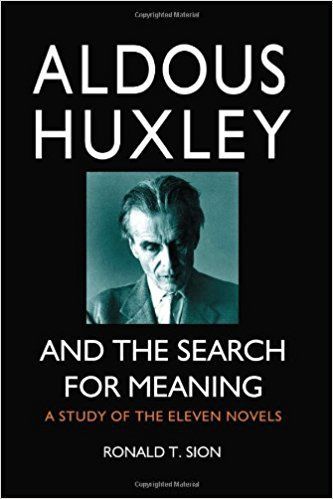
“This critical biography explores Huxley’s life-long quest for self-actualization by interfacing the events of his life with details of the creative period that produced each book, weaving Huxley’s letters, essays and interviews with the thematic content of each novel, providing a unique look into the man’s life and work”–Provided by publisher.
ما از اخلاق چه انتظاری داریم؟ این سوال شاید تاحدودی برای عموم مردم و یا متخصصان این رشته قابل پاسخ باشد؛ اینکه خوب بودن را به ما بیاموزد و در تنظیم روابط فردی م...

جشن کتاب تهران به ایستگاه سی و یکم رسیده است. حال و احوال نشر کتاب خوب نیست و باید فرهنگدوستان را به خرید و هدیه دادن کتاب ترغیب نمود. خانه اخلاقپژوهان جوان ب...

بنیاد کتابهای اخلاق اسلامی عمدتا پالایش جان از آلودگیها و آراستن آن به زیباییها است. اندیشه محوری این قبیل کتابها آن است که انسان فعلی آنی نیست که باید باشد...

-
0 Comments