Notice: تابع WP_Block_Type_Registry::register به طورنادرست فراخوانی شد. نامهای نوع بلوک نباید حروف بزرگ داشته باشند. لطفاً برای اطلاعات بیشتر، اشکال زدایی در وردپرس را مشاهده کنید. (این پیام در نگارش 5.0.0 افزوده شده است.) in /home/ethicsho/public_html/wp-includes/functions.php on line 5313
Warning: Use of undefined constant TDC_PATH_LEGACY - assumed 'TDC_PATH_LEGACY' (this will throw an Error in a future version of PHP) in /home/ethicsho/public_html/wp-content/plugins/td-composer/td-composer.php on line 109
Warning: Use of undefined constant TDSP_THEME_PATH - assumed 'TDSP_THEME_PATH' (this will throw an Error in a future version of PHP) in /home/ethicsho/public_html/wp-content/plugins/td-composer/td-composer.php on line 113 بایگانیهای 9780195107623 - خانه اخلاق پژوهان جوان Notice: Trying to access array offset on value of type bool in /home/ethicsho/public_html/wp-content/plugins/wp-ulike/inc/general-functions.php on line 807
Abortion in Judaism presents a complete Jewish legal history of abortion from the earliest relevant biblical references through the end of the twentieth century. For the first time, almost every Jewish text relevant to the abortion issue is explored in detail. These texts are investigated in historical sequence, thereby elucidating the development inherent within the Jewish approach to abortion. Following the examination of the foundational sources, a range of contemporary responses from across the Jewish spectrum is also introduced in order to probe their place in this history, as well as to discern the directions in which they would have the law proceed. The impact of Jewish abortion law upon Israeli legislative enactments is evaluated, along with the social outcomes of such legislation. Finally, the work considers the insights that this thematic history provides into Jewish ethical principles, as well as into the role of halakhah within Judaism.
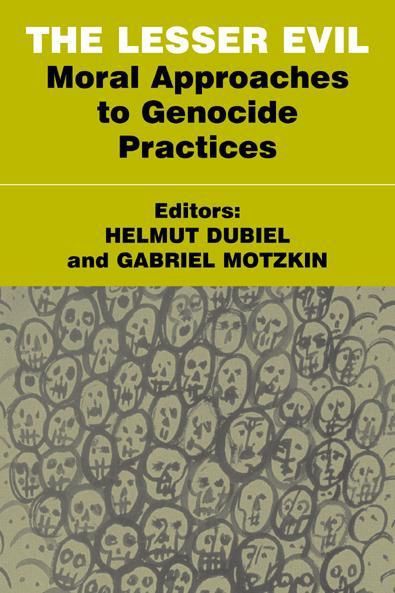
This book compares the genocide perpetrated by both Nazism and Communism. Both political systems were evil yet, when compared, they lose some of their power to shock. The book considers: the different receptions given to Nazism and Communism; whether people can behave “rationally” in contexts of great wickedness; whether the Communist or Nazi worldview was more “rational” the relationship between post-war memories and history; and how atrocities are remembered by society and how intellectuals construct them. The editors argue that these twentieth-century evils invite comparison if only because of their traumatic effects and that we have an obligation to understand what happened and an obligation to understand how we have dealt with it.
“Organ shortage is an ongoing problem in many countries. The needless death and suffering which have resulted necessitate an investigation into potential solutions. This examination of contemporary ethical means, both practical and policy-oriented, of reducing the shortfall in organs draws on the experiences of a range of countries. The authors focus on the resolution and negotiation of ethical conflict, examine systems approaches such as the ‘Spanish model’ and the US Breakthrough Collaboratives, evaluate policy proposals relating to incentives, presumed consent, and modifications regarding end-of-life care, and evaluate the greatly increased use of (non-heart-beating) donors suffering circulatory death, as well as living donors. The proposed strategies and solutions are not only capable of resolving the UK’s own organ-shortage crisis, but also of being implemented in other countries grappling with how to address the growing gap between supply and demand for organs”–
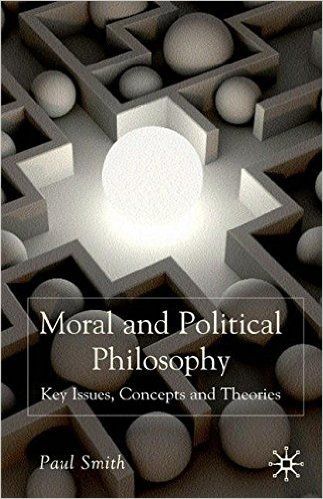
Paul Smith’s clear and concise introduction provides a comprehensive and incisive examination of key concepts and theories in moral and political philosophy. With a clear focus on the essentials of each topic, he presupposes no prior knowledge and relates moral philosophy to social and political issues. Chapters can be read independently, but are interconnected, enabling students to develop a coherent understanding of the subject, including: – the controversial and topical practical issues of drug laws, justifications of punishment, civil disobedience and whether there is a duty to obey the law, and global poverty. – key concepts in moral and political theory: liberty, reasons for laws that limit liberty (harm to others, offence, harm to self, and harmless wrongdoing), rights, equality and social justice. – critical evaluation of moral and political theories: moral relativism, utilitarianism, Kantian moral philosophy, and Rawls’s theory of justice, together with libertarian and egalitarian criticisms of Rawls.
ما از اخلاق چه انتظاری داریم؟ این سوال شاید تاحدودی برای عموم مردم و یا متخصصان این رشته قابل پاسخ باشد؛ اینکه خوب بودن را به ما بیاموزد و در تنظیم روابط فردی م...

جشن کتاب تهران به ایستگاه سی و یکم رسیده است. حال و احوال نشر کتاب خوب نیست و باید فرهنگدوستان را به خرید و هدیه دادن کتاب ترغیب نمود. خانه اخلاقپژوهان جوان ب...

بنیاد کتابهای اخلاق اسلامی عمدتا پالایش جان از آلودگیها و آراستن آن به زیباییها است. اندیشه محوری این قبیل کتابها آن است که انسان فعلی آنی نیست که باید باشد...

-
0 Comments