Notice: تابع WP_Block_Type_Registry::register به طورنادرست فراخوانی شد. نامهای نوع بلوک نباید حروف بزرگ داشته باشند. لطفاً برای اطلاعات بیشتر، اشکال زدایی در وردپرس را مشاهده کنید. (این پیام در نگارش 5.0.0 افزوده شده است.) in /home/ethicsho/public_html/wp-includes/functions.php on line 5313
Warning: Use of undefined constant TDC_PATH_LEGACY - assumed 'TDC_PATH_LEGACY' (this will throw an Error in a future version of PHP) in /home/ethicsho/public_html/wp-content/plugins/td-composer/td-composer.php on line 109
Warning: Use of undefined constant TDSP_THEME_PATH - assumed 'TDSP_THEME_PATH' (this will throw an Error in a future version of PHP) in /home/ethicsho/public_html/wp-content/plugins/td-composer/td-composer.php on line 113 بایگانیهای 9780195096965 - خانه اخلاق پژوهان جوان Notice: Trying to access array offset on value of type bool in /home/ethicsho/public_html/wp-content/plugins/wp-ulike/inc/general-functions.php on line 807
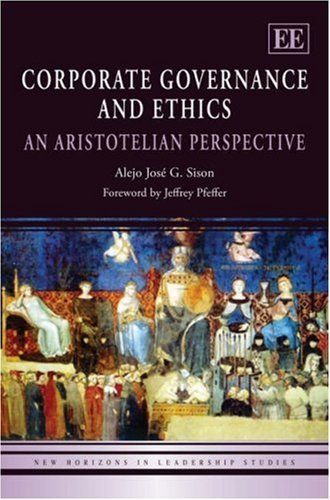
Corporate Governance and Ethics is an illuminating and practical reading of Aristotle’s Politics for today’s corporate directors. With a deft synthesis of ethics, economics and politics, Alejo Sison elevates the discussion of corporate governance out of the realm of abstract rules and structures into a more effective form of Aristotelian politics. He argues that corporate governance is a human practice where subjective, ethical conditions outweigh the mastery of techniques, since the firm is not a mere production function but, above all, a community of workers. Corporate governance issues are discussed in a holistic fashion, using international case studies to embed the discussion in environments defined by their economic, legal and cultural systems. One of the author’s key messages is that reform starts with the ethical and political education of directors.Alejo Sison uses an integrative approach to corporate governance that incorporates ethical-political considerations with the economic and legal dimensions of issues. He backs his theoretical claims with a series of case histories including Fiat from Italy, Cheung Kong Holdings and Whampoa Limited from China, Banco Popular from Spain and United Airlines from the US. He provides a special focus on the education of corporate directors in accordance with the principles of Aristotle’s Politics. This accessible book will appeal to corporate directors, executives and managers; academics and students with an interest in corporate governance, leadership and ethics, corporate citizenship and corporate social responsibility; and modern readers of Aristotle’s virtue theory and politics in relation to business ethics.
The Cambridge Companion to the Scottish Enlightenment offers a philosophical perspective on an eighteenth-century movement that has been profoundly influential on western culture. A distinguished team of contributors examines the writings of David Hume, Adam Smith, Thomas Reid, Adam Ferguson, Colin Maclaurin and other Scottish thinkers, in fields including philosophy, natural theology, economics, anthropology, natural science and law. In addition, the contributors relate the Scottish Enlightenment to its historical context and assess its impact and legacy in Europe, America and beyond. The result is a comprehensive and accessible volume that illuminates the richness, the intellectual variety and the underlying unity of this important movement. It will be of interest to a wide range of readers in philosophy, theology, literature and the history of ideas.
In England in the second half of the eighteenth century an unprecedented amount of writing urged kindness to animals. This theme was carried in many genres, from sermons to encyclopedias, from scientific works to literature for children, and in the poetry of Cowper, Wordsworth, Coleridge, Clare and others. Romanticism and Animal Rights discusses the arguments writers used, and the particular meanings of these arguments in a social and economic context so different from the present. After introductory chapters, the material is divided according to specific practices that particularly influenced feeling or aroused protest: pet keeping, hunting, baiting, working animals, eating them, and the various harms inflicted on wild birds. The book shows how extensively English Romantic writing took up issues of what we now call animal rights. In this respect it joins the growing number of studies that seek precedents or affinities in English Romanticism for our own ecological concerns.
Biobanking, i.e. storage of biological samples or data emerging from such samples for diagnostic, therapeutic or research purposes, has been going on for decades. However, it is only since the mid 1990s that these activities have become the subject of considerable public attention, concern and debate. This shift in climate is due to several factors. The purpose of this book is to investigate some of the ethical, legal and social challenges raised by research biobanking in its different modern forms and formats. The issues raised by research biobanking in its modern form can be divided into four main clusters: how biological materials are entered into the bank; research biobanks as institutions; under what conditions researchers can access materials in the bank, and problems concerning ownership of biological materials and of intellectual property arising from such materials; and how the information is collected and stored, e.g. access-rights, disclosure, confidentiality, data security and data protection.
Philosophy of Religion provides an account of the central issues and viewpoints in the philosophy of religion but also shows how such issues can be rationally assessed and in what ways competing views can be rationally assessed. It includes major philosophical figures in religious traditions as well as discussions by important contemporary philosophers. Keith Yandell deals lucidly and constructively with representative views from Judaism, Christianity, Islam, Hinduism, Buddhism, and Jainism. This book will appeal to students of both philosophy and religion as well as to the general reader interested in the subject.Unique features of Philosophy of Religion: * key reading and new reading in the subject area* questions at the ends of chapters* a glossary of philosophical terms* annotated further reading
ما از اخلاق چه انتظاری داریم؟ این سوال شاید تاحدودی برای عموم مردم و یا متخصصان این رشته قابل پاسخ باشد؛ اینکه خوب بودن را به ما بیاموزد و در تنظیم روابط فردی م...

جشن کتاب تهران به ایستگاه سی و یکم رسیده است. حال و احوال نشر کتاب خوب نیست و باید فرهنگدوستان را به خرید و هدیه دادن کتاب ترغیب نمود. خانه اخلاقپژوهان جوان ب...

بنیاد کتابهای اخلاق اسلامی عمدتا پالایش جان از آلودگیها و آراستن آن به زیباییها است. اندیشه محوری این قبیل کتابها آن است که انسان فعلی آنی نیست که باید باشد...

-
0 Comments