Notice: تابع WP_Block_Type_Registry::register به طورنادرست فراخوانی شد. نامهای نوع بلوک نباید حروف بزرگ داشته باشند. لطفاً برای اطلاعات بیشتر، اشکال زدایی در وردپرس را مشاهده کنید. (این پیام در نگارش 5.0.0 افزوده شده است.) in /home/ethicsho/public_html/wp-includes/functions.php on line 5313
Warning: Use of undefined constant TDC_PATH_LEGACY - assumed 'TDC_PATH_LEGACY' (this will throw an Error in a future version of PHP) in /home/ethicsho/public_html/wp-content/plugins/td-composer/td-composer.php on line 109
Warning: Use of undefined constant TDSP_THEME_PATH - assumed 'TDSP_THEME_PATH' (this will throw an Error in a future version of PHP) in /home/ethicsho/public_html/wp-content/plugins/td-composer/td-composer.php on line 113 بایگانیهای 9780195096699 - خانه اخلاق پژوهان جوان Notice: Trying to access array offset on value of type bool in /home/ethicsho/public_html/wp-content/plugins/wp-ulike/inc/general-functions.php on line 807
Is it ever acceptable to lie? This question plays a surprisingly important role in the story of Europe’s transition from medieval to modern society. According to many historians, Europe became modern when Europeans began to lie–that is, when they began to argue that it is sometimes acceptable to lie. This popular account offers a clear trajectory of historical progression from a medieval world of faith, in which every lie is sinful, to a more worldly early modern society in which lying becomes a permissible strategy for self-defense and self-advancement. Unfortunately, this story is wrong. For medieval and early modern Christians, the problem of the lie was the problem of human existence itself. To ask “Is it ever acceptable to lie?” was to ask how we, as sinners, should live in a fallen world. As it turns out, the answer to that question depended on who did the asking. The Devil Wins uncovers the complicated history of lying from the early days of the Catholic Church to the Enlightenment, revealing the diversity of attitudes about lying by considering the question from the perspectives of five representative voices–the Devil, God, theologians, courtiers, and women. Examining works by Augustine, Bonaventure, Martin Luther, Madeleine de Scudâery, Jean-Jacques Rousseau, and a host of others, Dallas G. Denery II shows how the lie, long thought to be the source of worldly corruption, eventually became the very basis of social cohesion and peace. –from back cover.
Hamlet tells Horatio that there are more things in heaven and earth than are dreamt of in his philosophy. InDouble Vision, philosopher and literary critic Tzachi Zamir argues that there are more things in Hamlet than are dreamt of–or at least conceded–by most philosophers. Making an original and persuasive case for the philosophical value of literature, Zamir suggests that certain important philosophical insights can be gained only through literature. But such insights cannot be reached if literature is deployed merely as an aesthetic sugaring of a conceptual pill. Philosophical knowledge is not opposed to, but is consonant with, the literariness of literature. By focusing on the experience of reading literature as literature and not philosophy, Zamir sets a theoretical framework for a philosophically oriented literary criticism that will appeal both to philosophers and literary critics. Double Visionis concerned with the philosophical understanding induced by the aesthetic experience of literature. Literary works can function as credible philosophical arguments–not ones in which claims are conclusively demonstrated, but in which claims are made plausible. Such claims, Zamir argues, are embedded within an experiential structure that is itself a crucial dimension of knowing. Developing an account of literature’s relation to knowledge, morality, and rhetoric, and advancing philosophical-literary readings ofRichard III, Macbeth, Romeo and Juliet, Othello, Antony and Cleopatra, Hamlet, andKing Lear, Zamir shows how his approach can open up familiar texts in surprising and rewarding ways.
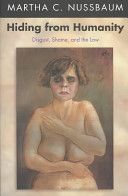
Should laws about sex and pornography be based on social conventions about what is disgusting? Should felons be required to display bumper stickers or wear T-shirts that announce their crimes? This powerful and elegantly written book, by one of America’s most influential philosophers, presents a critique of the role that shame and disgust play in our individual and social lives and, in particular, in the law. Martha Nussbaum argues that we should be wary of these emotions because they are associated in troubling ways with a desire to hide from our humanity, embodying an unrealistic and sometimes pathological wish to be invulnerable. Nussbaum argues that the thought-content of disgust embodies “magical ideas of contamination, and impossible aspirations to purity that are just not in line with human life as we know it.” She argues that disgust should never be the basis for criminalizing an act, or play either the aggravating or the mitigating role in criminal law it currently does. She writes that we should be similarly suspicious of what she calls “primitive shame,” a shame “at the very fact of human imperfection,” and she is harshly critical of the role that such shame plays in certain punishments. Drawing on an extraordinarily rich variety of philosophical, psychological, and historical references–from Aristotle and Freud to Nazi ideas about purity–and on legal examples as diverse as the trials of Oscar Wilde and the Martha Stewart insider trading case, this is a major work of legal and moral philosophy.
ما از اخلاق چه انتظاری داریم؟ این سوال شاید تاحدودی برای عموم مردم و یا متخصصان این رشته قابل پاسخ باشد؛ اینکه خوب بودن را به ما بیاموزد و در تنظیم روابط فردی م...

جشن کتاب تهران به ایستگاه سی و یکم رسیده است. حال و احوال نشر کتاب خوب نیست و باید فرهنگدوستان را به خرید و هدیه دادن کتاب ترغیب نمود. خانه اخلاقپژوهان جوان ب...

بنیاد کتابهای اخلاق اسلامی عمدتا پالایش جان از آلودگیها و آراستن آن به زیباییها است. اندیشه محوری این قبیل کتابها آن است که انسان فعلی آنی نیست که باید باشد...

-
0 Comments