Notice: تابع WP_Block_Type_Registry::register به طورنادرست فراخوانی شد. نامهای نوع بلوک نباید حروف بزرگ داشته باشند. لطفاً برای اطلاعات بیشتر، اشکال زدایی در وردپرس را مشاهده کنید. (این پیام در نگارش 5.0.0 افزوده شده است.) in /home/ethicsho/public_html/wp-includes/functions.php on line 5313
Warning: Use of undefined constant TDC_PATH_LEGACY - assumed 'TDC_PATH_LEGACY' (this will throw an Error in a future version of PHP) in /home/ethicsho/public_html/wp-content/plugins/td-composer/td-composer.php on line 109
Warning: Use of undefined constant TDSP_THEME_PATH - assumed 'TDSP_THEME_PATH' (this will throw an Error in a future version of PHP) in /home/ethicsho/public_html/wp-content/plugins/td-composer/td-composer.php on line 113 بایگانیهای 9780195086461 - خانه اخلاق پژوهان جوان Notice: Trying to access array offset on value of type bool in /home/ethicsho/public_html/wp-content/plugins/wp-ulike/inc/general-functions.php on line 807
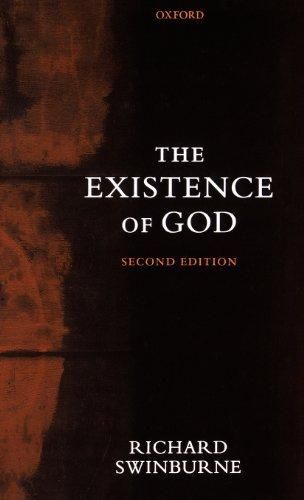
Richard Swinburne presents a substantially rewritten and updated edition of his most celebrated book. No other work has made a more powerful case for the probability of the existence of God. Swinburne argues compellingly that the existence of the universe, its law-governed nature and fine-tuning, human consciousness and moral awareness, and evidence of miracles and religious experience, all taken together (and despite the occurrence of pain and suffering), make it likely that there is a God.
It has long been recognized that anyone seriously interested in Aristotle’s moral philosophy will need to take full account of the Eudemian Ethics, a work still gravely neglected in favor of the better-known Nicomachean Ethics. The relation between the two continues to be the subject of lively scholarly debate. This volume contains a translation of three of the eight books of the Eudemian Ethics–those that are likely to be of most interest to philosophers today–together with a philosophical commentary on these books from a contemporary point of view. Intended to serve the needs of readers of Aristotle without a knowledge of Greek, this book’s aim in translation has been to give as accurate an idea as possible of Aristotle’s text; but for the benefit of those who are able to read the original, there are notes on the Greek text used for problematic passages.
This work focuses on divine command, and in particular the theory that what makes something obligatory is that God commands it, and what makes something wrong is that God commands us not to do it. Focusing on the Abrahamic faiths, eminent scholar John E. Hare explains that two experiences have had to be integrated. The first is that God tells us to do something, or not to do something. The second is that we have to work out ourselves what to do and what not to do. The difficulty has come in establishing the proper relation between them. In Christian reflection on this, two main traditions have emerged, divine command theory and natural law theory. Professor Hare successfully defends a version of divine command theory, but also shows that there is considerable overlap with some versions of natural law theory. He engages with a number of Christian theologians, particularly Karl Barth, and extends into a discussion of divine command within Judaism and Islam.0The work concludes by examining recent work in evolutionary psychology, and argues that thinking of our moral obligations as produced by divine command offers us some help in seeing how a moral conscience could develop in a way that is evolutionarily stable.
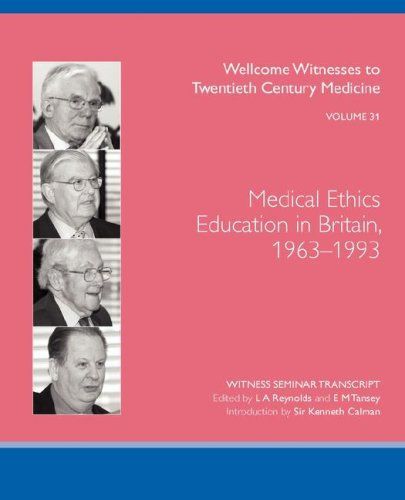
Changing attitudes toward human experimentation along with other controversial moral issues emerged after the Second World War and, in 1963, led to the establishment of the London Medical Group, organized by Ted Shotter, with similar Medical Groups elsewhere from 1967. These became forums for discussion and debate arising from dilemmas encountered in medical settings. Medical ethics did not become a recognized subject in the syllabus of Britain’s medical schools until 1993. This Witness Seminar transcript records the development of international ethical codes, the response to them over the period 1963-93 by students and doctors and the extent of resistance encountered from deans, hospital administrators and others; the Groups’ influence on medical practice; the impact on both Medical Group organizers and participants in their subsequent careers; the local and regional variations and their significant lasting contributions. The meeting was chaired by Dr Stephen Lock and included former Medical Group members, scientists, physicians and policy makers, such as Professors Kenneth Boyd, Bill Fulford, Roger Higgs, Sir Ian Kennedy, David Morton and Sir Malcolm Macnaughton. An introduction by Professor Sir Kenneth Calman and appendices of the Very Revd Edward Shotter’s reflections on the influence of the Medical Groups as a report for the Institute of Medical Ethics complete the transcript.
ما از اخلاق چه انتظاری داریم؟ این سوال شاید تاحدودی برای عموم مردم و یا متخصصان این رشته قابل پاسخ باشد؛ اینکه خوب بودن را به ما بیاموزد و در تنظیم روابط فردی م...

جشن کتاب تهران به ایستگاه سی و یکم رسیده است. حال و احوال نشر کتاب خوب نیست و باید فرهنگدوستان را به خرید و هدیه دادن کتاب ترغیب نمود. خانه اخلاقپژوهان جوان ب...

بنیاد کتابهای اخلاق اسلامی عمدتا پالایش جان از آلودگیها و آراستن آن به زیباییها است. اندیشه محوری این قبیل کتابها آن است که انسان فعلی آنی نیست که باید باشد...

-
0 Comments