Notice: تابع WP_Block_Type_Registry::register به طورنادرست فراخوانی شد. نامهای نوع بلوک نباید حروف بزرگ داشته باشند. لطفاً برای اطلاعات بیشتر، اشکال زدایی در وردپرس را مشاهده کنید. (این پیام در نگارش 5.0.0 افزوده شده است.) in /home/ethicsho/public_html/wp-includes/functions.php on line 5313
Warning: Use of undefined constant TDC_PATH_LEGACY - assumed 'TDC_PATH_LEGACY' (this will throw an Error in a future version of PHP) in /home/ethicsho/public_html/wp-content/plugins/td-composer/td-composer.php on line 109
Warning: Use of undefined constant TDSP_THEME_PATH - assumed 'TDSP_THEME_PATH' (this will throw an Error in a future version of PHP) in /home/ethicsho/public_html/wp-content/plugins/td-composer/td-composer.php on line 113 بایگانیهای 9780195059236 - خانه اخلاق پژوهان جوان Notice: Trying to access array offset on value of type bool in /home/ethicsho/public_html/wp-content/plugins/wp-ulike/inc/general-functions.php on line 807
Do citizens have an obligation to obey the law? This book differs from standard approaches by shifting from the language of obedience (orders) to that of deference (normative judgments). The popular view that law claims authority but does not have it is here reversed on both counts: Law does not claim authority but has it. Though the focus is on political obligation, the author approaches that issue indirectly by first developing a more general account of when deference is due to the view of others. Two standard practices that political theorists often consider in exploring the question of political obligation – fair-play and promise-keeping – can themselves be seen as examples of a duty of deference. In this respect the book defends a more general theory of ethics whose scope extends beyond the question of political obligation to questions of duty in the case of law, promises, fair play and friendship.
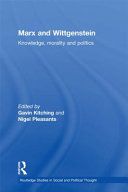
At first sight, Karl Marx and Ludwig Wittgenstein may well seem to be as different from each other as it is possible for the ideas of two major intellectuals to be. Despite this standard conception, however, a small number of scholars have long suggested that there are deeper philosophical commonalities between Marx and Wittgenstein. They have argued that, once grasped, these commonalities can radically change and enrich understanding both of Marxism and of Wittgensteinian philosophy. This book develops and extends this unorthodox view, emphasizing the mutual enrichment that comes from bringing Marx’s and Wittgenstein’s ideas into dialogue with one another.
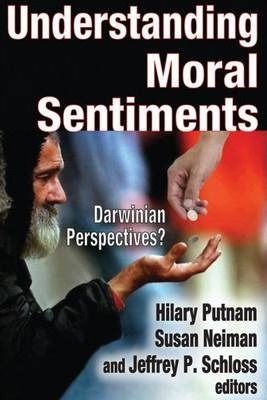
This volume brings together leading scholars to examine Darwinian perspectives on morality from widely ranging disciplines: evolutionary biology, anthropology, psychology, philosophy, and theology. They bring not only varied expertise, but also contrasting judgments about which, and to what extent, differing evolutionary accounts explain morality. They also consider the implications of these explanations for a range of religious and non-religious moral traditions. The book first surveys scientific understandings of morality. Chapters by Joan Silk and Christopher Boehm ask what primatology and anthropology tell us about moral origins. Daniel Batson and Stephen Pinker provide contrasting accounts of how evolution shapes moral psychology, and Jeffrey Schloss assesses a range of biological proposals for morality and altruism. Turning to philosophical issues, Martha Nussbaum argues that recognizing our animal nature does not threaten morality. Stephen Pope and Timothy Jackson explore how Darwinian accounts of moral goodness both enrich and require understandings outside the sciences. Hilary Putnam and Susan Neiman ask whether Darwin is truly useful for helping us to understand what morality actually is and how it functions. The book is a balanced effort to assess the scientific merits and philosophical significance of emerging Darwinian perspectives on morality. how Darwinian accounts of moral goodness both enrich and require understandings outside the sciences. Hilary Putnam and Susan Neiman ask whether Darwin is truly useful for helping us to understand what morality actually is and how it functions. The book is a balanced effort to assess the scientific merits and philosophical significance of emerging Darwinian perspectives on morality.
The works of Paul Grice collected in this volume present his metaphysical defense of value, and represent a modern attempt to provide a metaphysical foundation for value. Value judgments are viewed as objective; value is part of the world we live in, but nonetheless is constructed by us. We inherit, or seem to inherit, the Aristotelian world in which objects and creatures are characterized in terms of what they are supposed to do. We are thereby enabled to evaluate by reference to function and finality. The most striking part of Grice’s position, however, is his contention that the legitimacy of such evaluations rests ultimately on an argument for absolute value.
When does a person qualify for protected and continuing life? At a time when technology can sustain marginal life, it is ever more important to understand what constitutes a person. What are the medical, ethical, mental, legal, and philosophical criteria that determine protectable human life? By providing a much-needed religious/philosophical context for the discussion – examining contemporary thinking on just what constitutes valuable life – Walters broadens his inquiry beyond the human to include other animals and also deals with the phenomenon of anencephalic infants, those who are born without higher brains. Searching for a measurable and humane standard of personhood, Walters looks at its current definition and declares it inadequate. He offers instead the idea of proximate personhood, with criteria for helping to determine which individuals possess a unique claim to life.
ما از اخلاق چه انتظاری داریم؟ این سوال شاید تاحدودی برای عموم مردم و یا متخصصان این رشته قابل پاسخ باشد؛ اینکه خوب بودن را به ما بیاموزد و در تنظیم روابط فردی م...

جشن کتاب تهران به ایستگاه سی و یکم رسیده است. حال و احوال نشر کتاب خوب نیست و باید فرهنگدوستان را به خرید و هدیه دادن کتاب ترغیب نمود. خانه اخلاقپژوهان جوان ب...

بنیاد کتابهای اخلاق اسلامی عمدتا پالایش جان از آلودگیها و آراستن آن به زیباییها است. اندیشه محوری این قبیل کتابها آن است که انسان فعلی آنی نیست که باید باشد...

-
0 Comments