Notice: تابع WP_Block_Type_Registry::register به طورنادرست فراخوانی شد. نامهای نوع بلوک نباید حروف بزرگ داشته باشند. لطفاً برای اطلاعات بیشتر، اشکال زدایی در وردپرس را مشاهده کنید. (این پیام در نگارش 5.0.0 افزوده شده است.) in /home/ethicsho/public_html/wp-includes/functions.php on line 5313
Warning: Use of undefined constant TDC_PATH_LEGACY - assumed 'TDC_PATH_LEGACY' (this will throw an Error in a future version of PHP) in /home/ethicsho/public_html/wp-content/plugins/td-composer/td-composer.php on line 109
Warning: Use of undefined constant TDSP_THEME_PATH - assumed 'TDSP_THEME_PATH' (this will throw an Error in a future version of PHP) in /home/ethicsho/public_html/wp-content/plugins/td-composer/td-composer.php on line 113 بایگانیهای 9780061755934 - خانه اخلاق پژوهان جوان Notice: Trying to access array offset on value of type bool in /home/ethicsho/public_html/wp-content/plugins/wp-ulike/inc/general-functions.php on line 807
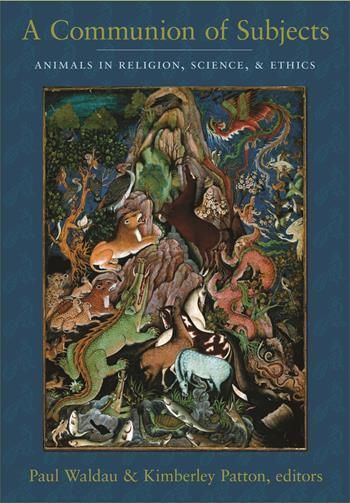
A Communion of Subjectsis the first comparative and interdisciplinary study of the conceptualization of animals in world religions. Scholars from a wide range of disciplines, including Thomas Berry (cultural history), Wendy Doniger (study of myth), Elizabeth Lawrence (veterinary medicine, ritual studies), Marc Bekoff (cognitive ethology), Marc Hauser (behavioral science), Steven Wise (animals and law), Peter Singer (animals and ethics), and Jane Goodall (primatology) consider how major religious traditions have incorporated animals into their belief systems, myths, rituals, and art. Their findings offer profound insights into humans’ relationships with animals and a deeper understanding of the social and ecological web in which we all live.Contributors examine Judaism, Christianity, Islam, Hinduism, Buddhism, Jainism, Daoism, Confucianism, African religions, traditions from ancient Egypt and early China, and Native American, indigenous Tibetan, and Australian Aboriginal traditions, among others. They explore issues such as animal consciousness, suffering, sacrifice, and stewardship in innovative methodological ways. They also address contemporary challenges relating to law, biotechnology, social justice, and the environment. By grappling with the nature and ideological features of various religious views, the contributors cast religious teachings and practices in a new light. They reveal how we either intentionally or inadvertently marginalize “others,” whether they are human or otherwise, reflecting on the ways in which we assign value to living beings.Though it is an ancient concern, the topic of “Religion and Animals” has yet to be systematically studied by modern scholars. This groundbreaking collection takes the first steps toward a meaningful analysis.
‘Fiala’s Tolerance and the Ethical Life is a profound study of the sources and consequences of the effort to get along with others in peace. His view that philosophy and toleration are particularly closely related is novel and important; connecting forbearance with tragically diverse communities stresses a much-neglected aspect of the subject. Written in accessible language but displaying a mastery of the history of thought, this book makes a permanent contribution to our understanding of why we must learn to live together and how difficult that is’ John Lachs, Vanderbilt University In a fresh and exciting way, this book shows how tolerance connects with the practice of philosophy. Andrew Fiala examines the virtue of tolerance as it appears in several historical contexts: Socratic philosophy, Stoic philosophy, Pragmatism and Existentialism. The lesson derived is that tolerance is a virtue for what Fiala calls ‘tragic communities’. Such communities are developed when we come together across our differences, but they lack the robust sense of connection that we often seek with others – the complete sort of happiness that is offered by a more Utopian ideal of community. But rather than viewing this conclusion as a failure, Fiala maintains that tragic communities are the best communities possible for human beings who are aware of their own individuality and finitude. Indeed, they are typical of the sorts of communities created by philosophers engaged in dialogue with others.
An award-winning psychologist skillfully combines two genres-philosophical wisdom and scientific research-delighting the reader with surprising insights
The question of responsibility plays a critical role not only in our attempts to resolve social and political problems, but in our very conceptions of what those problems are. Who, for example, is to blame for apartheid in South Africa? Is the South African government responsible? What about multinational corporations that do business there? Will uncovering the “true facts of the matter” lead us to the right answer? In an argument both compelling and provocative, Marion Smiley demonstrates how attributions of blame–far from being based on an objective process of factual discovery–are instead judgments that we ourselves make on the basis of our own political and social points of view. She argues that our conception of responsibility is a singularly modern one that locates the source of blameworthiness in an individual’s free will. After exploring the flaws inherent in this conception, she shows how our judgments of blame evolve out of our configuration of social roles, our conception of communal boundaries, and the distribution of power upon which both are based. The great strength of Smiley’s study lies in the way in which it brings together both rigorous philosophical analysis and an appreciation of the dynamics of social and political practice. By developing a pragmatic conception of moral responsibility, this work illustrates both how moral philosophy can enhance our understanding of social and political practices and why reflection on these practices is necessary to the reconstruction of our moral concepts.
“This book explores the Buddhist view of death and its implications for contemporary bioethics. Writing primarily from within the Tibetan tradition, author Karma Lekshe Tsomo discusses Buddhist notions of human consciousness and personal identity and how these figure in the Buddhist view of death. Beliefs about death and enlightenment and states between life and death are also discussed. Tsomo goes on to examine such hot-button topics as cloning, abortion, assisted suicide, euthanasia, organ donation, genetic engineering, and stem-cell research within a Buddhist context, introducing new ways of thinking about these highly controversial issues.”–BOOK JACKET.
ما از اخلاق چه انتظاری داریم؟ این سوال شاید تاحدودی برای عموم مردم و یا متخصصان این رشته قابل پاسخ باشد؛ اینکه خوب بودن را به ما بیاموزد و در تنظیم روابط فردی م...

جشن کتاب تهران به ایستگاه سی و یکم رسیده است. حال و احوال نشر کتاب خوب نیست و باید فرهنگدوستان را به خرید و هدیه دادن کتاب ترغیب نمود. خانه اخلاقپژوهان جوان ب...

بنیاد کتابهای اخلاق اسلامی عمدتا پالایش جان از آلودگیها و آراستن آن به زیباییها است. اندیشه محوری این قبیل کتابها آن است که انسان فعلی آنی نیست که باید باشد...

-
0 Comments