Notice: تابع WP_Block_Type_Registry::register به طورنادرست فراخوانی شد. نامهای نوع بلوک نباید حروف بزرگ داشته باشند. لطفاً برای اطلاعات بیشتر، اشکال زدایی در وردپرس را مشاهده کنید. (این پیام در نگارش 5.0.0 افزوده شده است.) in /home/ethicsho/public_html/wp-includes/functions.php on line 5313
Warning: Use of undefined constant TDC_PATH_LEGACY - assumed 'TDC_PATH_LEGACY' (this will throw an Error in a future version of PHP) in /home/ethicsho/public_html/wp-content/plugins/td-composer/td-composer.php on line 109
Warning: Use of undefined constant TDSP_THEME_PATH - assumed 'TDSP_THEME_PATH' (this will throw an Error in a future version of PHP) in /home/ethicsho/public_html/wp-content/plugins/td-composer/td-composer.php on line 113 بایگانیهای 9780028660202 - خانه اخلاق پژوهان جوان Notice: Trying to access array offset on value of type bool in /home/ethicsho/public_html/wp-content/plugins/wp-ulike/inc/general-functions.php on line 807
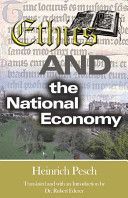
Written toward the end of World War I, this study of economics tackles the issue from the standpoint of religion and philosophy by summarizing the Catholic school of economics, which insists that the welfare of human beings belongs at the center of any real economy and that other systems that place either the individual or the state at the center of their schemes are not only false, but actually injurious to individuals, families, communities, and nations. Extensive documentation and citations from leading economic theorists are provided.
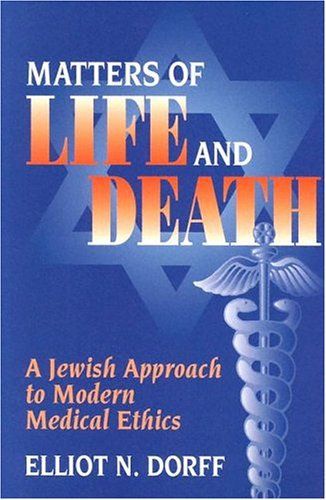
The incredible medical breakthroughs of today, like genetic engineering, in-vitro fertilizations, and cloning, have transformed long-held beliefs on the nature of both life and death, raising difficult moral and religious questions. In Matters of Life and Death Elliot Dorff thoroughly addresses this unavoidable confluence of medical technology and Jewish law and ethics.
No matter what we do, however kind or generous our deeds may seem, a hidden motive of selfishness lurks–or so science has claimed for years. This book, whose publication promises to be a major scientific event, tells us differently. In Unto Others philosopher Elliott Sober and biologist David Sloan Wilson demonstrate once and for all that unselfish behavior is in fact an important feature of both biological and human nature. Their book provides a panoramic view of altruism throughout the animal kingdom–from self-sacrificing parasites to insects that subsume themselves in the superorganism of a colony to the human capacity for selflessness–even as it explains the evolutionary sense of such behavior. Explaining how altruistic behavior can evolve by natural selection, this book finally gives credence to the idea of group selection that was originally proposed by Darwin but denounced as heretical in the 1960s. With their account of this controversy, Sober and Wilson offer a detailed case study of scientific change as well as an indisputable argument for group selection as a legitimate theory in evolutionary biology. Unto Others also takes a novel evolutionary approach in explaining the ultimate psychological motives behind unselfish human behavior. Developing a theory of the proximate mechanisms that most likely evolved to motivate adaptive helping behavior, Sober and Wilson show how people and perhaps other species evolved the capacity to care for others as a goal in itself. A truly interdisciplinary work that blends biology, philosophy, psychology, and anthropology, this book will permanently change not just our view of selfless behavior but also our understanding of many issues in evolutionary biology and the social sciences.
In the context of the current financial crisis, and at a time of deep global change, growing attention is paid to the global norms and ethical values that could underpin future global policy. Water is a key global resource. At the 3rd Marcelino Botin Foundation Water Workshop, held in Santander, Spain, June 12-14, 2007, the role of ethics in the deep roots, values, and the potential commonalities of the global water policy were discussed. Experts from different cultural, geographic and religious backgrounds considered the different ethical points of view to enhance the debate on how ethical considerations can play a more significant and explicit role in water development and management. Common ground for all contributing authors was considered to be the UN Declaration of 1948, and more specifically the basic aspects related to water ethics: 1. the dignity of every human being and 2. the necessity of solidarity among all human beings.The book is divided in 8 sections which correspond to the papers presented at the Workshop: Some Cultural Traditional Approaches on Water Ethics Some Ethical Aspects of New Water Management Water as a Human Right and as an Economic Resource Water and Poverty Groundwater Use and its Ethical Aspects Ethics of Water Ownership and Management Corruption, Transparency and Participation in the Water Sector Ethical Aspects of Unforeseen and Extreme Events Management such as Floods and Droughts
ما از اخلاق چه انتظاری داریم؟ این سوال شاید تاحدودی برای عموم مردم و یا متخصصان این رشته قابل پاسخ باشد؛ اینکه خوب بودن را به ما بیاموزد و در تنظیم روابط فردی م...

جشن کتاب تهران به ایستگاه سی و یکم رسیده است. حال و احوال نشر کتاب خوب نیست و باید فرهنگدوستان را به خرید و هدیه دادن کتاب ترغیب نمود. خانه اخلاقپژوهان جوان ب...

بنیاد کتابهای اخلاق اسلامی عمدتا پالایش جان از آلودگیها و آراستن آن به زیباییها است. اندیشه محوری این قبیل کتابها آن است که انسان فعلی آنی نیست که باید باشد...

-
0 Comments