Notice: تابع WP_Block_Type_Registry::register به طورنادرست فراخوانی شد. نامهای نوع بلوک نباید حروف بزرگ داشته باشند. لطفاً برای اطلاعات بیشتر، اشکال زدایی در وردپرس را مشاهده کنید. (این پیام در نگارش 5.0.0 افزوده شده است.) in /home/ethicsho/public_html/wp-includes/functions.php on line 5313
Warning: Use of undefined constant TDC_PATH_LEGACY - assumed 'TDC_PATH_LEGACY' (this will throw an Error in a future version of PHP) in /home/ethicsho/public_html/wp-content/plugins/td-composer/td-composer.php on line 109
Warning: Use of undefined constant TDSP_THEME_PATH - assumed 'TDSP_THEME_PATH' (this will throw an Error in a future version of PHP) in /home/ethicsho/public_html/wp-content/plugins/td-composer/td-composer.php on line 113 بایگانیهای 9780028658315 - خانه اخلاق پژوهان جوان Notice: Trying to access array offset on value of type bool in /home/ethicsho/public_html/wp-content/plugins/wp-ulike/inc/general-functions.php on line 807
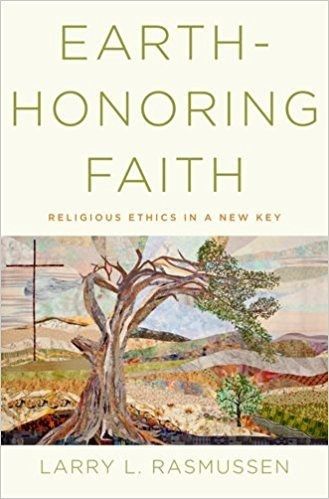
Grand Winner of the 2014 Nautilus Book Awards Thoughtful observers agree that the planetary crisis we now face-climate change; species extinction; the destruction of entire ecosystems; the urgent need for a more just economic-political order-is pushing human civilization to a radical turning point: change or perish. But precisely how to change remains an open question. In Earth-honoring Faith, Larry Rasmussen answers that question with a dramatically new way of thinking about human society, ethics, and the ongoing health of our planet. Rejecting the modern assumption that morality applies to human society alone, Rasmussen insists that we must derive a spiritual and ecological ethic that accounts for the well-being of all creation, as well as the primal elements upon which it depends: earth, air, fire, water, and sunlight. He argues that good science, necessary as it is, will not be enough to inspire fundamental change. We must draw on religious resources as well to make the difficult transition from an industrial-technological age obsessed with consumption to an ecological age that restores wise stewardship of all life. Earth-honoring Faith advocates an alliance of spirituality and ecology, in which the material requirements for planetary life are reconciled with deep traditions of spirituality across religions, traditions that include mysticism, sacramentalism, prophetic practices, asceticism, and the cultivation of wisdom. It is these shared spiritual practices that can produce a chorus of world faiths to counter the consumerism, utilitarianism, alienation, oppression, and folly that have pushed us to the brink. Written with passionate commitment and deep insight, Earth-honoring Faith reminds us that we must live in the present with the knowledge that the eyes of future generations will look back at us.
David Ellison’s book is an investigation into the historical origins and textual practice of European literary Modernism. Ellison’s study traces the origins of Modernism to the emergence of early German Romanticism from the philosophy of Immanuel Kant, and emphasizes how the passage from Romanticism to Modernism can be followed in the gradual transition from the sublime to the uncanny. Arguing that what we call High Modernism cannot be reduced to a religion of beauty, an experimentation with narrative form, or even a reflection on time and consciousness, Ellison demonstrates that Modernist textuality is characterized by the intersection, overlapping, and crossing of aesthetic and ethical issues. Beauty and morality relate to each other as antagonists struggling for dominance within the related fields of philosophy and theory on the one hand (Kant, Kierkegaard, Nietzsche, Freud) and imaginative literature on the other (Baudelaire, Proust, Gide, Conrad, Woolf, Kafka).
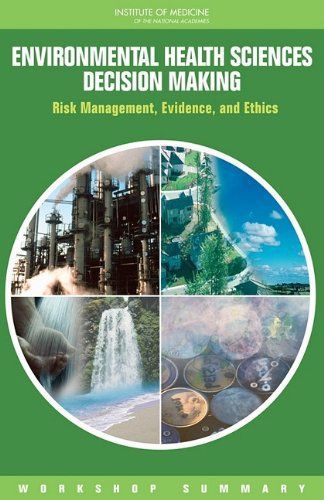
Environmental health decision making can be a complex undertaking, as there is the need to navigate and find balance among three core elements: science, policy, and the needs of the American public. Policy makers often grapple with how to make appropriate decisions when the research is uncertain. The challenge for the policy maker is to make the right decision with the best available data in a transparent process. The workshop, summarized in this volume, included an overview of the principles underlying decision making, the role of evidence and challenges for vulnerable populations, and ethical issues of conflict of interest, scientific integrity, and transparency. The workshop engaged science interest groups, industry, government, and the academic sector.
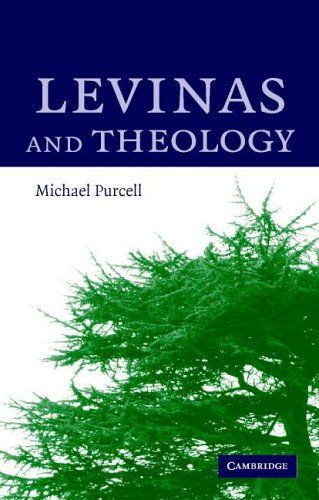
Emmanuel Levinas was a significant contributor to the field of philosophy, phenomenology and religion. A key interpreter of Husserl, he stressed the importance of attitudes to other people in any philosophical system. For Levinas, to be a subject is to take responsibility for others as well as yourself. He regarded ethics as the foundation for all other philosophy, but later admitted it could also be the foundation for theology. Michael Purcell outlines the basic themes of Levinas’ thought and the ways in which they might be deployed in fundamental and practical theology, and the study of the phenomenon of religion.
ما از اخلاق چه انتظاری داریم؟ این سوال شاید تاحدودی برای عموم مردم و یا متخصصان این رشته قابل پاسخ باشد؛ اینکه خوب بودن را به ما بیاموزد و در تنظیم روابط فردی م...

جشن کتاب تهران به ایستگاه سی و یکم رسیده است. حال و احوال نشر کتاب خوب نیست و باید فرهنگدوستان را به خرید و هدیه دادن کتاب ترغیب نمود. خانه اخلاقپژوهان جوان ب...

بنیاد کتابهای اخلاق اسلامی عمدتا پالایش جان از آلودگیها و آراستن آن به زیباییها است. اندیشه محوری این قبیل کتابها آن است که انسان فعلی آنی نیست که باید باشد...

-
0 Comments