Notice: تابع WP_Block_Type_Registry::register به طورنادرست فراخوانی شد. نامهای نوع بلوک نباید حروف بزرگ داشته باشند. لطفاً برای اطلاعات بیشتر، اشکال زدایی در وردپرس را مشاهده کنید. (این پیام در نگارش 5.0.0 افزوده شده است.) in /home/ethicsho/public_html/wp-includes/functions.php on line 5313
Warning: Use of undefined constant TDC_PATH_LEGACY - assumed 'TDC_PATH_LEGACY' (this will throw an Error in a future version of PHP) in /home/ethicsho/public_html/wp-content/plugins/td-composer/td-composer.php on line 109
Warning: Use of undefined constant TDSP_THEME_PATH - assumed 'TDSP_THEME_PATH' (this will throw an Error in a future version of PHP) in /home/ethicsho/public_html/wp-content/plugins/td-composer/td-composer.php on line 113 بایگانیهای 978-0262041065 - خانه اخلاق پژوهان جوان Notice: Trying to access array offset on value of type bool in /home/ethicsho/public_html/wp-content/plugins/wp-ulike/inc/general-functions.php on line 807
Andre examines the field of bioethics from an insider’s point of view, exploring the questions that have dominated the field and encouraging students and practitioners to move beyond end-of-life issues to address issues in the routine practice of medicine.
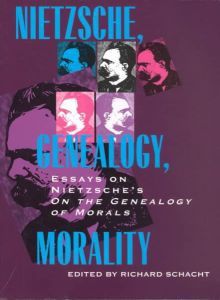
Written at the height of the philosopher’s intellectual powers, Friedrich Nietzsche’s On the Genealogy of Morals has become one of the key texts of recent Western philosophy. Its essayistic style affords a unique opportunity to observe many of Nietzsche’s persisting concerns coming together in an illuminating constellation. A profound influence on psychoanalysis, antihistoricism, and poststructuralism and an abiding challenge to ethical theory, Nietzsche’s book addresses many of the major philosophical problems and possibilities of modernity.In this unique collection focusing on the Genealogy, twenty-five notable philosophers offer diverse discussions of the book’s central themes and concepts. They explore such notions as ressentiment, asceticism, “slave” and “master” moralities, and what Nietzsche calls “genealogy” and its relation to other forms of inquiry in his work. The book presents a cross section of contemporary Nietzsche scholarship and philosophical investigation that is certain to interest philosophers, intellectual and cultural historians, and anyone concerned with one of the master thinkers of the modern age. Written at the height of the philosopher’s intellectual powers, Friedrich Nietzsche’s On the Genealogy of Morals has become one of the key texts of recent Western philosophy. Its essayistic style affords a unique opportunity to observe many of Nietzsche’s persisting concerns coming together in an illuminating constellation. A profound influence on psychoanalysis, antihistoricism, and poststructuralism and an abiding challenge to ethical theory, Nietzsche’s book addresses many of the major philosophical problems and possibilities of modernity.In this unique collection focusing on the Genealogy, twenty-five notable philosophers offer diverse discussions of the book’s central themes and concepts. They explore such notions as ressentiment, asceticism, “slave” and “master” moralities, and what Nietzsche calls “genealogy” and its relation to other forms of inquiry in his work. The book presents a cross section of contemporary Nietzsche scholarship and philosophical investigation that is certain to interest philosophers, intellectual and cultural historians, and anyone concerned with one of the master thinkers of the modern age.
This volume examines the psychological, social-relational, and cultural foundations of the most basic moral commitments. It begins by looking at the seminal writings of Augusto Blasi, whose writings on moral cognition, the development of self-identity, and moral personality have transformed the research agenda in moral psychology. This work is now the starting point of all discussion about the relationship between self and morality; the developmental grounding of the moral personality; and the moral integration of cognition, emotion, and behavior. Indeed, it is now widely believed that organizing self-understanding around basic moral commitments is crucial to the formation of a moral identity which, in turn, underwrites moral conduct. Using Blasi’s work as a point of departure, a distinguished interdisciplinary and international group of scholars have contributed essays summarizing their own theoretical and empirical research on these topics. This book features new theories of moral functioning that range across several psychological literatures, including social cognition, cognitive science, and personality development. Examining the social-relational, communitarian, and cultural aspects of moral self-identity, it provides a comprehensive account of moral personality. Uniformly integrative, field-expanding, and on the cutting edge of research on moral development and personality, the book appeals to scholars, developmental theorists and graduate students interested in issues of moral development, education, and behavior, as well as cognitive development theory.
Bioethics, still in its infancy, is routinely called on by the government to provide political cover for controversial public health decisions involving the life and death of Americans. Doomsday or worst-case scenarios are often at the heart of these biopolitical decisions. A central feature of science fiction, these scenarios can impart useful insights. But worst-case scenarios, like Frankenstein’s monster, can also be unpredictably destructive, undermining both preparedness and the very values bioethics seeks to promote. Discovering a new flu strain, for example, leads immediately to visions of the 1918 flu pandemic, the worst in human history. Likewise, a “ticking time bomb” scenario leads to the use of physicians for torture, and he all purpose worst case charge of “socialism” threatens to derail meaningful healthcare reform. In Worst Case Bioethics George Annas employs contemporary disputes involving death and disaster to explore the radical changes underway in public health practice, the application of constitutional law to medicine, and human rights discourse to promote human health and wellbeing. Worst-case scenarios, especially worst-case bioethics scenarios, distort debate, limit options, rationalize human rights abuses, and undermine equality and social justice. It is, nonetheless, possible to temper worst-case scenarios in ways that promote both the development of a meaningful American bioethics, and a life and liberty affirming global health and human rights movement. Written at the intersection of law, bioethics, public health, and human rights, Worst Case Bioethics will interest not only bioethicists but scholars in public health, public policy, and human rights law, as well as members of the public who want to participate in these policy debates. Written at the intersection of law, bioethics, public health, and human rights, Worse Case Bioethics will interest not only bioethicists but scholars in public health, public policy, and human rights law.
ما از اخلاق چه انتظاری داریم؟ این سوال شاید تاحدودی برای عموم مردم و یا متخصصان این رشته قابل پاسخ باشد؛ اینکه خوب بودن را به ما بیاموزد و در تنظیم روابط فردی م...

جشن کتاب تهران به ایستگاه سی و یکم رسیده است. حال و احوال نشر کتاب خوب نیست و باید فرهنگدوستان را به خرید و هدیه دادن کتاب ترغیب نمود. خانه اخلاقپژوهان جوان ب...

بنیاد کتابهای اخلاق اسلامی عمدتا پالایش جان از آلودگیها و آراستن آن به زیباییها است. اندیشه محوری این قبیل کتابها آن است که انسان فعلی آنی نیست که باید باشد...

-
0 Comments